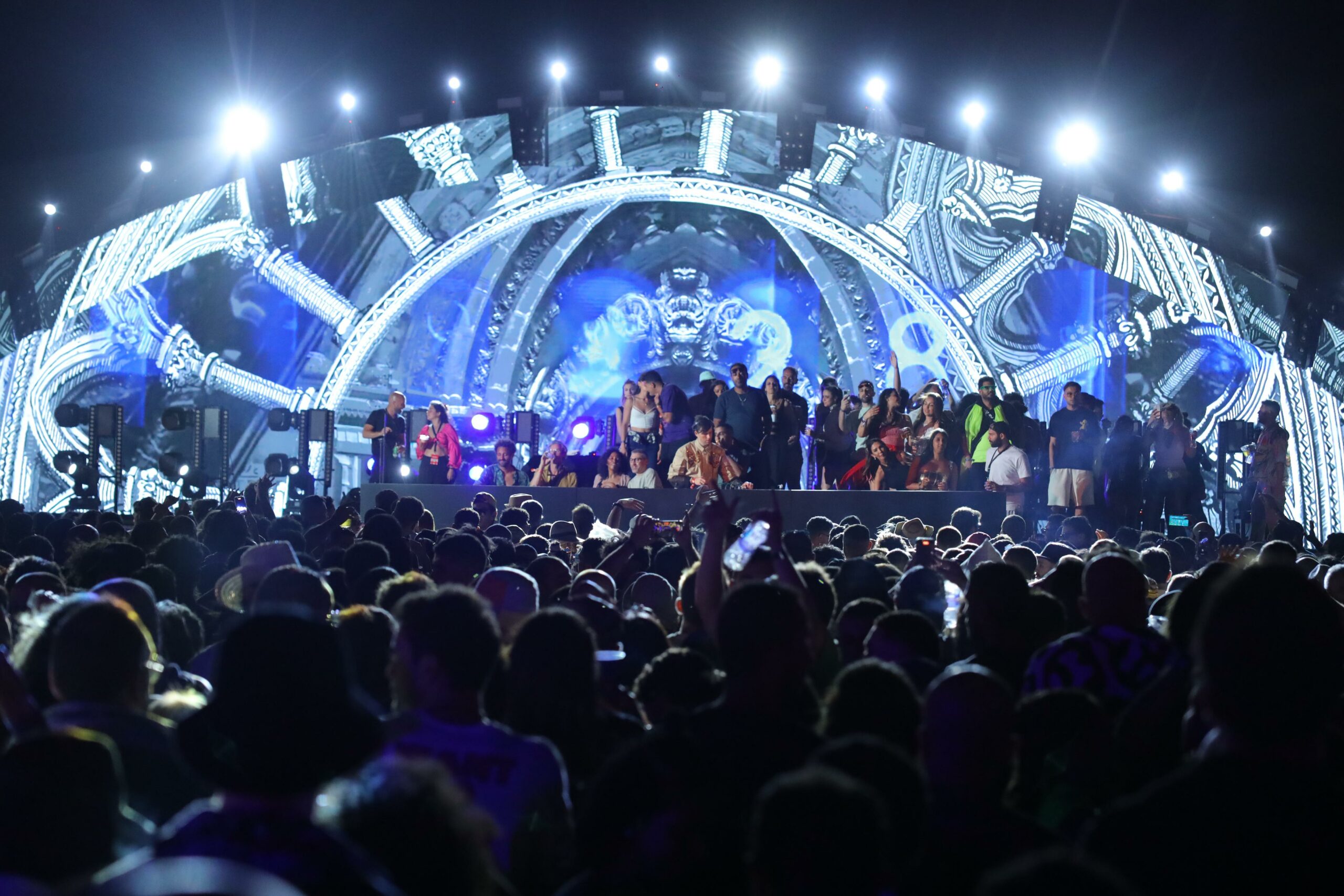
Most modern festivals feel like they’re built for the highlight reel. You arrive, scan the line-up, wait for the headliner, and leave with just enough footage to prove you were there. It’s an efficient, hierarchical experience, moulded by the same logic as everything else we consume: fast, visible, and easily captured.
Created by Egyptian events collective Nacelle, Sandbox Festival doesn’t really play by those rules. Founder Tito El Khachab often returns to a single, guiding mantra: “If you build it, they will come.” It is the core philosophy of a founder who, fourteen years ago, chose to play music for a specific audience in Egypt and simply trusted that the right crowd would find their way to it.
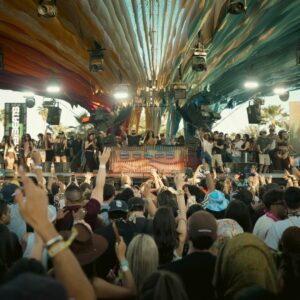
Tucked along the Red Sea in El Gouna, it operates on a different tempo, set across three days. Time stretches here, it doesn’t rush. By removing main-stage hierarchies and VIP ropes, the festival replaces the pressure of the next big moment with hours-long sets in self-contained worlds. The energy builds slowly, almost stubbornly resisting the urge to rush.
Speaking to YUNG, Tito El Khachab points to this year’s B2B pairings as one of the festival’s strongest draws, including DJ Tennis b2b Traumer, Shanti Celeste b2b Peach, Butch b2b Toman, and Notre Dame b2b Ankhoï. “This festival is about the global dance music community, and our line-up is made to reflect the beautiful mosaic that makes up the electronic dance music scene, with the artist spirit as one of the primary selection criteria,” El Khachab unveils.
Sandbox was never intended to be a static event; it was designed as a living experiment in what a festival in the region could actually be. From its 2012 inception as a boutique gathering of a few hundred, it has spent over a decade consistently prioritizing the integrity of the dance floor over commercial checkboxes. “In the beginning, it was small,” El Khachab says. “It was, ‘let’s do it, we want to play music for everyone’.” By 2015, the festival moved to a three-day format and introduced a cashless system. “Running an electronic music event in Egypt for three days, and keeping it tight and together like that; that’s what made us see the potential.”
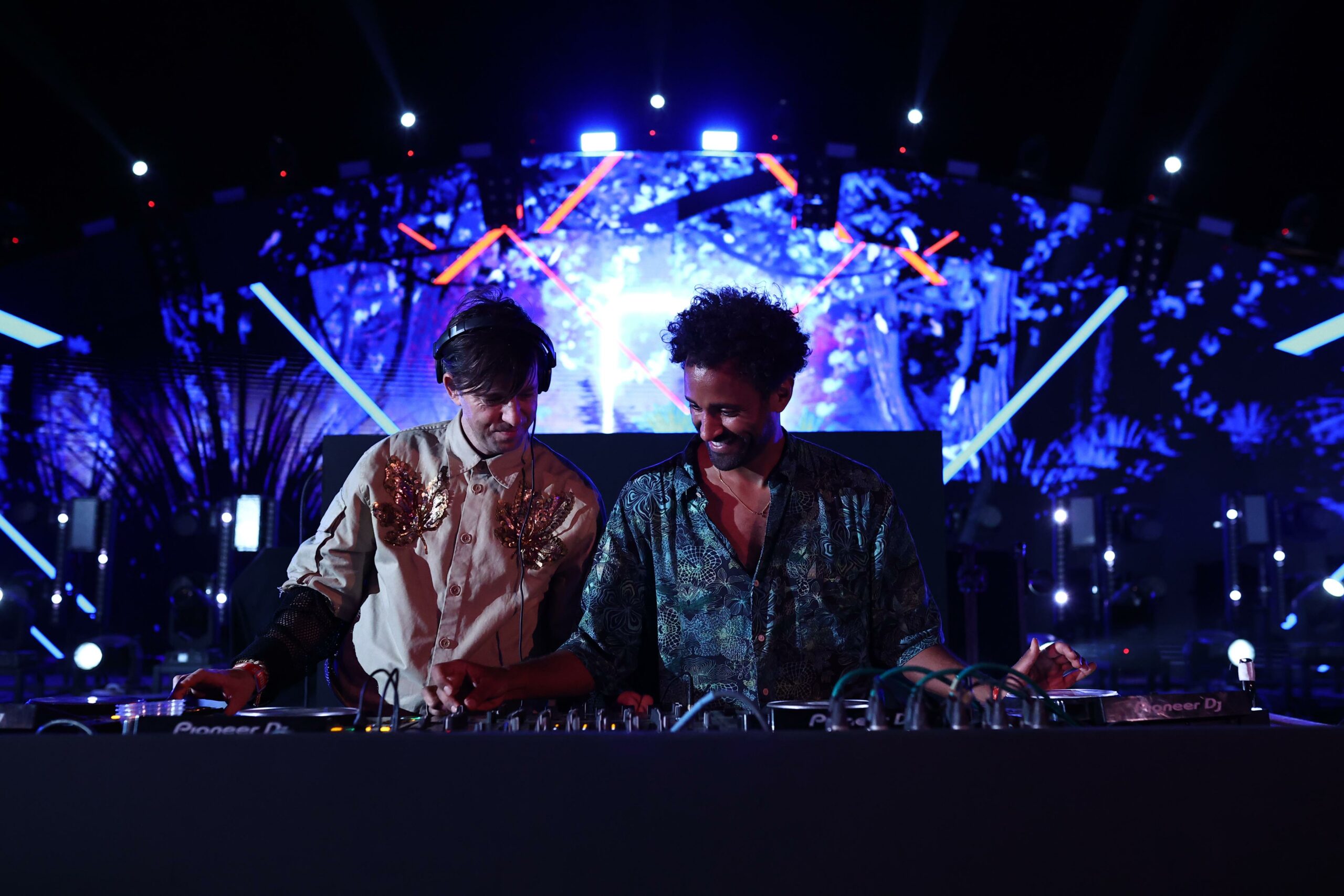
By stepping back from typical festival hierarchies—it has essentially trained its audience to listen differently. We have become accustomed to a world where music is something to scroll through rather than stay with, making the act of committing to a single sound for hours feel almost foreign. Sandbox, on the other hand, is a festival structured for immersion, a space where attention is held together and sustained. “Sandbox really is about stripping down the essence of it all: music and people,” El Khachab tells YUNG.
This methodology goes beyond the way we spend a night out or how we party. In fact, it’s a reflection of how our collective focus has evolved. Over the last twenty years, our social cognitive capacity has been put through a hydraulic press. In 2004, the average person could stay on a single screen for about two and a half minutes. Today? We’re lucky to hit 47 seconds.
Our distraction has evolved into something bigger; we are fragmented. We process over 5,000 pieces of content a day, a relentless cycle of scrolling and tapping that has trained our brains to value the ‘burst’ over the ‘build’. Even our preferences have rewired themselves to fit this rhythm—Gen Z audiences now favour videos under 20 seconds, with engagement falling off a cliff the moment a clip lingers too long.
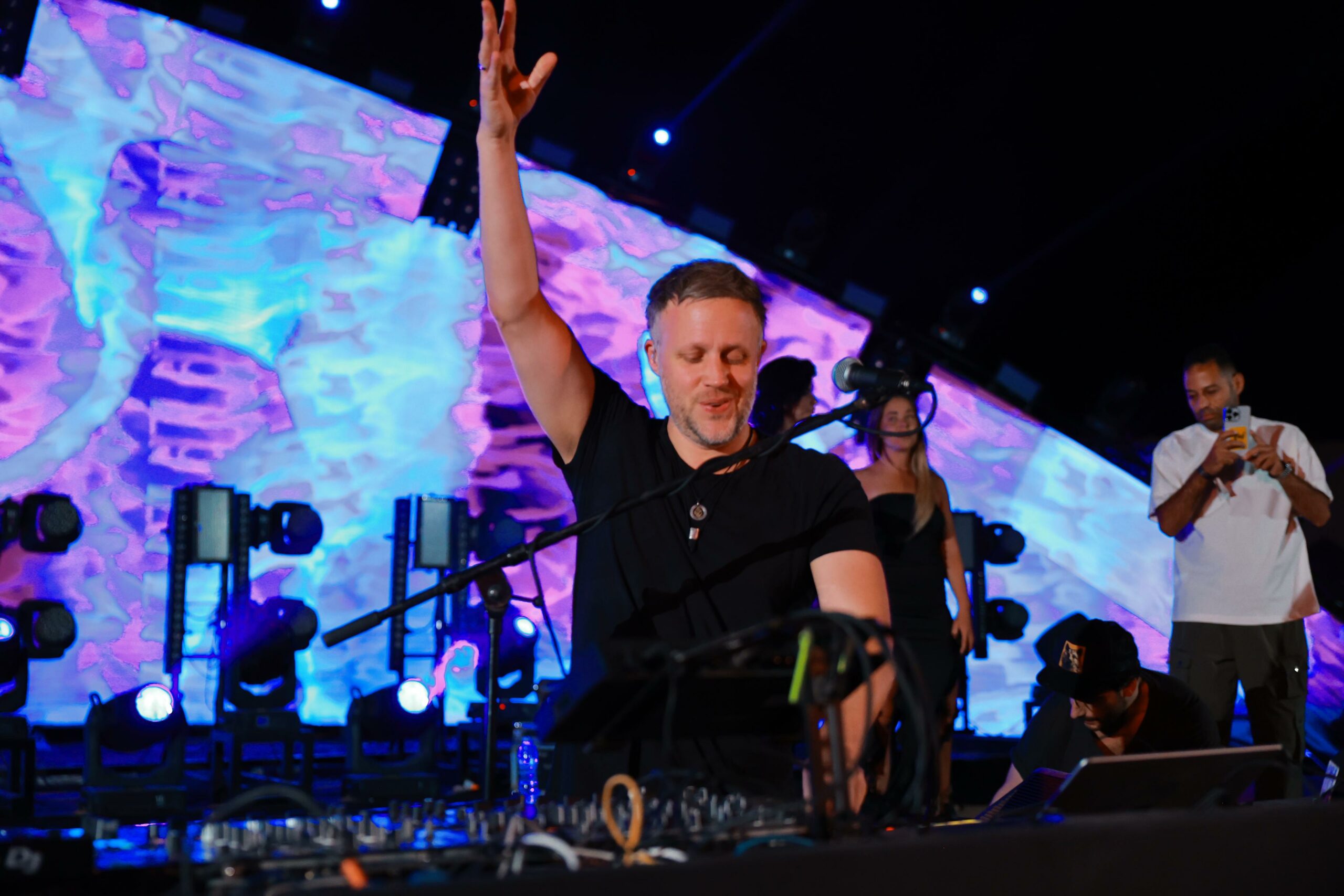
This evolution has fundamentally reshaped how we experience music. We discover songs in fragments, reduce four-hour sets to ten-second highlights, and filter entire nights out through the lens of what’s ‘shareable’. The logic is the same everywhere: faster, shorter, more immediate.
But as we’ve reached peak acceleration, a conscious slowing has started to form. The same digital immersion that eroded our attention has also made us painfully aware of its absence. We’re starting to realize that you can’t actually feel something if you’re already looking for the exit. There’s a growing hunger not just to consume, but to be present—to stay inside a moment long enough for it to actually mean something.
At this point, Sandbox becomes a necessary correction. By prioritizing extended sets and moving past the “headliner” hierarchy, the festival fosters a space for deep engagement, offering a substantive alternative to short-form culture. At a time shaped by the “next” button, Sandbox asks for the opposite: duration, presence, and the simple yet increasingly-difficult act of staying put.
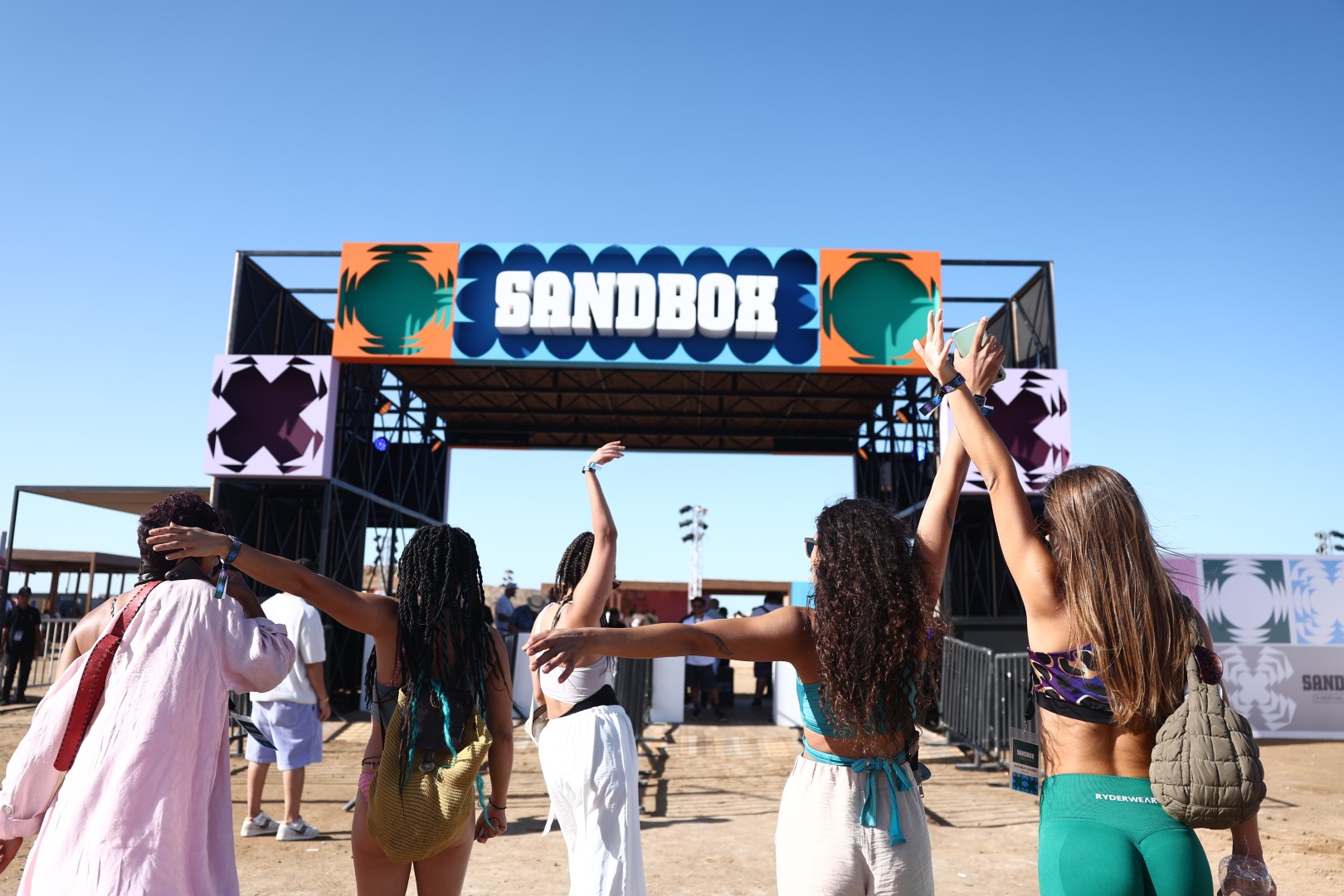
“When ego gets involved, either on the listener’s side or the artist’s side, the two-way communication vital to a fulfilling festival experience disappears,” El Khachab reveals. “At Sandbox, the aim is always to keep that line of communication alive.” The festival is built around five main stages and three micro-stages, but the real magic is in how they coexist. Each space is carefully curated with a distinct sonic identity and physical environment, designed so that no two stages ever compete for your ears.
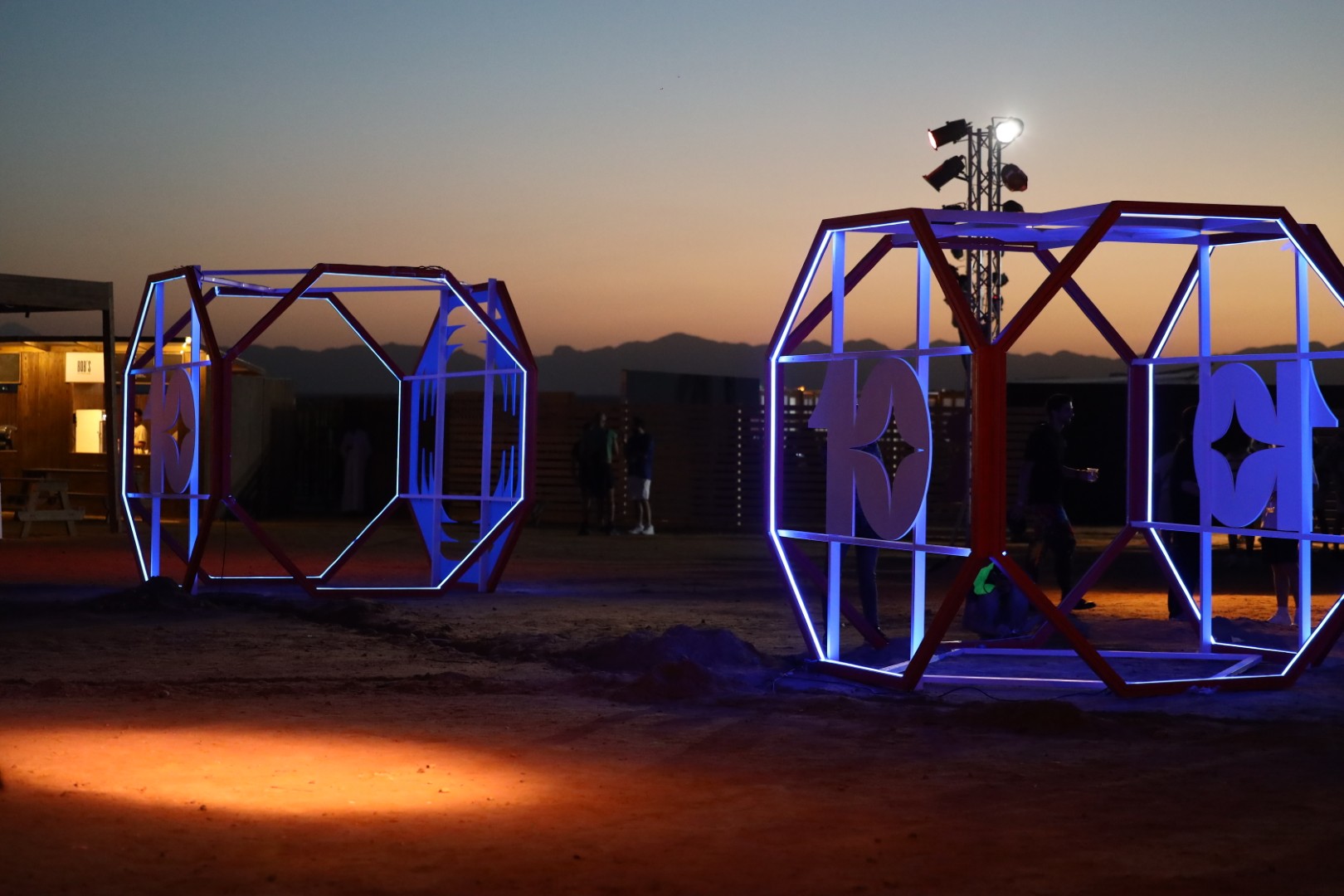
Every year, the festival site is physically reshaped with over 1,000 truckloads of sand to create massive, purpose-built sandbanks. More than just aesthetic choices, they are highly effective acoustic barriers engineered to absorb and isolate sound. It’s this massive logistical undertaking that allows the nocturnal heartbeat of the Sandbox Stage to thrive alongside the intimate, rhythm-forward storytelling of the Groovebox, or the daytime energy of the Beach Hut, without a single note of audio bleed.
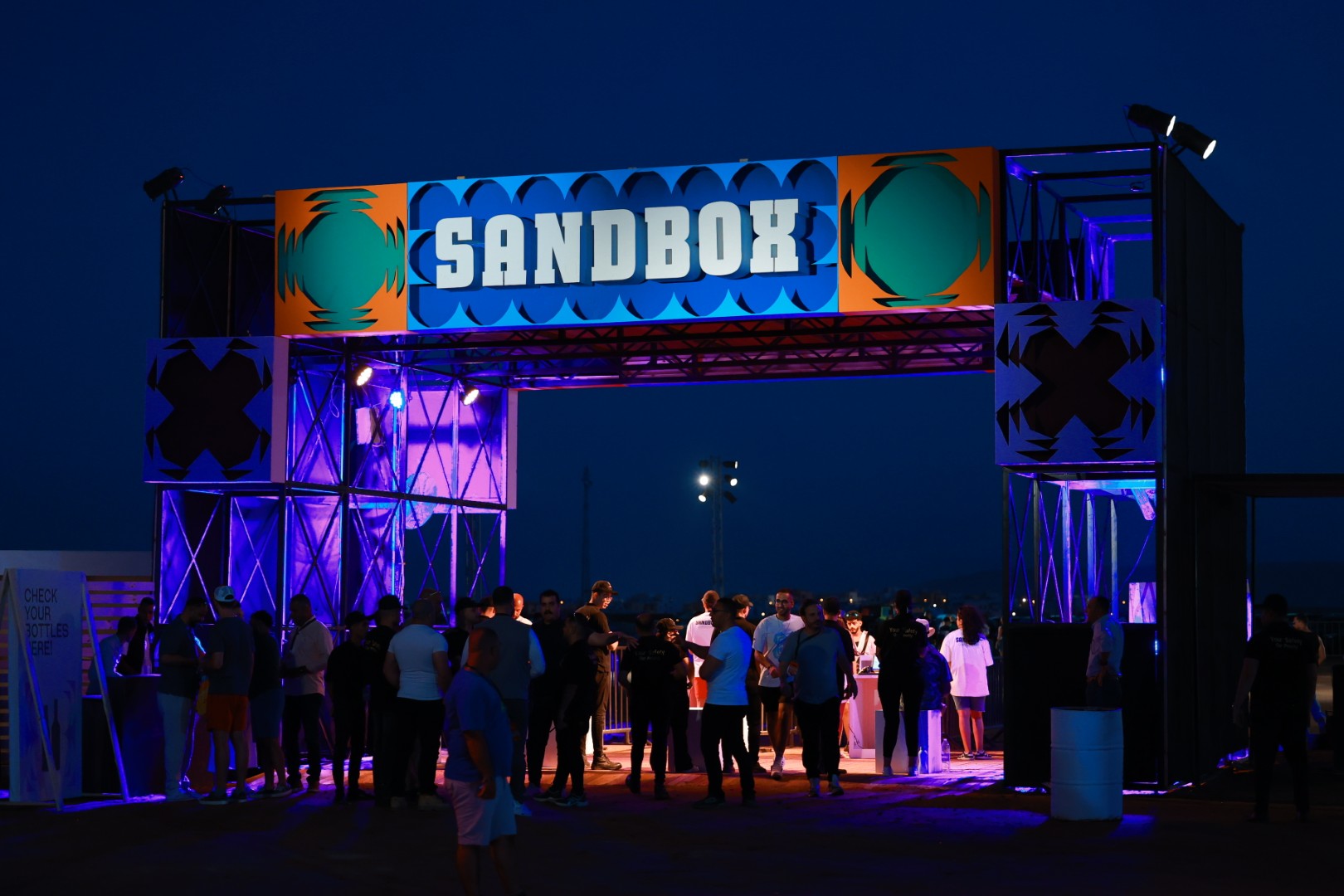
From 1 PM until the early hours of 5 AM, the landscape functions as a seamless, intermingling ecosystem. Whether you’re at the Playground—where a team of visual artists live-operate large-scale screens—or tucked away at the Secret Stage for a spontaneous discovery, the sound remains surgical. Even the micro-stages, like the vinyl-led Record Box and the regional showcase at Select Box, maintain their own world. By treating sound design as a physical construction project, Sandbox ensures that the music is felt in total isolation.
Against a system where the independent festival model faces mounting commercial pressure from massive, state-backed competitors, Sandbox occupies a unique space. It remains founder-owned, institutionally un-backed, and editorially independent. That positioning—which was once simply a reflection of how the festival was built—has become, in 2026, a definitive statement. There is a rare power in a project that answers only to its own community and the music it champions.
Our attention changed, but so did the way we relate to each other. The pandemic kept us glued to our screens and, in the process, flattened the music experience. For two years, “live” meant a livestream. Sound became something isolated and sterile, stripped of the physicality, the sweat, and the glorious unpredictability that makes a crowd feel alive.
When the world finally reopened, we flooded venues. By 2023, the global live music industry rocketed past $30 billion, blowing past pre-pandemic records. This went beyond revenge spending sprees—it was a desperate search for collective presence. A simple show wasn’t enough; people were looking for the visceral, unspoken rhythm of being surrounded by strangers moving in sync.
There’s a subtle but massive distinction here. It used to be that just “showing up” was enough. You’d watch the stage, then you’d leave. Now, there’s a deeper hunger unsatisfied by flat surface-level moments. The value isn’t just in who’s on the line-up; it’s in who you’re standing next to when the sun comes up. We’ve realized that you can’t download the feeling of a community forming in real time.
The festival treats the crowd not as a passive audience, but as the main event. We’ve spent years forced apart, and Sandbox rebuts that: the best experiences aren’t something you consume—they’re something you build together, on the ground, in real time. “From the moment I step behind the decks, I can feel it—the crowd isn’t just there, they’re in it with me,” Aly Goede, Egyptian DJ and artist booker, shares with YUNG. “It’s one of those rare spaces where I don’t have to hold back or fit into a box. I can take them wherever I want to go, play everything I’m truly into, and they’re right there riding the wave with me.”
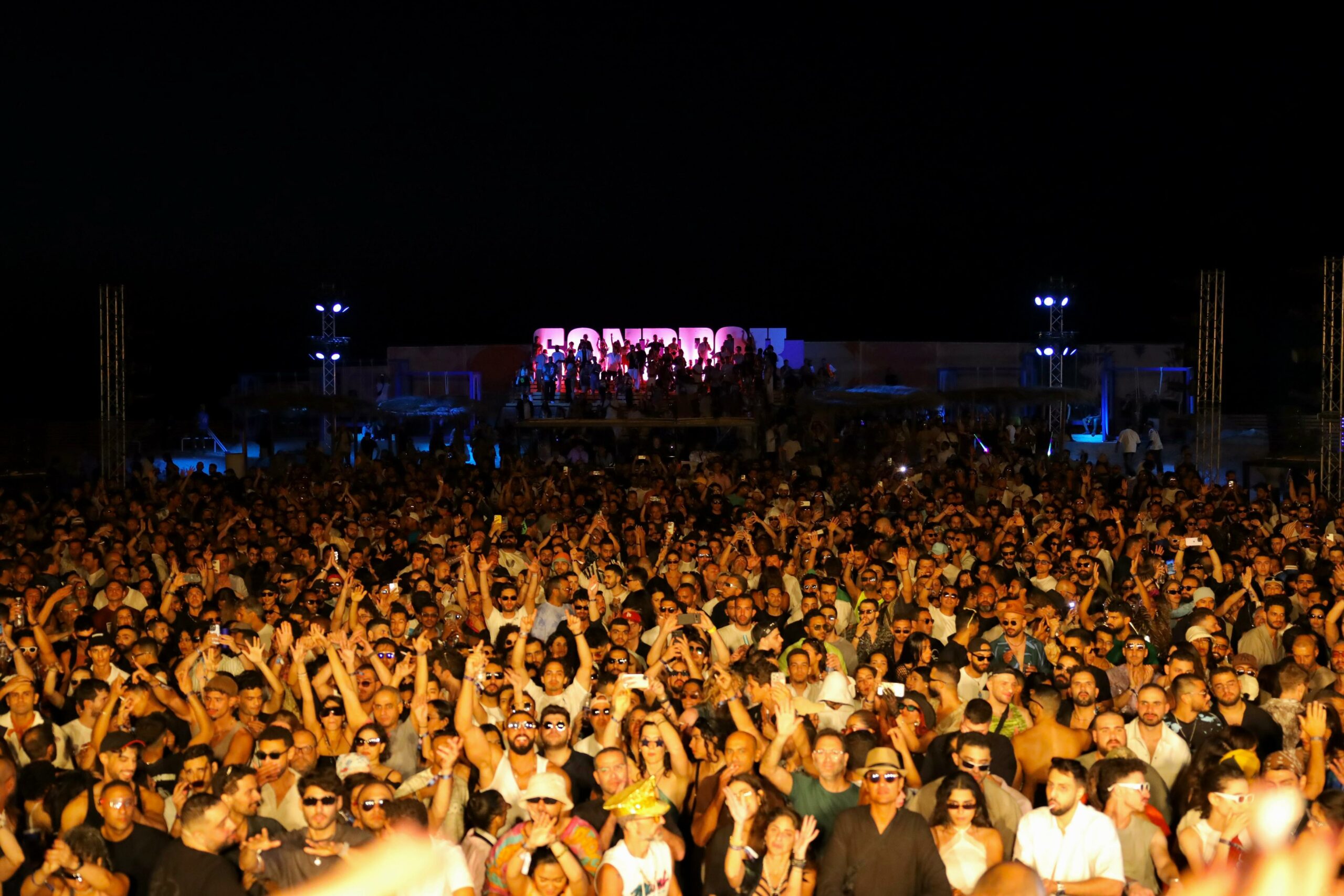
This is where Sandbox’s design feels particularly intentional. Most festivals talk about community while simultaneously building walls—backstage passes and metaphorical velvet ropes that chop the experience into fragments. “In this region, festivals with strong human connections are rare,” the founder shares. “If a festival is simply programmed to draw, it becomes the equivalent of a social media feed, run by algorithms.”
In El Gouna, Sandbox operates from a location that, until recently, sat outside the usual circuits of global electronic music. Part of that dynamic is shaped by where it exists. Misty, an Egyptian DJ and producer, speaks on the topic, “Because of its location, curation and community, you immediately feel at home. By the second day, nobody is a stranger. I’ve always said it’s my favorite weekend of the year and I really mean it.”
Building that kind of credibility from Egypt required a different kind of patience—one where artists arrived out of curiosity, returned through trust, and gradually embedded the festival into global touring circuits. If artists came out of curiosity, they came back because it worked—because the crowd listened, because the format held, because the experience translated. As for audiences, visibility wasn’t immediate—it had to be built through repetition, word of mouth, and the slow accumulation of quality and expectation.
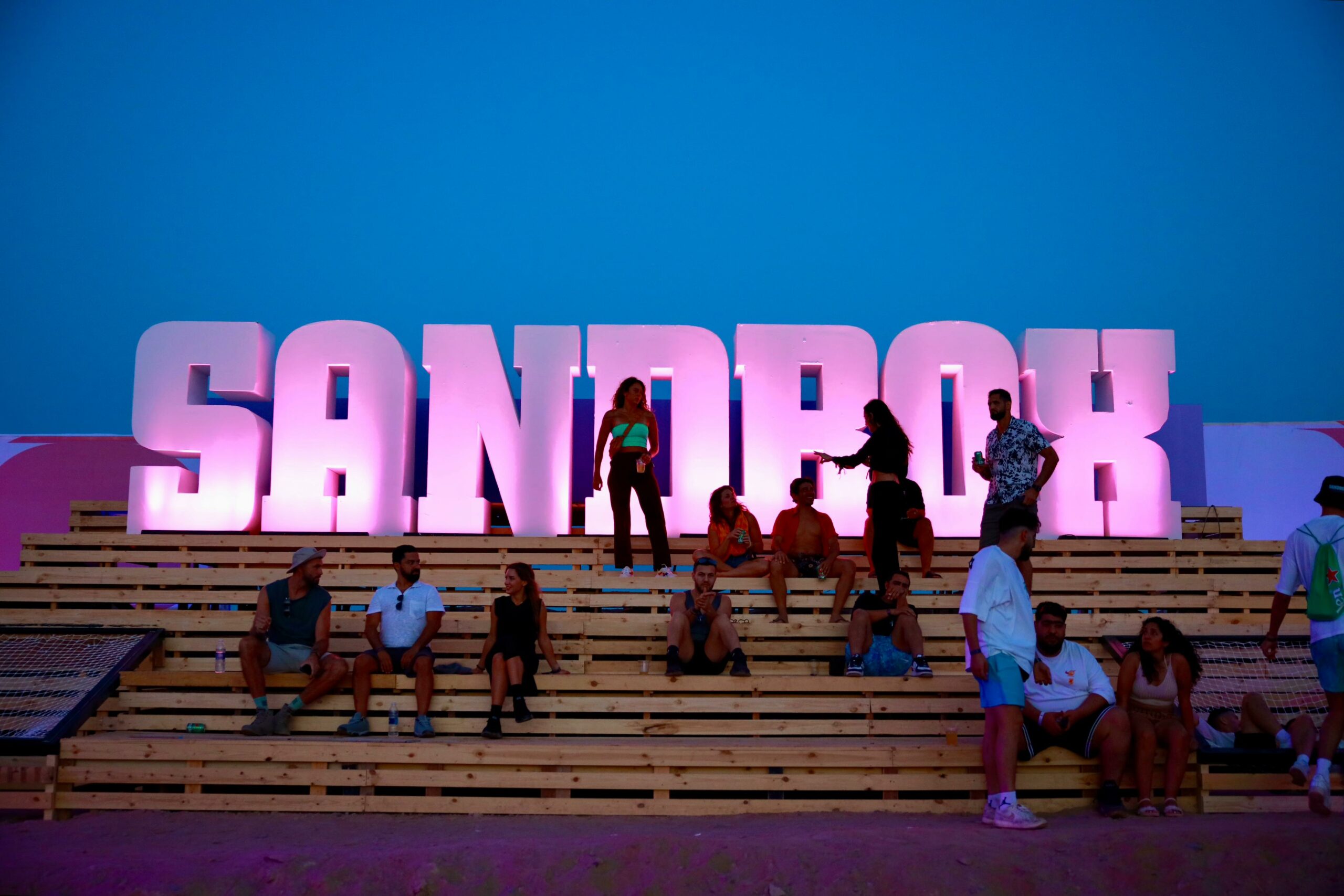
By the time 2024 rolled around, the festival celebrated a tenth anniversary that felt like a global coronation. Bringing names like Paul Kalkbrenner, Dixon, DJ Tennis, TSHA, and Soichi Terada to the sand was described by founder Tito as “surprising and humbling”—the ultimate proof that an independent Egyptian project could command the world’s attention. Since then, the momentum has only gone wild. 2025 saw the debut of AIRBOX, a Middle East first that turned the journey itself into part of the curation with a party plane from Dubai to El Gouna.
That tension—between the intimacy of the past and the scale of the future—is becoming harder to ignore. What started as a tightly-knit boutique gathering has evolved into a powerhouse in its 12th edition: over 100 artists, eight stages, and 72 hours of non-stop programming. “11 Sandboxes in, and somehow it still surprises me every single time,” Nour Fahmy, a Cairo-based DJ and self-proclaimed ‘professional raver’, shares on the topic. With the launch of Sandbox Selects in Dubai and a growing trophy case of international press, the Sandbox name has outgrown its local secret status—it’s now a global brand.
Growth is inevitable, but it brings a small, nagging contradiction. The very scale that gives a festival its platform risks diluting its soul. When a line-up explodes and the crowd doubles, you start to lose the collective coherence that made the early years feel so electric. New audiences bring new expectations, and expansion brings a different kind of pressure.
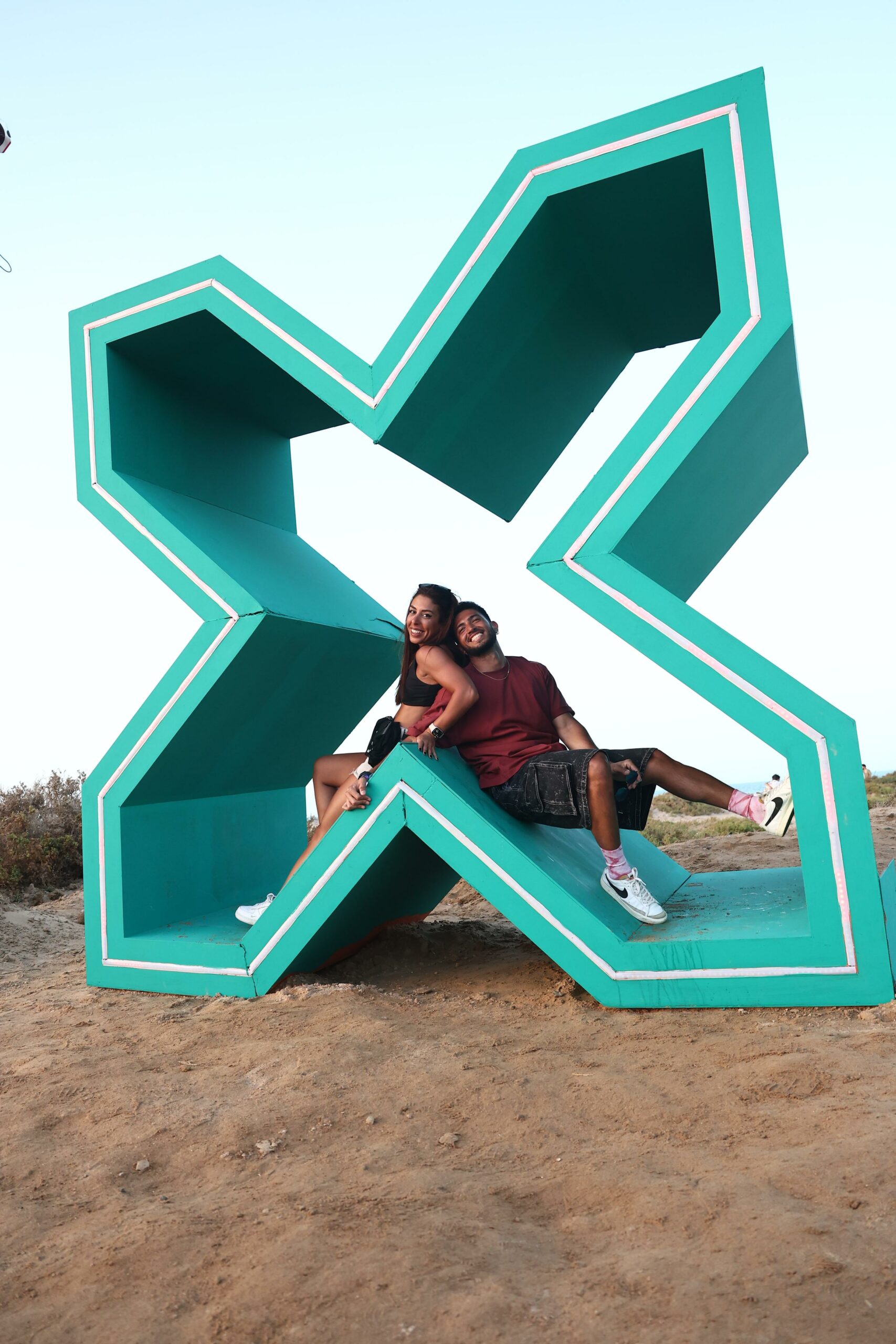
Can you scale subculture? The real question isn’t whether Sandbox can grow—the data shows it already has. The question is whether a festival built on resisting hierarchy, speed, and spectacle can survive once it starts to resemble the giants it originally set itself apart from. “We intentionally control our growth year on year,” El Khachab adds. In this world, “independence” is about more than who signs the checks. It’s about whether the experience can stay deliberately slow and carefully curated while the demand for it moves at 100mph.
The word escapism usually sounds passive—like a retreat, or a weakness. Here, this experience isn’t about running away from the world, but committing to a more intentional version of it. It’s three days where music actually dictates the rhythm of life, surrounded by a community that was curated with real care. The physical environment—the Red Sea, the desert, the open air—does the heavy lifting that no indoor venue ever could.
Up until now, Sandbox has managed this tightrope walk through sheer control: keeping capacity tight, being selective with the crowd, and refusing to compromise on the format. But as the festival’s influence spills over the borders of El Gouna, the challenge is shifting. Starting it was one thing—keeping it as it is is another. Building something for the scene is the easy part; making sure it doesn’t eventually turn into just another “product” is the real test.
For more stories of music from around the region, visit our dedicated archives and follow us on Instagram.