It seems I keep finding myself coming back to the same problem over and over. Identity.
How it’s treated. What we are doing with it. What is being done to us through it. The discourse around the diaspora. The politics of the language of representation. Something is imploding.
I think identity is often treated as a destination when it is, in fact, a condition, something lived, shaped by constant internal and external pressures. It is a continuous, life-long negotiation between who we understand ourselves to be and the gaze that insists on naming us.
We inherent names and identities before we understand them. We are passed down nations and religions, languages and traditions. We are born into names. And they arrive carrying histories and expectations.
Some of these identities we make our own; some we are made into. The hard part is to tell the difference between the ones that help us understand ourselves and the ones which are put forward for us to play into, so that others can understand us. Sometimes it is a mix of both.
So, when it comes to music, and particularly music by people who were pulled into this language of representation, we all know by now that the identity that arrives does not present itself pure. Before the music reaches our ears, it must first pass through many filters. It gets packaged, softened, sharpened and translated back to us in a way that makes it all easier to understand and place. There is a flattening.
In the diaspora post 9/11, particularly in the U.S., Arabness went from being a simple cultural hand me down to a site of study and prodding. And over the decades, we saw it morph into something we increasingly needed to defend and humanize just to survive in a world where visibility has become the main currency. That backstory sits behind a lot of the language of representation we see used in music today. For the diaspora it was about surviving the West with the tools they had.
And now, artists from both the region and its dispersions have found themselves pulled into a framework or script that rewards them for how well they perform their humanity and how carefully they narrate their pain. And yes, of course, there is catharsis in this for listeners and yes, it is processing and self-expression. That is important for a people isolated from their homelands and a new generation that did not choose to be born there and is genuinely trying to connect with its roots. This is all important and valid. I feel a lot of people in the MENA region do not always grasp the layers and contradictions of living in the same country that is actively destroying your homeland. Identity is what you grasp on to when you are so physically distant. Perhaps we need to cut our diaspora brothers and sisters some slack and realize we are all victims of the same system, but within different dynamics and contexts.
Having said that, the predominant nature of this identity-first approach and its dominant framework has to make us look more critically at the nature of this exchange itself. What are we gaining from this visibility? And what are we giving up to receive it?
The West is simultaneously deeply implicated in the destruction of the Middle East while also functioning as the global music authority that measures and supports the circulation of this music and cultural production.
And when that script is good enough and compelling enough, Western institutions can reward and award them without having to interrogate the structures that made these narratives necessary in the first place.
Representation is most readily accepted when it can be understood without disturbing these structures. The artist becomes visible, but that visibility doesn’t necessarily translate into freedom. At times, it can end up shaping the boundaries of what can be seen and said. So here, visibility ends up becoming its own form of containment.
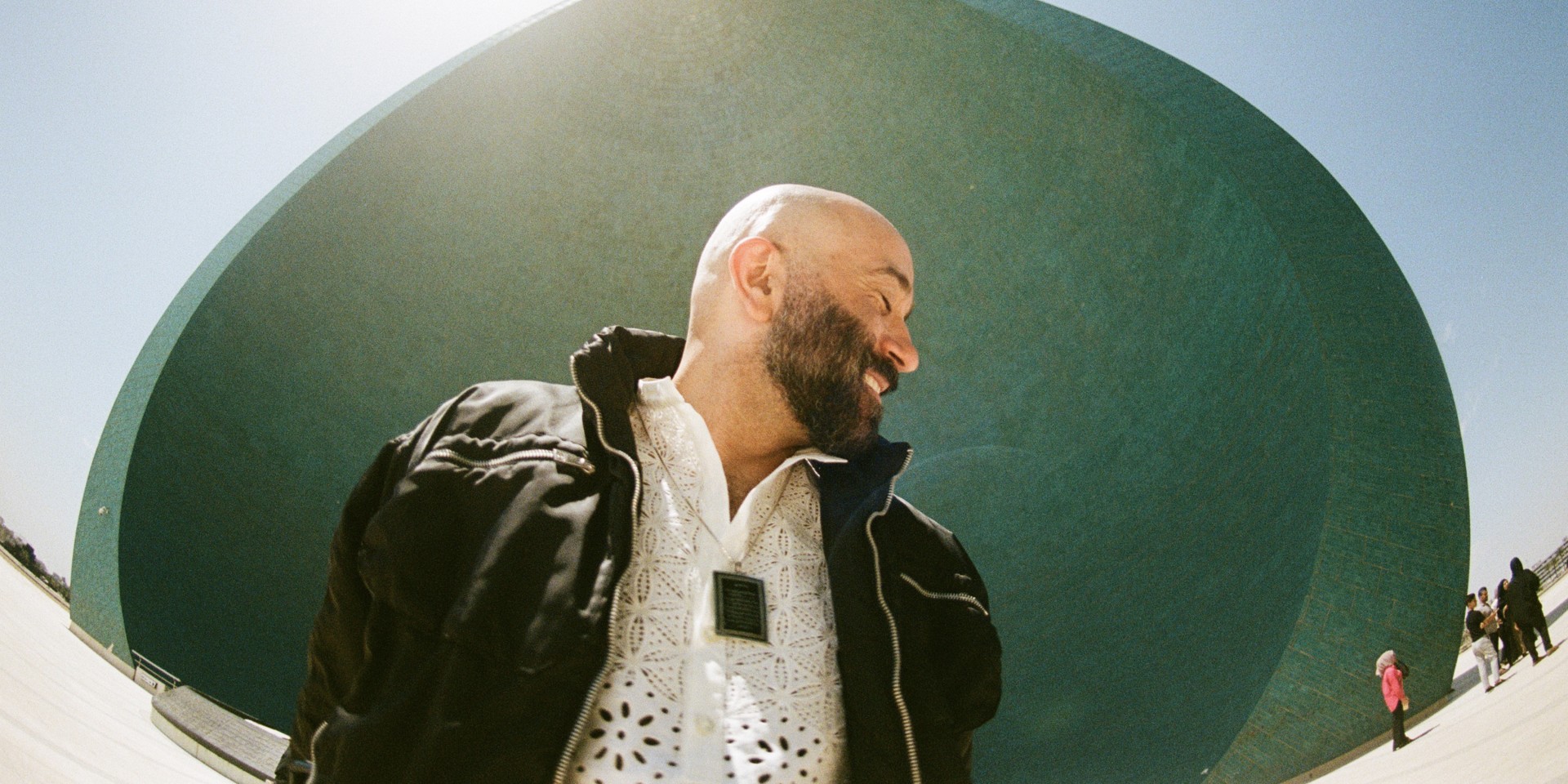
NARCY understands these dynamics intimately. Not as an abstract idea or a theoretical concern, but as someone who has spent two decades moving through the music industry and experiencing its structures first-hand.
To Be An (Arab) is an album, certainly, but it does not really behave like one. It feels like a long conversation taking place with the self. A conversation and negotiation that stretched across years and continents, grief, faith, and contradiction.
The album’s 28 tracks are split between themes of darkness and light, masculine and feminine, emotional collapse/spiritual reorientation. Across one hour and a minute, Yassin Alsalman, or simply NARCY, proceeds to stage a full-blown confrontation with the systems that have shaped him. Industry, empire, masculinity, diaspora, digitality, performance.
The album is a study of the box before it becomes a search for what exists outside it.
That framework is built directly into the structure of the record. Framed as a conversation with an AI therapy bot named N.O.O.R., who is voiced by DJ Nooriyah, NARCY uses artificial intelligence as a metaphor for contemporary existence itself. Throughout the record, the human voice keeps fighting to remain intact within a web of systems that is designed to flatten any sort of complexity into a consumable form.
It’s a tension that runs through the veins of the project. Eventually it arrives at questions of identity and representation, and who gets to define both.
“American identity politics are at the centre of many people’s reflection in the mirror. I found that many Muslim and Arab artists coming out of America had to contend with the tsunami of imagery bombarding their life after 9/11 and when we finally were afforded the space to move in media, many of them thought – this is the time to counter those images. The problem with that, in this era, is that you become a panderer and are addressing a white gaze that no longer needs to be addressed,” NARCY shares.
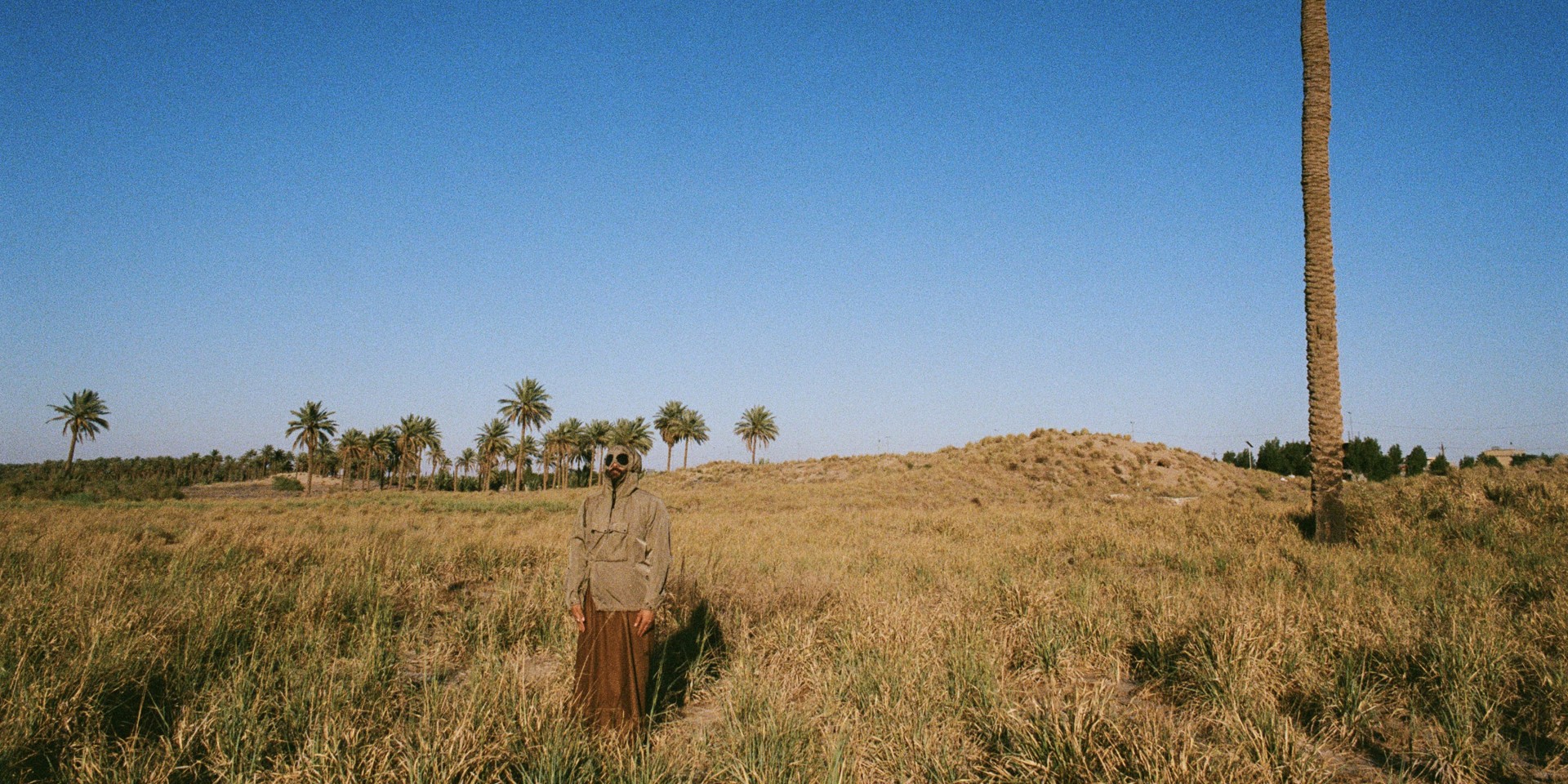
Behind these words is a deep fatigue. It’s the perspective of someone who has spent decades watching the idea of identity be twisted into both a means of access and a set of expectations. A trap.
He references Homi Bhabha’s idea that Western systems simultaneously accept and contain culture with a metaphor: the “first Arab artist” narrative is not liberation but a form of controlled admission. A diversity benchmark. The institution gets to claim progress while leaving its underlying logic largely untouched. Yes, the artist gets access to the room, but the architecture remains pretty much the same.
This feels so relevant today as Arabness and “MENA” as an identity are becoming increasingly sellable within the global music ecosystem. Just like any other culture, Arabness circulates easily and quickly when it is reduced down to an aesthetic marker. Enter the sample, the keffiyeh, the belly dance reference, the melancholic oud loop over electronic drums. Yes, they are part of us. But not all of us. They are fragments and they are real, but they are detached from the density and complexity of the worlds they came from. They are agile because they don’t require that much context.
At one point, he says, “There are artists in our community who are literally belly dancing, some are sexualizing resistance, it’s a million and one habibis out there. We again simplified and commodified instead of expanding our universe into the beauty and diversity that it is.” Whether one agrees with him or not, to me the comment does not feel like NARCY is trying to police cultural expression. He is just rejecting this narrowing of cultural possibility that is happening. It is about the way certain symbols of Arab identity have become disproportionately representative. And as they get more popular, these symbols start functioning as cultural shorthand.
And yet To Be An (Arab) is not anti-identity. That would be too simple for all the work put into this. As I like to say, what you are running from, you are running to. If you hate something, you are still attached to it in a way. It is another kind of captivity. And uncovering that projection is the work.
The album is actually obsessed with identity. It circles it constantly, but it doesn’t stay there. He keeps returning to the distinction between telling identity and selling identity. “I don’t want to be defined by it or to be consumed for it. I want it to just be. To Be.”
The album itself moves through contradiction as part of its nature. He describes the structure almost cosmologically, “Disc 1 deals with the dark and Disc 2 deals with the light, the masculine and the feminine nature of my life, the Gemini, the duality I constantly functioned in. Side A is the problem and side B is the solution – the journey of an Emotional Man in Artificial Times.”
The phrase “Emotional Man in Artificial Times” feels larger than the album itself. Because beneath the politics of representation sits another current running through the project: masculinity. Or more precisely, what masculinity and emotional life become inside systems that are built on extraction by nature.
And there is grief written all over this record. The slow exhaustion of negotiating oneself through these institutions. “I was always aware of them as a Media professor and an avid reader, but I became more aware of the programmed ones after I went to grief therapy. Even in my choice of therapist, I went to someone who is from our culture so I could skip the step of having to educate someone about our customs, our rituals, our limitations and our self-imposed shame.”
That sentence contains an entire sociology of diaspora masculinity. The exhaustion of the translation of explaining cultural pain before even reaching the personal pain. And maybe that is what the album attempts formally. To move beyond explanation.
Even the way he released the project rejects the conventional industry logic almost entirely. He toured the album without performing it traditionally. He played it for audiences, gathered feedback, returned and altered it. The vinyl existed first. The streaming came later on. He decentralized his own image from the visuals. He released the project for free on a Palestinian-owned platform before wider distribution.
These gestures matter because they are infrastructural ones. “I reverse engineered the release to undo my own trappings of how music is consumed. I re-valued my art, I set my own deal terms, I went out and got it.”
The phrase “reverse engineered” stays with me. So much of music culture feels optimized toward frictionless consumption but To Be An (Arab) resists that velocity intentionally.
The vinyl format, the art installations, the bookshop ecosystem around MAKTABA, the decentralization of celebrity – all of it points toward an attempt to rebuild artistic space outside of the dominant platforms. NARCY repeatedly returns to the idea that existing institutions cannot be reformed meaningfully because their foundations remain extractive. “I do not believe in changing this system anymore, I believe in exposing it. I believe in building new systems,” he says.
Especially now, when we are witnessing independent culture being swallowed up by monopolized infrastructures. The same infrastructures that pretend to enable freedom while they quietly centralize power. In that context, MAKTABA feels important. It feels important as an argument. As a refusal to wait for institutional permission.
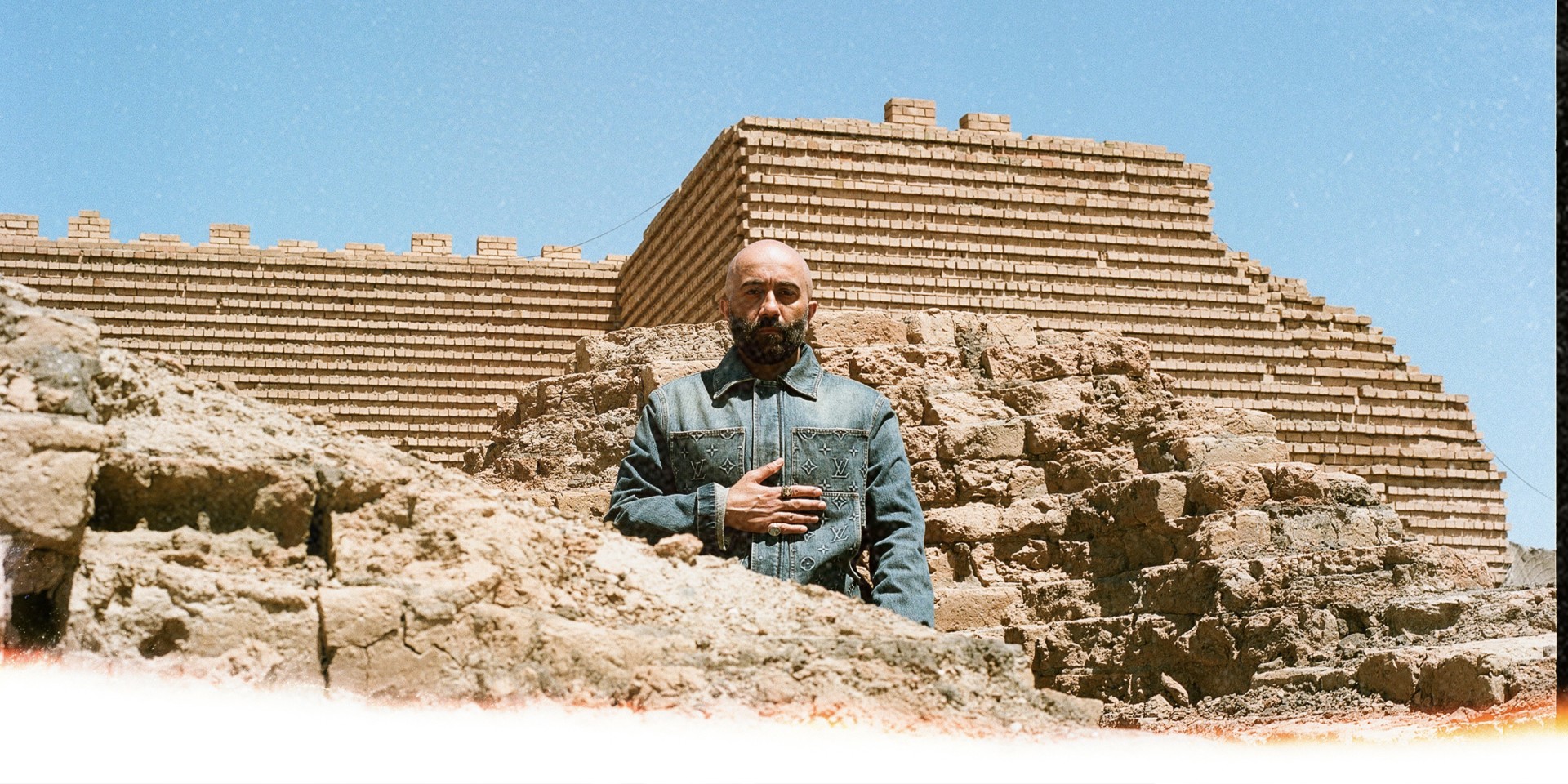
NARCY knows it is more important to build these community-owned ecosystems rather than to seek out the validation from Western cultural power centres. “If I do enter those spaces, it has to be under my terms not theirs,” he says. Wrapped inside that statement is an older political language – sovereignty over inclusion. And sovereignty is perhaps the hidden subject of the album. The right to exist outside the violent simplifications that are imposed on us.
At one point, I ask him what the “box” is made of. He responded, “The box is made of the limitations of the public gaze. It is made up of what people need to consume you and feed off you and understand you and how we appease that. It is not made of natural self. It is made from the prism of other people’s vision of who you are. It is made from the prison of the Empire.”
As much as the album is about escaping the confines of categorization, it is also about trying to recover interiority.
That recovery happens musically too. Across the record, voices blur and flow between the organic and digital. Raw vocal takes slowly become processed, layered and fragmented. The self becomes increasingly mediated through technology until intimacy begins to sound synthetic.
But there are interruptions. His daughter appears. And his parents. Fragments of lineage surface inside the machinery. Inheritance breaking through the algorithm.
Each collaboration appears tied to a story, a relationship, or a personal history. In the case of Ziad Rahbani, the connection stretches back more than a decade, carrying its own archive. “The sample came to me on a cassette from Syria over 15 years ago. I listen to that song so much and finally had the courage to find Ziad and ask him.”
That detail says everything about how the album operates. Music here is accumulation and migration. Memory moving through objects.
This is also why the album’s length matters. Twenty-eight tracks. Twenty-eight as Saturn return. Twenty-eight as completion and recurrence. He describes the number in an almost mystical way, finding himself researching its symbolic weight after repeatedly encountering it.
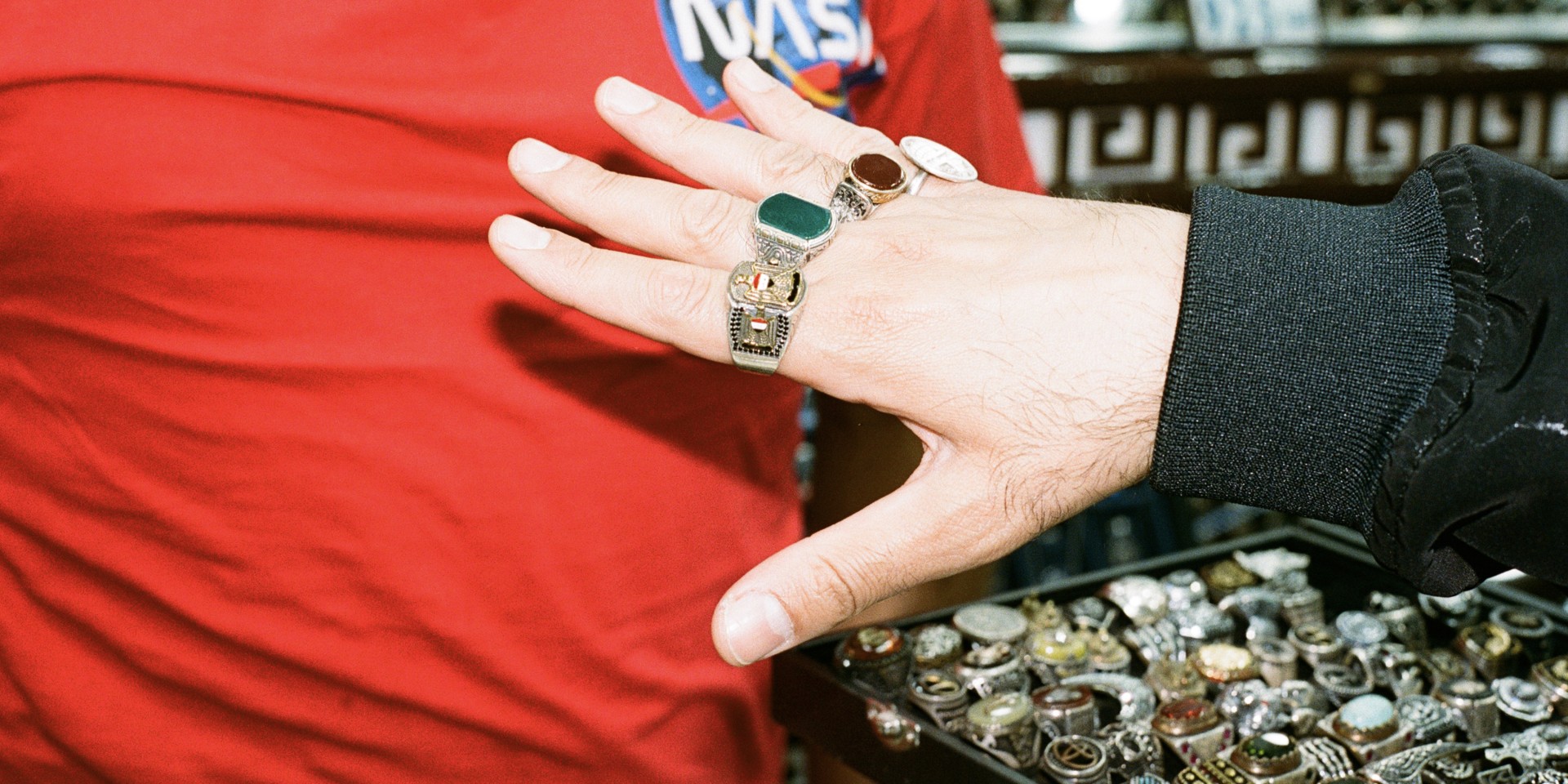
Sometimes numerological framing risks collapsing into pretension, but here it works because the album already functions through cycles: grief and rebirth, ego and surrender, public self and private self.
Even the evolution from “The Narcicyst” to “NARCY” to “Yassin” follows that arc. When I ask him how the name feels now, his answer is gentle and honest. “I had to shed the superhero I built to protect myself in the rap space.”
The narcissism was the ego speaking, trying to armour up. And maybe this album is what happens when the armour finally becomes too heavy to carry.
And yet the album does not end in cynicism. That is important. Underneath all its critique, To Be An (Arab) is strangely hopeful. Not optimistic. There is a difference. Optimism assumes the system will improve. Hope begins after that illusion dies.
At the end, after reading over his answers and immersing myself in the world of this album, what remains most striking is not his anger toward the industry or his exhaustion with representation politics.
It is his insistence on tenderness and beauty. On the possibility of creating differently. He says: “I love my people and my culture and my heritage and it is at the core of who I am and I no longer want to defend it, I want to flower it and grow it naturally and beautifully.”
Maybe that is what To Be An (Arab) ultimately reaches toward: a form of existence beyond reaction. A space where Arabness no longer needs to appear as spectacle, trauma, proof, or commodity in order to matter.
Toward the end, he zooms out: “At the end of the day, I have to face Allah, not the editorial teams that dictate what breaks through and what doesn’t.”
And with that, much of the album rearranged itself for me. The industry critique and the dismantling of persona. The search for creative sovereignty and the insistence on ownership. Even the repeated questioning of identity itself.
All of it leads back to accountability. Not public accountability. Divine accountability. For him, they are ultimately ethical questions. Questions of alignment and responsibility. Questions of whether one’s work, relationships, and ambitions answer to conviction or to recognition.
And that is where, I believe, his rejection of these externally imposed identities begins and ends. If the final point of reference is divine accountability, then institutional validation loses some of its authority. The gaze that categorizes, rewards, includes, excludes, or commodifies no longer occupies the highest position in the hierarchy.
Which is perhaps why the album feels heavier than most contemporary rap records dealing with identity. Beneath its critiques of lies a more fundamental inquiry. How does a person remain truthful to themselves and when so many systems benefit from defining them otherwise?
In that sense, the album’s central gesture is return. A return to a source of value that exists outside the market and the endless negotiations of visibility. What emerges on the other side is the possibility of inhabiting identity without becoming confined by it.
Listen to it here.
For more stories of music from around the region, visit our dedicated archives and follow us on Instagram.