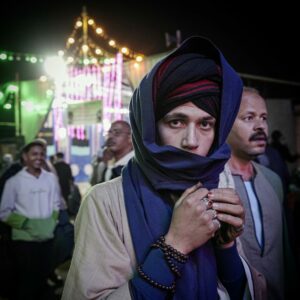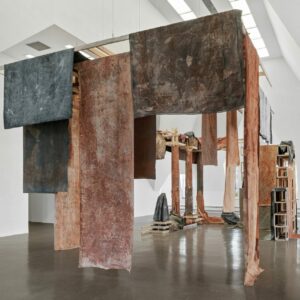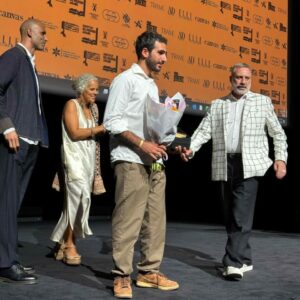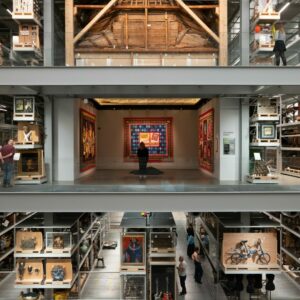
At CONTINUUM ’26, technology rarely behaves like a neutral tool. It remembers, watches, repeats, responds and occasionally seems to acquire a presence of its own. Across virtual realities, AI-generated works, immersive environments, moving images and machines, 16 emerging artists are using some of contemporary art’s newest technologies to ask questions that are considerably older: what do we remember, who holds power, where does the body end and technology begin, and what happens when human behaviour becomes part of a system?
Running at Diriyah Art Futures in Riyadh until November 7, CONTINUUM ’26 brings together the work of the second cohort of DAF’s Emerging New Media Artists Programme. Developed over a year under the mentorship of artists Louis-Philippe Demers from Canada and South Africa’s Rick Treweek, the exhibition includes artists from Saudi Arabia, Egypt, Kuwait, Yemen, Uganda, China, India, Mexico and more.
For an exhibition filled with technologies synonymous with what’s next, CONTINUUM ’26 is surprisingly preoccupied with things we have always carried with us: memory, place, power and the body.
Curated by Irini Papadimitriou alongside assistant curator Bushra Alghamdi, CONTINUUM ’26 moves between realities that are becoming increasingly difficult to separate — human and artificial intelligence, physical and virtual existence, organic life and synthetic systems. The exhibition approaches tensions around technology through four looser threads: memory; systems of power; the body and perception; and repetition and collective experience.
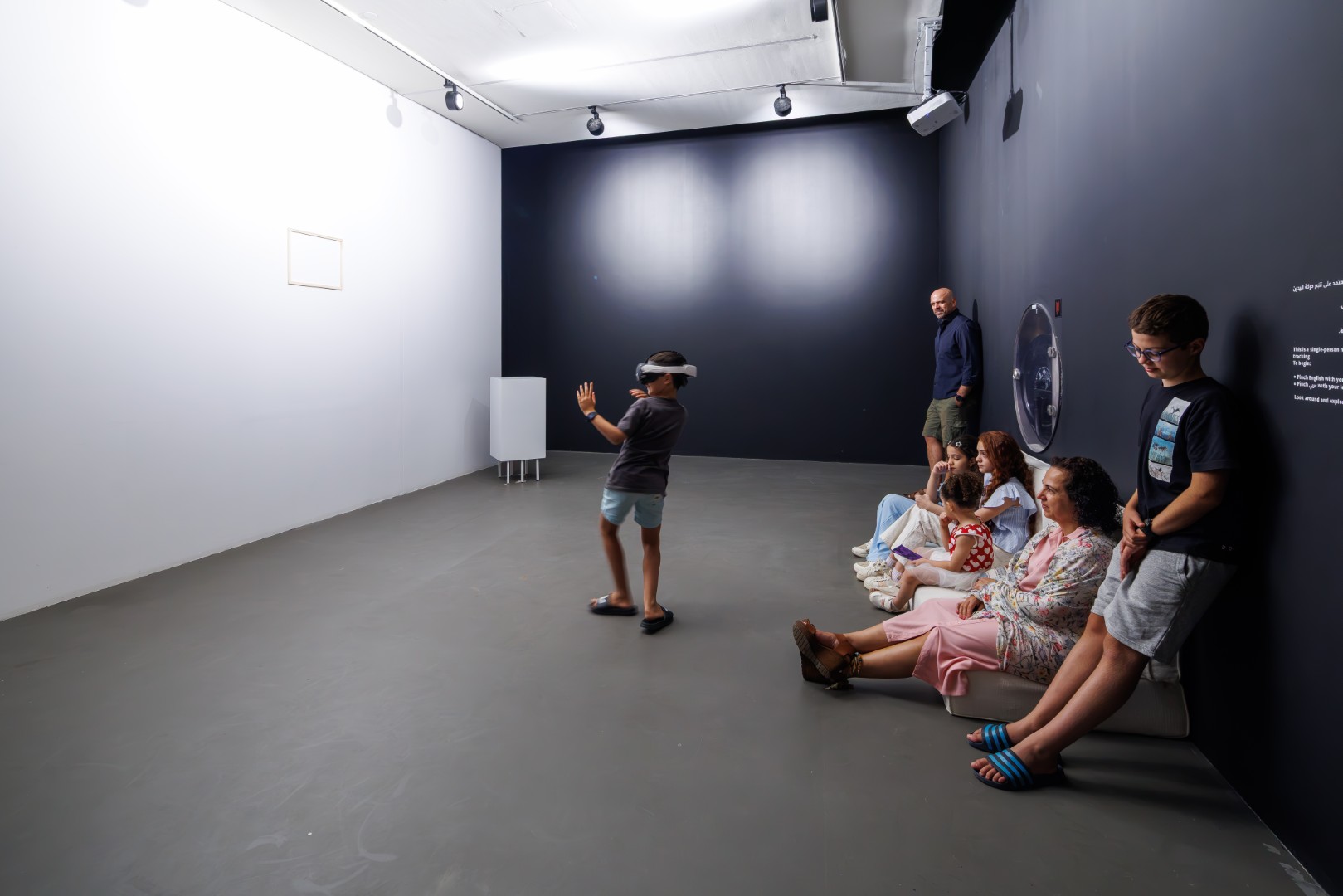
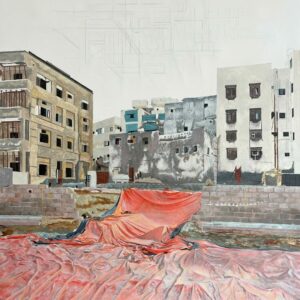
Memory might seem like an unusual place to start. Digital technology has given us an unprecedented capacity to record, store and retrieve, but remembering has never worked quite like an archive. Memories disappear, distort, accumulate and change according to who is doing the remembering. CONTINUUM ’26 considers memory accordingly: not as information waiting to be retrieved intact, but as something still being made. Across Omar Adel’s The Time That Remains, Fai Ahmed’s Suspended Memory, Dina Khalil’s Apt. 9, Badriyah Alsalem’s Names of the Sun and Ezzat Shdad’s Does the Sea Die?, remembering moves between the personal, collective, cultural and environmental.
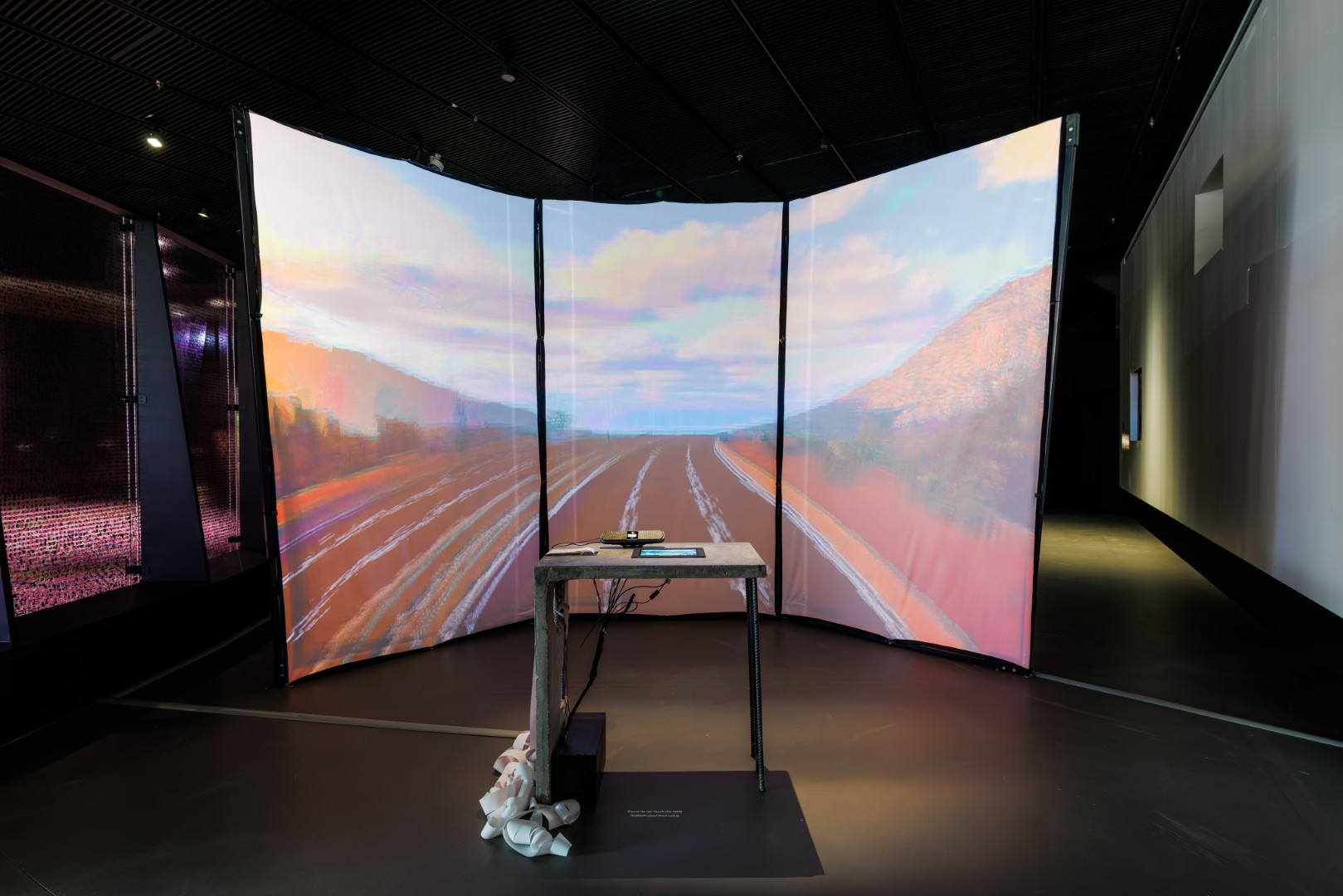
Saudi interdisciplinary artist Fai Ahmed works around collective memory and the politics of technology, paying particular attention to what gets lost, corrupted or overlooked in the process. Her installation, Suspended Memory (2026), surrounds a solitary desk with large-scale projections of shifting landscapes, placing an everyday space of work and recollection inside something far less stable. Memory here isn’t presented as a fixed record that technology can neatly preserve. It becomes spatial, fragmented and immersive, something the viewer is placed inside rather than simply asked to retrieve. Even the title suggests a state of uncertainty: a memory held somewhere between preservation and disappearance, the physical and the digital.
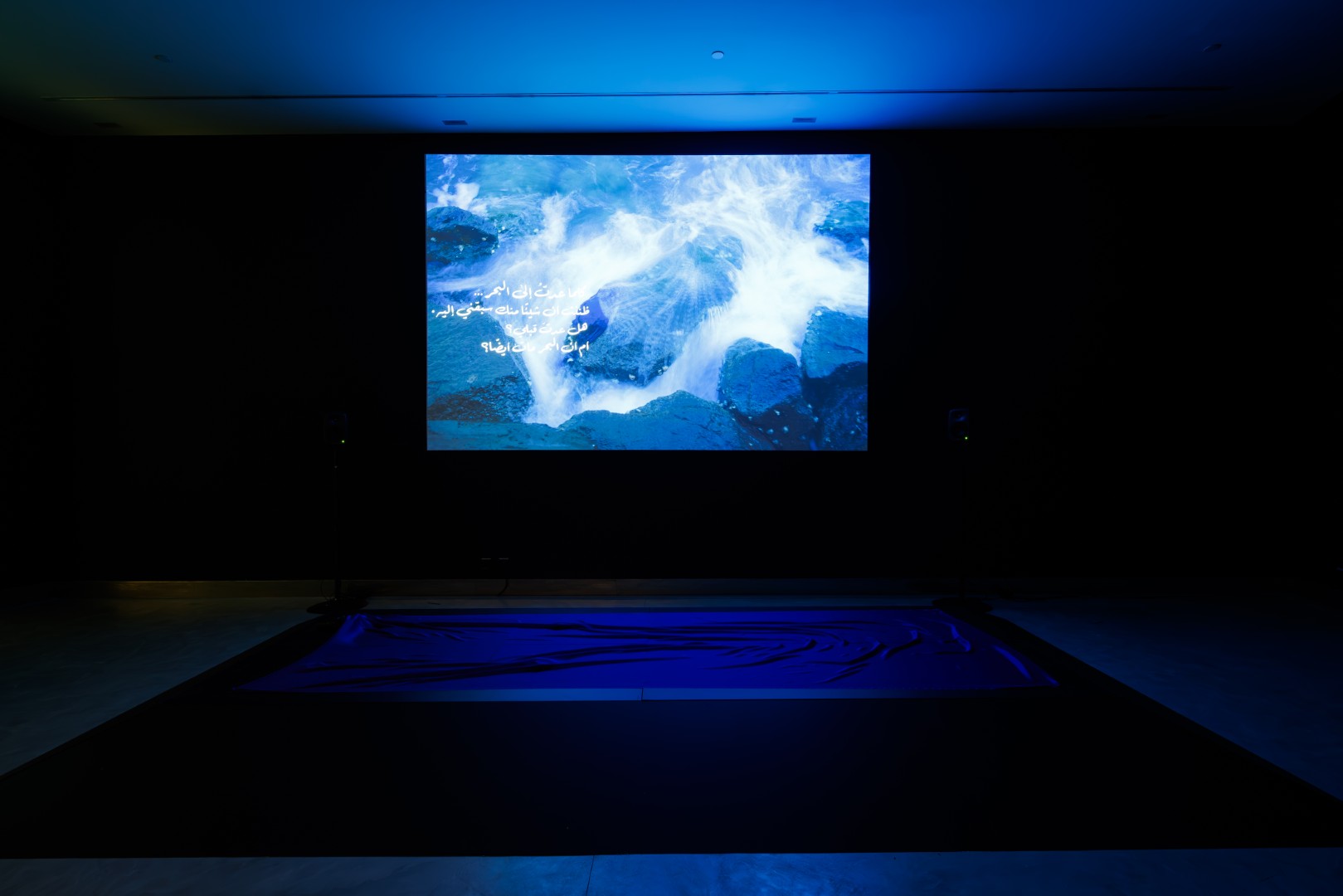
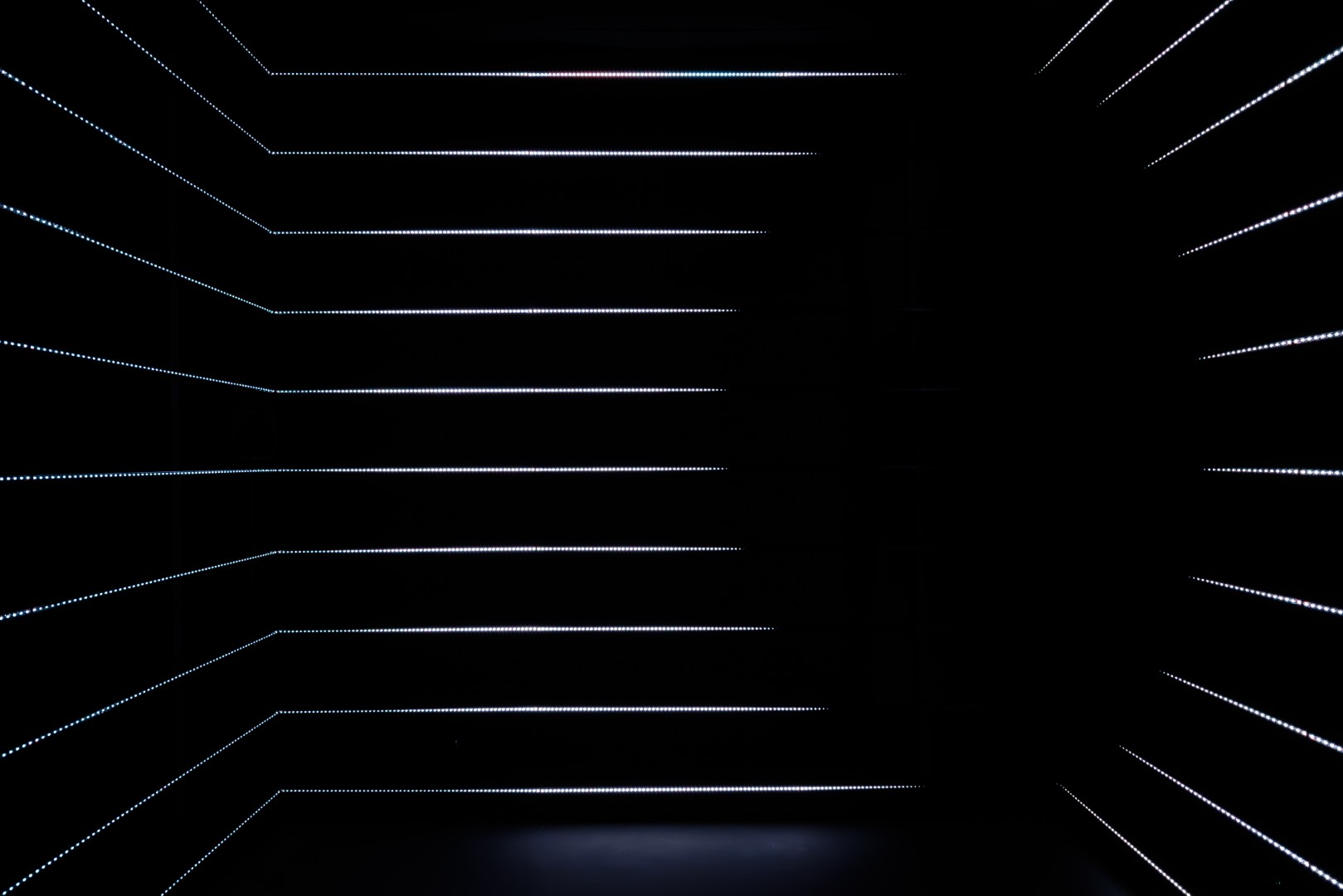
Yemeni filmmaker and visual artist Ezzat Shdad’s Does the Sea Die? (2026) pushes that instability towards the landscape itself. Inside a darkened installation, moving images of crashing water sit alongside glimpses of the built environment, while another illuminated element stretches across the floor beneath them. The work’s title turns an apparently impossible question — can something as vast and enduring as the sea die? — into one about what happens to places, environments and the memories attached to them when permanence can no longer be taken for granted.
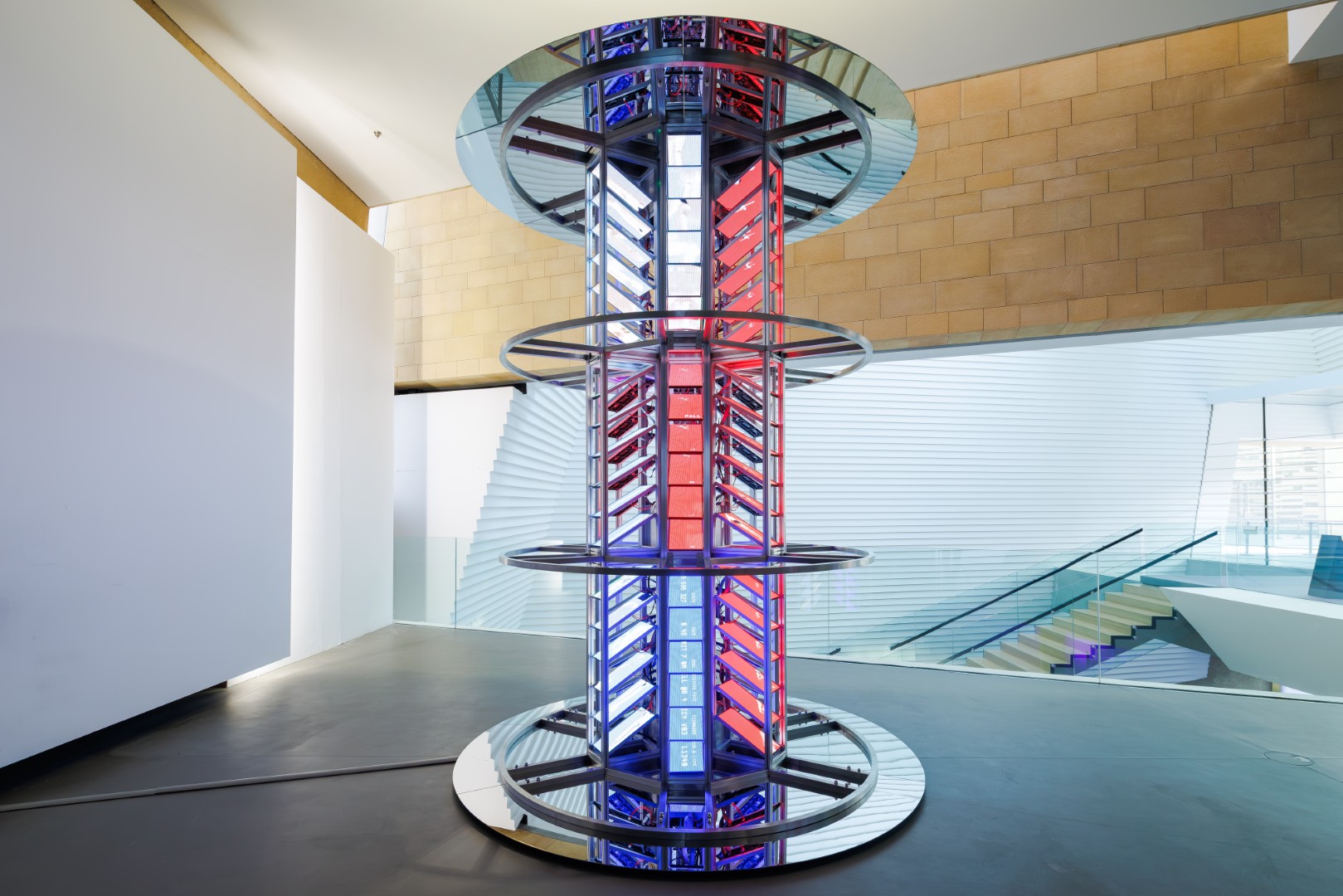
Another thread running through CONTINUUM ’26 is power — specifically, the role humans continue to play in systems that can appear increasingly autonomous. Foreseen Agency’s The Farm, Ahmad Aiuby’s Mean Gaze, SCARLETMOTIFF’s AUTOBIOGRAPH MACHINE, Linda Dong’s Look Alike and Y7’s wonderfully titled You may not like it, but this is what peak performance looks like look at systems of observation, reproduction, classification and optimisation.
if technology can extend human power, CONTINUUM ’26 also asks whether it might extend the limits of the human itself. Harpreet Sareen’s Echoes of the Unseen, Evgenii Popov’s Being Beside and Gabriela Reyes’ AVOID NIL shift the exhibition away from systems and towards bodies: how we sense, inhabit and understand the world around us. Here, technology isn’t necessarily something sitting opposite the body. It can become part of the apparatus through which that body perceives.
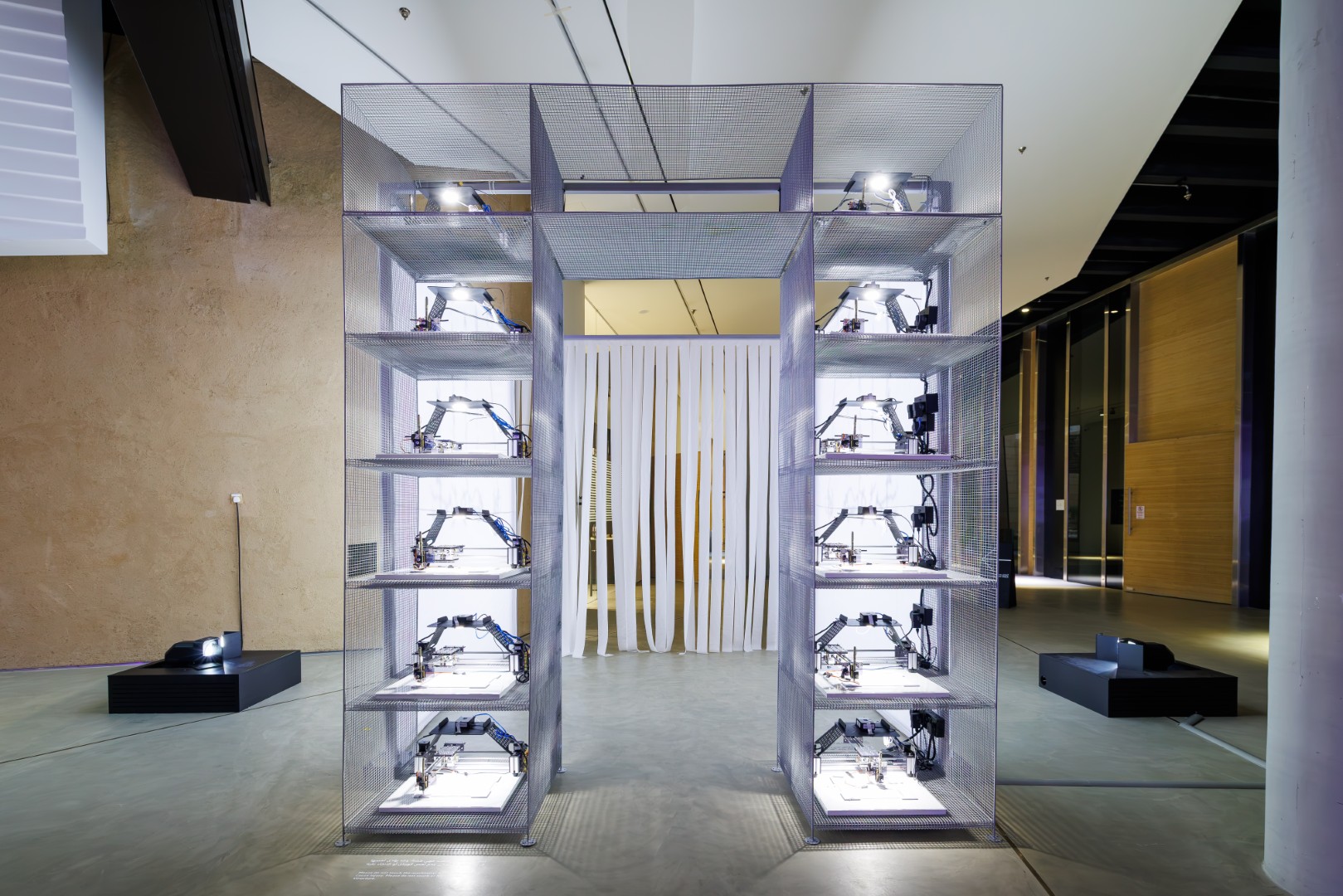
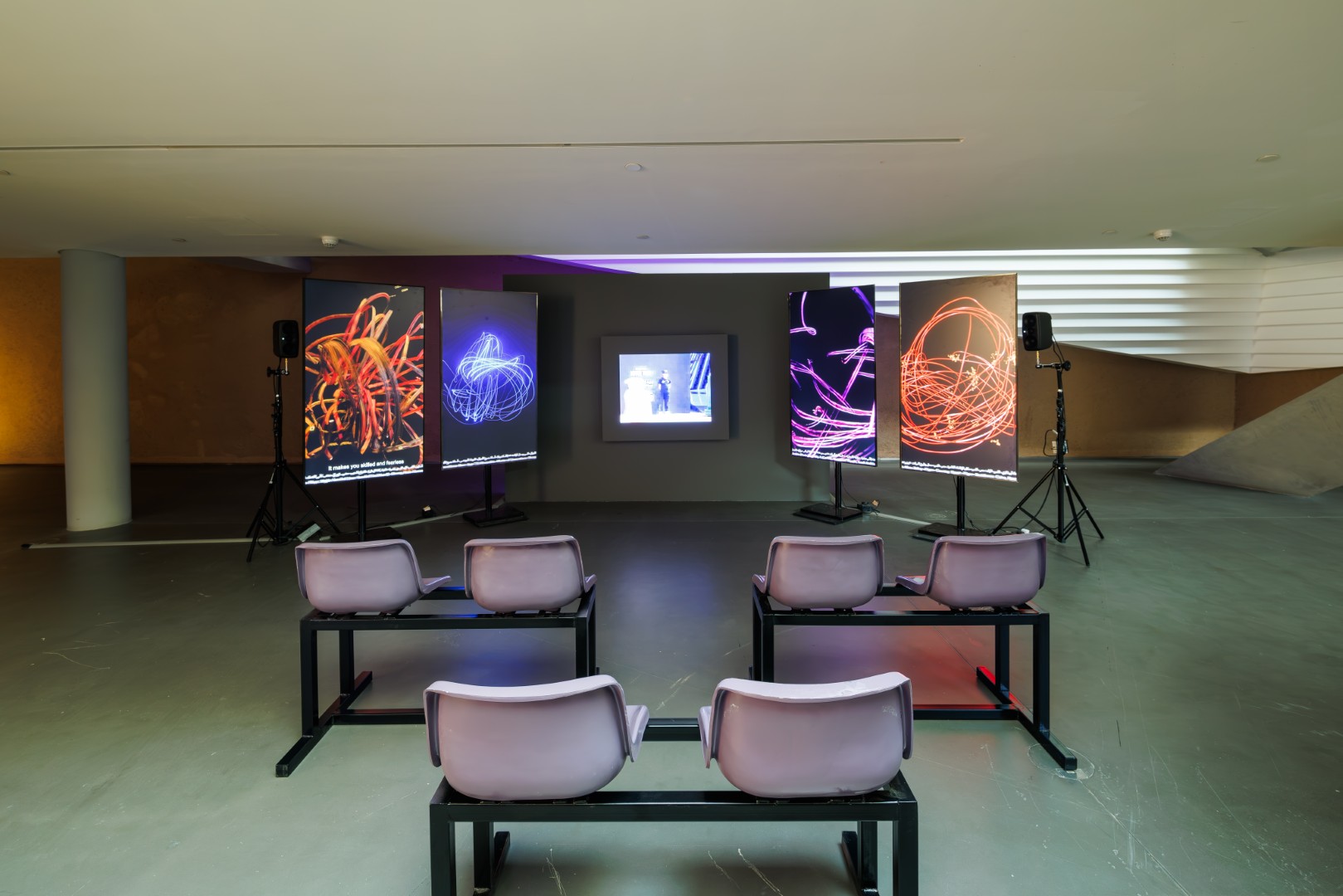
The exhibition’s final thread turns to repetition. Njood Albawardi’s This Is All A Big Test and Mena El Shazly’s Ballistics of a Polite War look at the rhythms created by automated systems, labour and human endurance. It is here that CONTINUUM ’26 becomes interested not only in what technology does, but in the patterns it creates around us — the actions repeated, the routines followed and the bodies expected to keep going. Machines repeat because they are instructed to; humans repeat because work, ritual, habit and social systems often require them to. Somewhere between those two rhythms sits the question of who is actually serving whom. Automation might remove labour from the body, but it can also determine the rhythm the body is expected to keep.
It’s fitting to ask these questions in Diriyah. DAF sits within a place inseparable from Saudi Arabia’s historical memory, while positioning itself as the MENA region’s first institution dedicated to new media and digital arts. CONTINUUM ’26 therefore doesn’t have to choose between preservation and experimentation. The archive and the algorithm can occupy the same room. For an exhibition built around emerging technology, its most persistent subject might ultimately be the oldest one available: us.
For more stories of art and culture, visit our dedicated archives and follow us on Instagram.