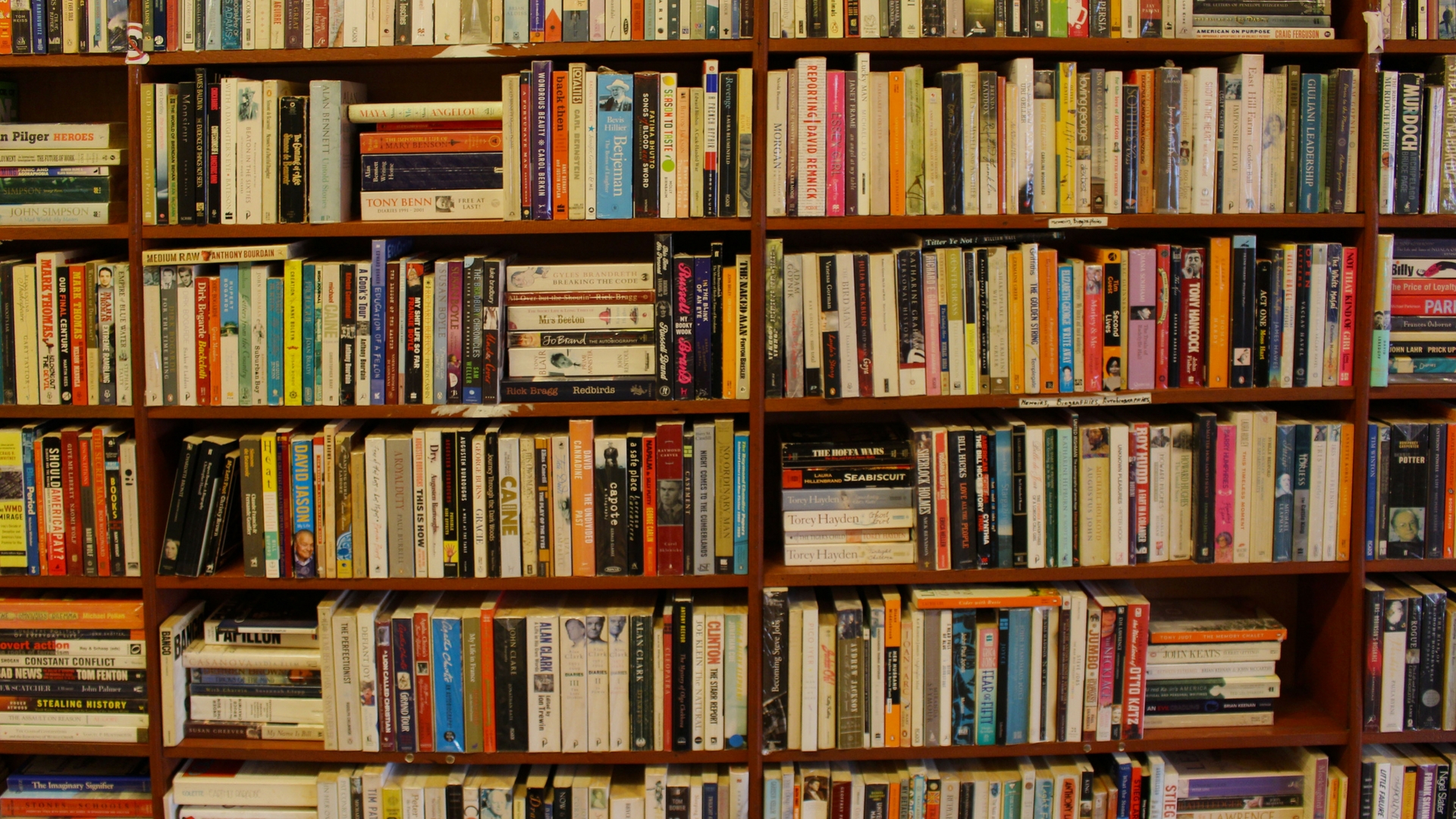
A bookshelf confesses more than its owner means it to. These are the five I’d defend with my life: Palestinian actors staging Hamlet under occupation, a Lebanese philosopher on the run from his mother, a Moroccan girl who reads a room better than anyone in it.
Before Zoom meetings begin, I read the room — by which I mean the bookshelf. It takes thirty seconds to know too much. The 48 Laws of Power means he’s read one book about power and intends to use it on you. It Ends With Us, face-out, means she’ll tell you the book was better while you’re still watching the film. The Body Keeps the Score means something happened, and I am not licensed to ask.
Shelves are hard to fake. People curate themselves everywhere else — on Instagram, on LinkedIn, at dinner parties — but books remain strangely bad at keeping secrets. There is what sits at eye level, what is falling apart from over-handling, what has been exiled to storage after serving its purpose. Taste is one thing, but need is another.
My shelf is curated too, though I use the word loosely. It reads like an autobiography: the books that formed me, ambushed me, ruined my standards, and survived every move. The ones I lend reluctantly, annotate too aggressively, and would rescue from a fire with suspicious moral clarity. What follows are five of them: a Palestinian actress staging Hamlet in the West Bank; a Lebanese philosopher fleeing his mother; a Moroccan girl discovering that desire, properly wielded, is its own kind of power.
Enter Ghost by Isabella Hammad. Fiction. Palestinian-British.
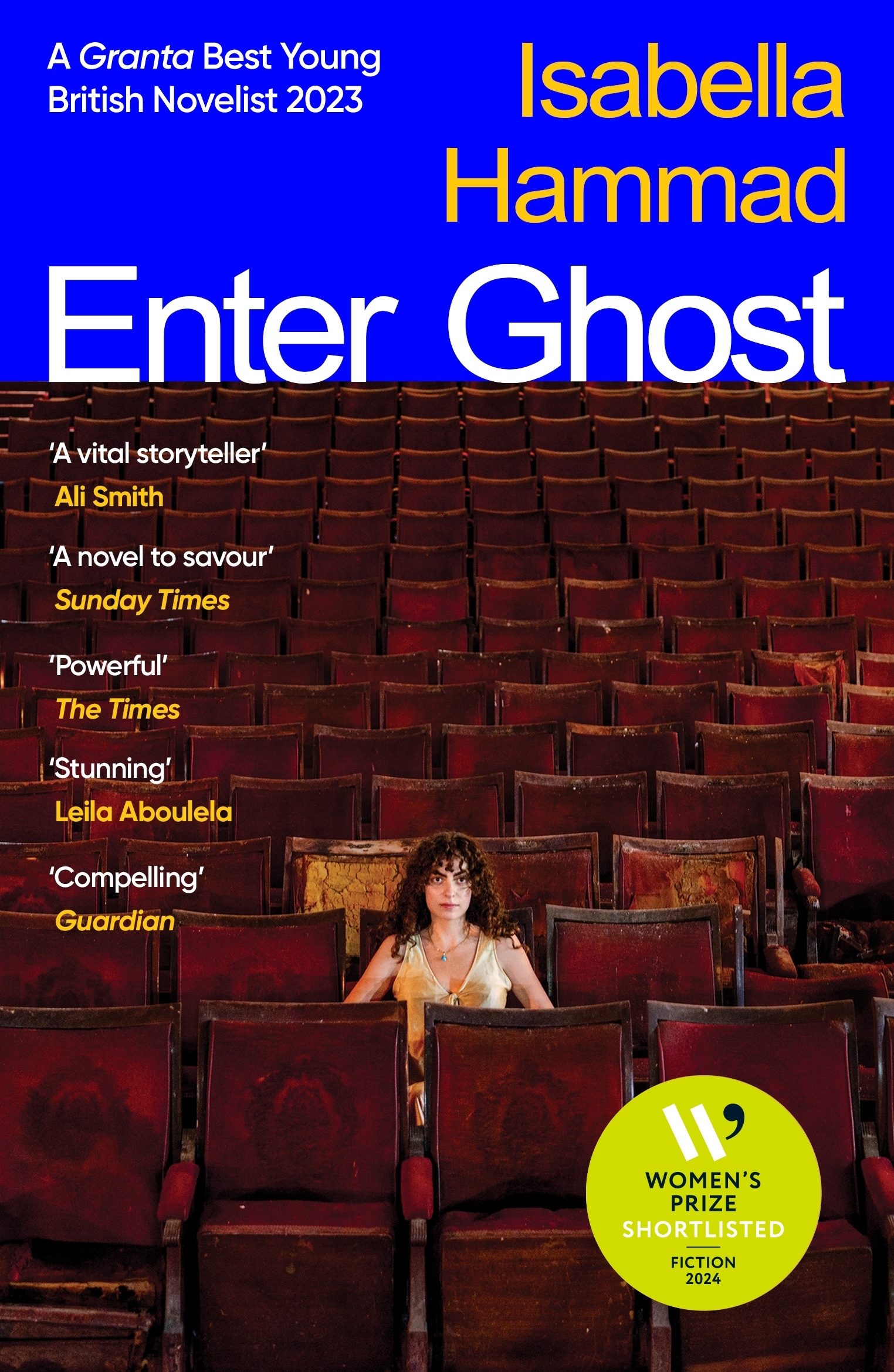
There is a particular fatigue that comes from reading Arab fiction in English and watching every character arrive first as a political condition. The mother is Trauma, the father is Displacement, and falling in love is, somehow, still about the land. Trouble begins when history becomes a solvent, dissolving humour, pettiness, spite, desire: the unruly little things that make a person feel alive on the page.
Hammad understands the trap. Enter Ghost follows Sonia, a Palestinian-British actress who travels to the West Bank and is pulled into a production of Hamlet. The premise is almost too neat: a play about paralysis, staged where action is never abstract. But Hammad refuses to let symbolism swallow the room.
What lingers are the people: actors arguing about casting, sisters misreading each other, everyone flirting when they should be focusing. They exist under occupation, and they move through it with vanity, distraction, longing, pride, and spectacularly bad timing. Hammad gives them the thing Arab characters are too often denied in English: texture without translation.
I’ll Tell You When I’m Home by Hala Alyan. Memoir. Palestinian-American.
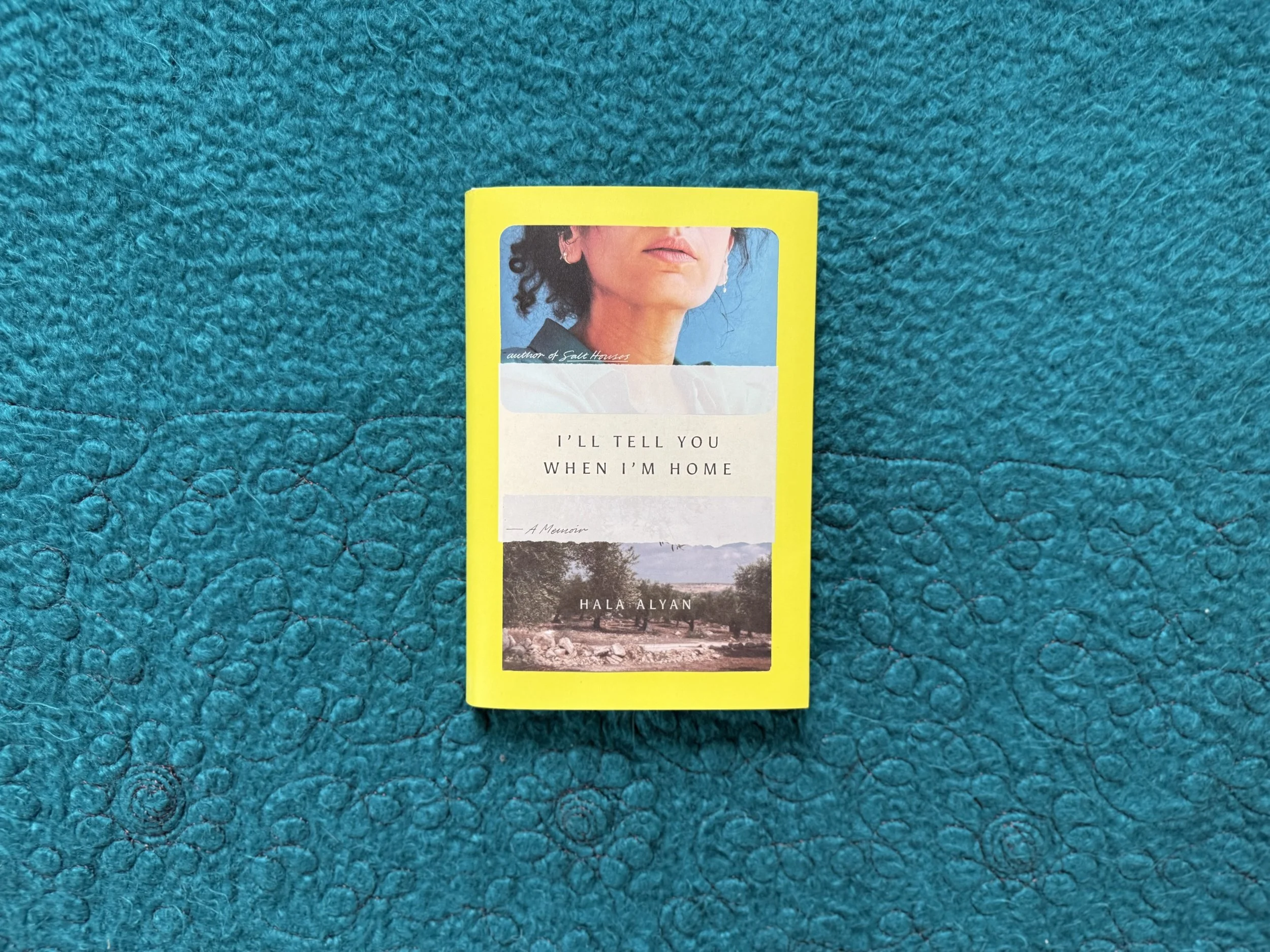
Alyan has spent her life being remade by circumstance. Born in America, raised between Kuwait, Oklahoma, and Lebanon, she learns early that home is rarely a place one gets to keep. Each country leaves something behind in her: a language, a rhythm, a possible self. Then, before belonging can harden into fact, the place disappears, changes, or becomes unreachable.
By the time the memoir finds her in Brooklyn, trying to have a child, loss has become both intimate and geographic: five miscarriages, a surrogate carrying the baby in another country, a marriage coming apart quietly, almost politely, and Beirut collapsing on her phone screen from a distance she cannot quite justify.
A poet and a clinical psychologist, she works in two professions built around sitting with what refuses to resolve. She structures the book around the months of the pregnancy, each one pulling the past forward: her grandmother’s displacement, her mother’s, her own. Three generations of Arab women start again because history has given them very few alternatives. What they pass down is a method of survival, translated imperfectly from one woman to the next.
She does not force that inheritance into a clean revelation. Grief, habit, exile, motherhood, love: all of it remains in the room. Some lives are carried rather than healed.
Babylon, Albion by Dalia Al-Dujaili. Essays. Iraqi-British.
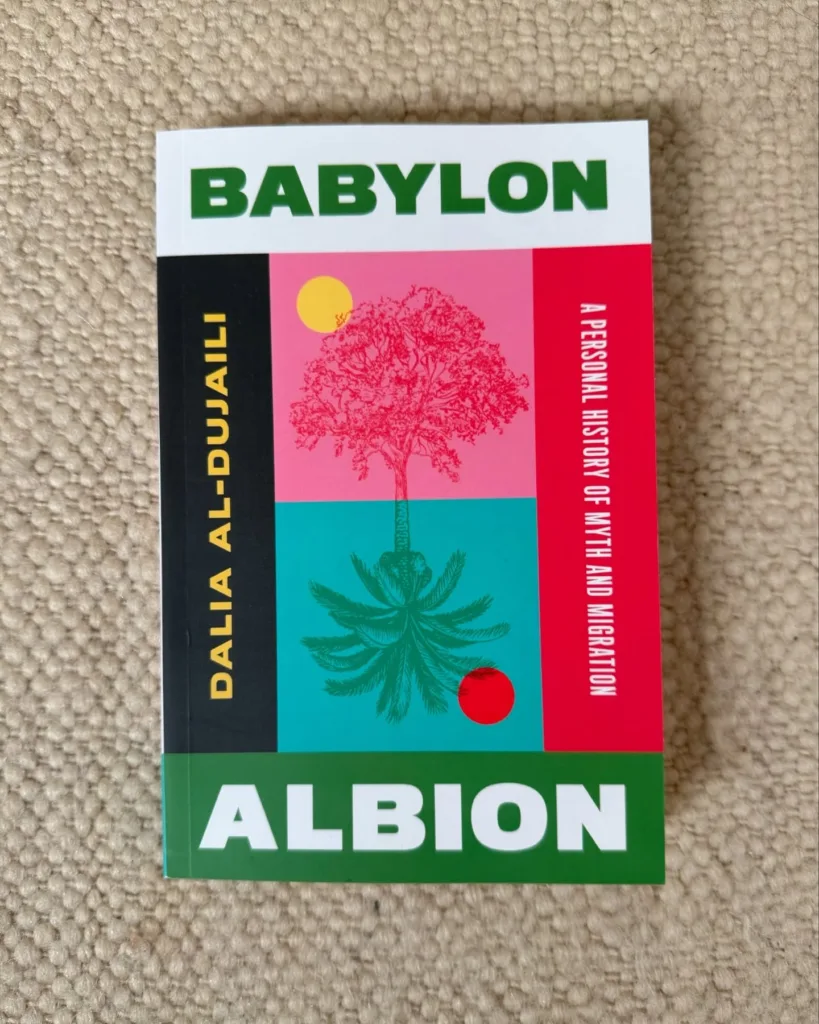
An oak in an English wood and a date palm on an Iraqi riverbank do not, on paper, have much to say to each other. Al-Dujaili, an Iraqi-British naturalist, spends these essays insisting they do: hers is a nature-memoir she began writing, fittingly, in airports, the least natural places on earth, the farthest thing from a forest, where she’d spent half her life living out of a suitcase between two countries that both half-claimed her.
She does what naturalists do — observe, catalogue, compare — except the specimen under the lens keeps turning out to be herself. As a child in the English suburbs she decides the oak is a witness, the one reliable truth-teller in a landscape that finds her exotic while her family back home finds her foreign. She is asked where she’s really from with such cheerful frequency that she has developed both a short answer and a private grudge. Where does a person belong when two places claim her? Somewhere between the oak and the palm, she suggests, and stops apologising for the gap.
The True True Story of Raja the Gullible by Rabih Alameddine. Fiction. Lebanese-American.
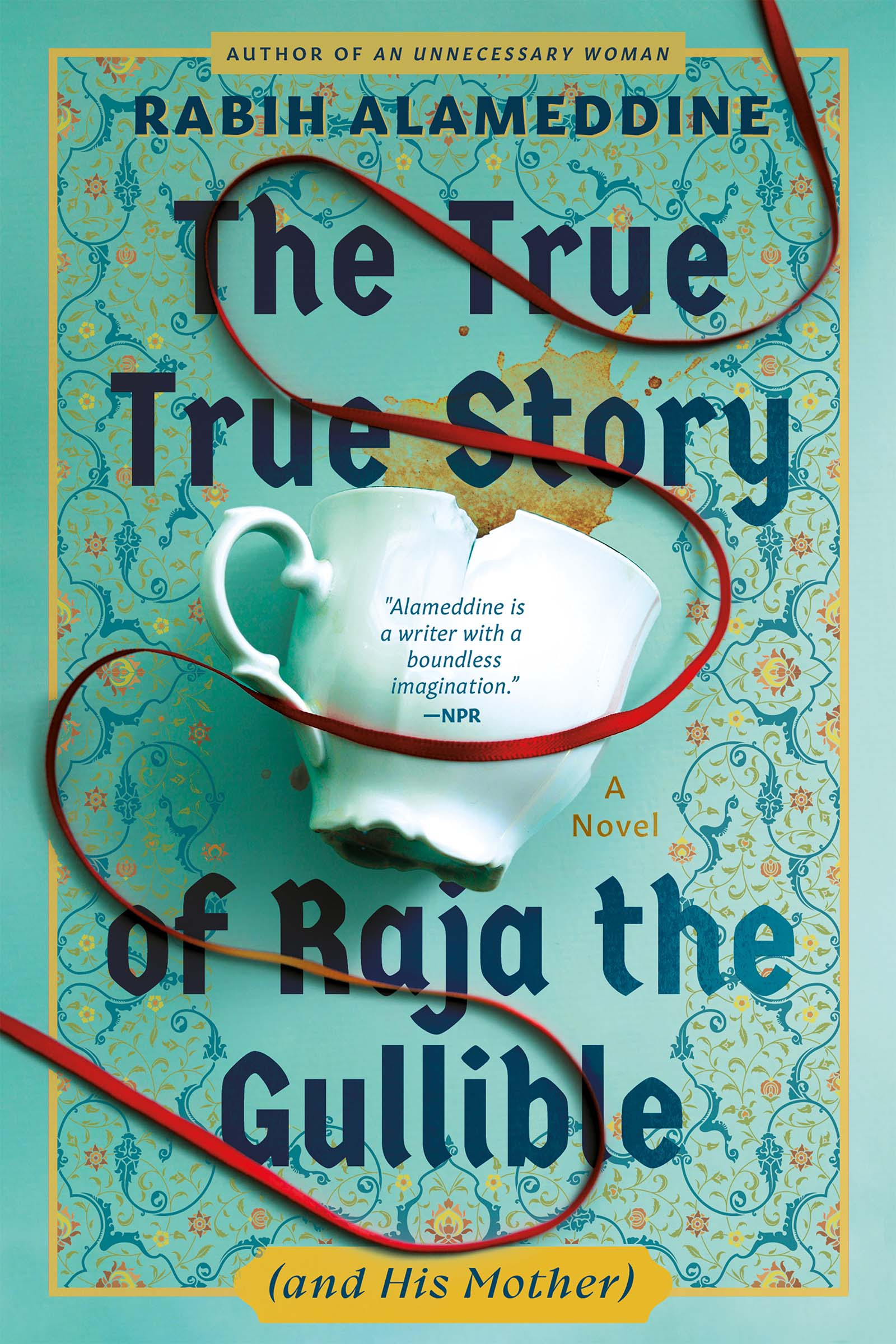
People flee to America for all kinds of reasons: persecution, war, economic collapse. Raja, a 63-year-old philosophy teacher in Beirut, flees his mother.
Zalfa is octogenarian, opinionated, and treats her son’s desire for privacy as a personal affront. When a writing residency appears, Raja takes it. The residency is the pretext; the point is the rarest thing in Arab family life: a socially acceptable excuse to leave.
Alameddine has spent decades making the case that Arab literary fiction is allowed to be funny, and this novel is one of his sharpest arguments yet. The comedy is immediate: the evasions, humiliations, bad decisions, and absurd logistics of trying to become yourself while still answering your mother’s calls. Beneath it is something more bruised: shame, aging, and the accumulated weight of a life lived slightly sideways from everyone’s expectations.
What an Arab man gets to feel, and who he gets to become, when nobody is watching: that is the real story, and Alameddine lets you laugh your way to it. Funny until it isn’t — which is almost a national literary tradition.
As Rich as the King by Abigail Assor. Fiction. Translated from French by Natasha Lehrer. Moroccan.
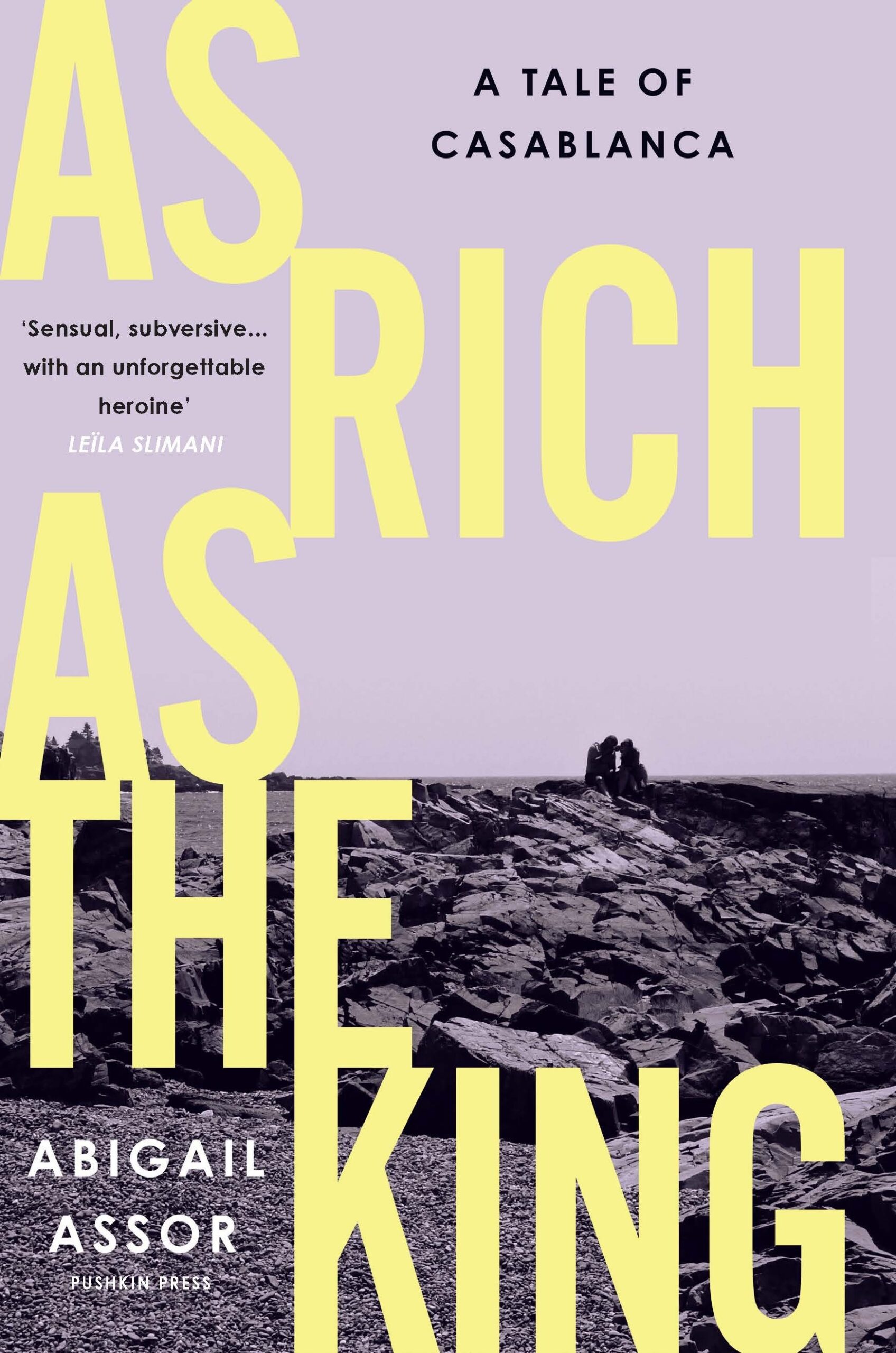
Casablanca, summer. The kind of heat that makes ambition feel reasonable. Sarah is seventeen, poor, and scholarship-placed at the city’s most exclusive bilingual school, the kind where old Moroccan money and French colonial residue have produced a class of people who speak French at dinner and Arabic to the help. She does not belong there. She knows it. Then she sees Driss: older, quiet, rumoured to be the richest man in the city, with eyes the cool green of sea glass. Suddenly, belonging looks negotiable.
Sarah is not naïve, which is what makes her thrilling. She understands the class codes, the colonial hangover, the particular economy of a city where beauty is currency and desire is leverage.
Assor writes with the precision of someone who knows exactly which doors open and which stay permanently shut. The result is slim, propulsive, and completely seductive: the only book on this list you could genuinely call a beach read, which is not an insult. Sometimes the most political thing a novel can do is make you keep turning the page.
For more stories of art and culture, visit our dedicated archives and follow us on Instagram.