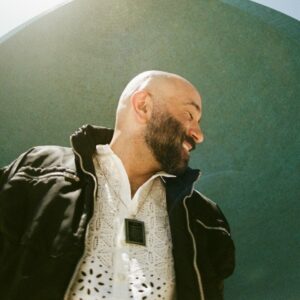
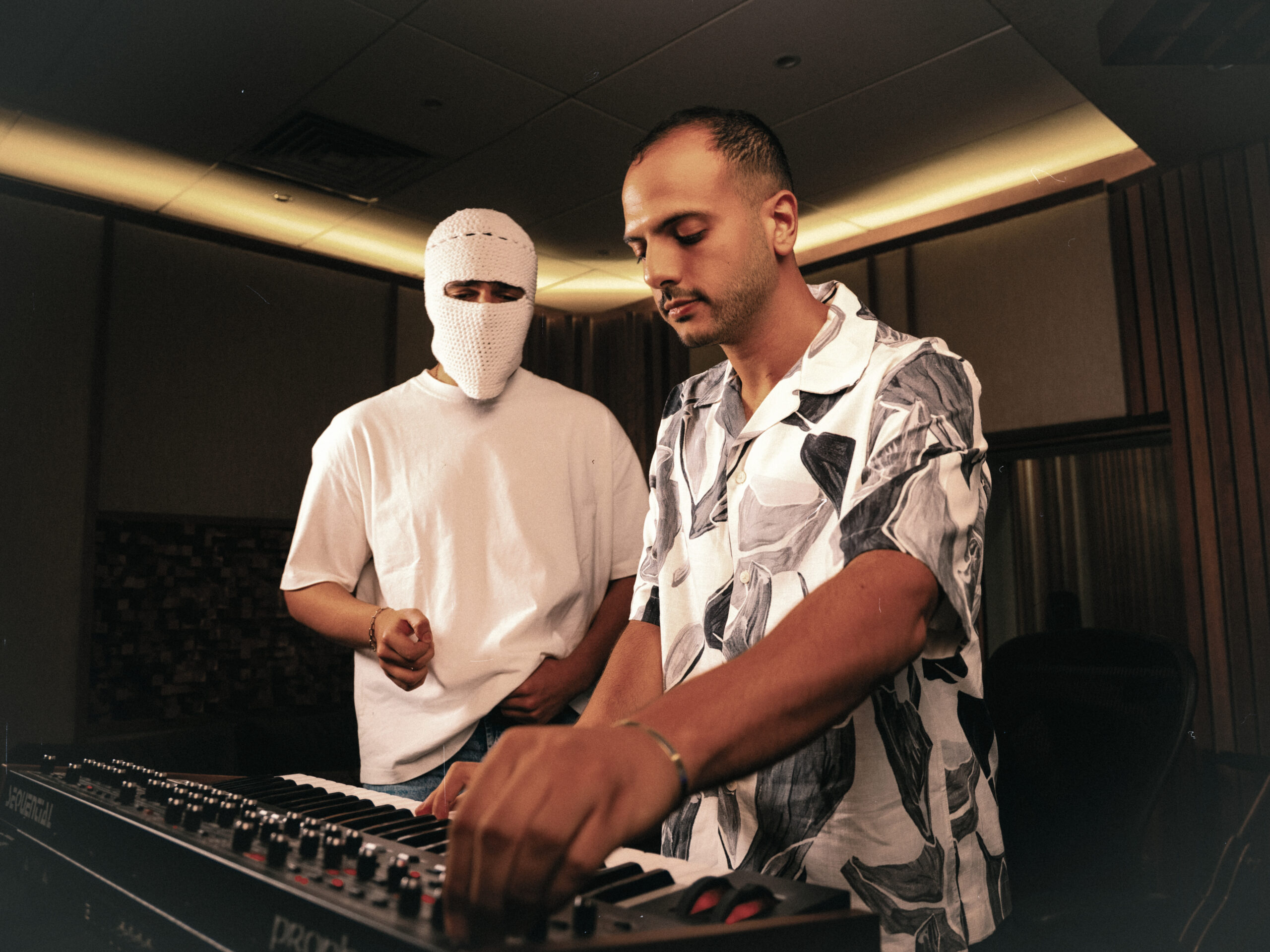
By every measurable standard available, Moataz Mady is a hitmaker.
He has a relatively compact body of work that includes a handful of production credits across Tul8te’s hit album Narein. With his musical thumbprint on “El Hob Gany,” “Heseeny,” “Narein,” “Habeeby Da,” “Ghareeb Haly,” and “Oyoun El Nas,” Mady snagged a handful of #1s in an instant.
His discography extends further and further, across genres, generations and industries. We are talking collaborations with Nancy Ajram, Bahaa Sultan, Amir Eid, and Cheb Khaled. Alongside this, he has been commissioned for more than thirty commercial campaigns, spanning telecom giants and national institutions.
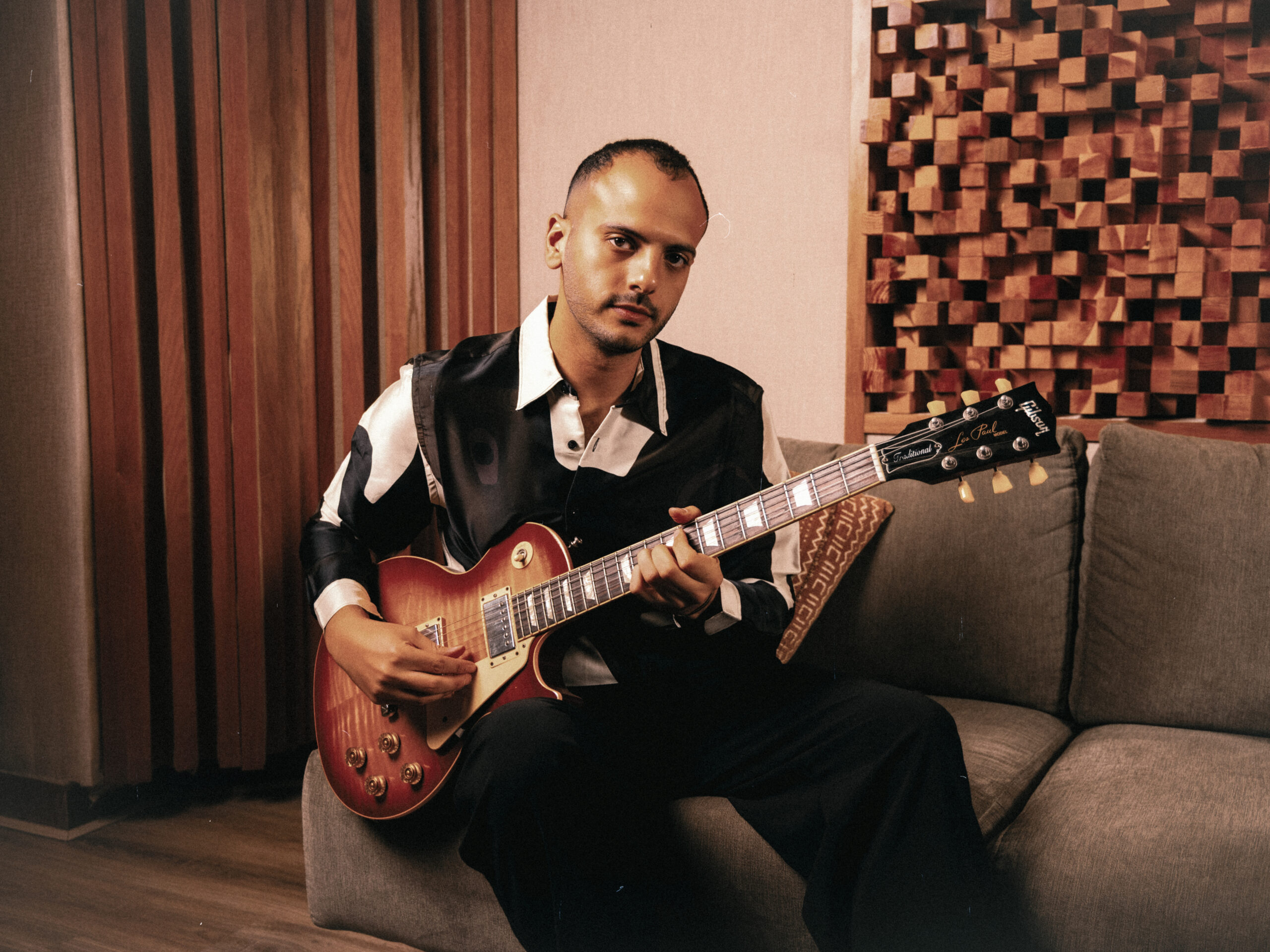
It seems that everything he touches tends to scale, to turn to gold. The infrastructure for recognition is already set in place; the spotlight is structurally available to him, ready to shine. Yet, somehow, he has remained largely outside of it. And it is not something he resists. He simply has not really pursued it.
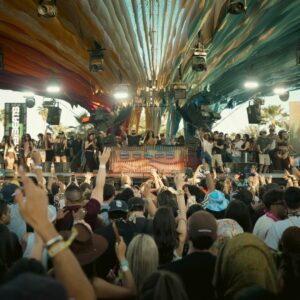
“I’m comfortable without it. I don’t need to be on stage or in front of a camera to feel like I did my job. When a song hits and people are singing it everywhere, I feel it. I know what I built. That’s enough for me. One of my most memorable moments was a Tul8te concert in Cairo – 20,000 people singing my song. That’s when it hit me.”
It is not about upholding some sort of anti-industry posture or rejecting visibility culture in any way. Mady just has a different calibration when it comes to value. It is more about circulation than it is about recognition. It comes the moment a song leaves the confines of the studio and embeds itself in the lives of his listeners. As he puts it, “Sometimes I like not being in the picture. But visibility matters for the career. Visibility feeds the work. Invisibility protects my private life. I need both.”
That very same balance appears in the way his music travels. “Be3teeny Leeh” featuring Ziad Zaza and Amr Moustafa on Red Bull Mazzika Salonat, one of the most-watched episodes of the season, scaled to 28 million views without any sort of paid promotion. The track’s success did not change his understanding of, or relationship to, the system. Rather, the organic success reinforced what he already knew to be true. “If the music is real, people find it,” he says. “28 million people watched it because the music made them feel something. You can’t buy that. Strategy gets you in front of people. Authenticity makes them stay.”
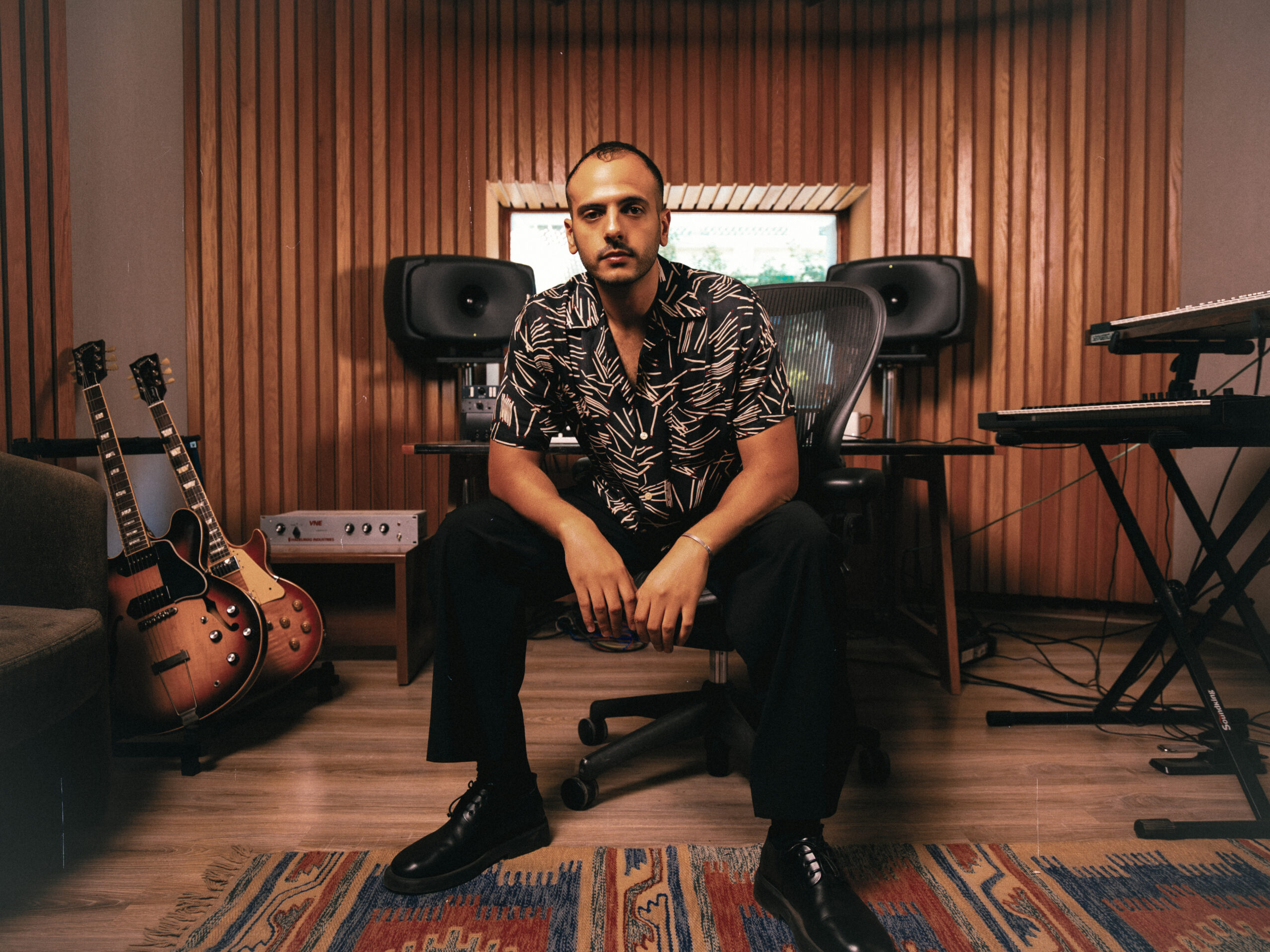
Today’s streaming economy is brimming with immediate hooks and accelerated turnover. So, paradoxically, what persists is no longer pure exposure but heartfelt music that aligns emotionally with listeners. Mady’s productions tend to privilege that emotional alignment.
His music is made for repetition, not engineered for a single impact point. Of course, there is a technical dimension to this. His productions tend to prioritise mid-frequency warmth over high-end brightness, dynamic restraint over immediate drops, and loop structures over immediate drops. This is what makes his music so easy on the ear. So addictive.
What he calls “real” translates into a kind of internal coherence. The tone, arrangement, and vocals all seem to move in the same direction emotionally.
And that is where his process begins. “Emotion first. Always. I need to feel something before I build anything.”
Melody or harmonic movement comes first, often as an internal fragment before it is played. From that point, the track begins to develop outwards. Rather than being layered or assembled by default, his music is constructed. Each element is introduced in relation to the emotional core.
This places him closer to the lineage of composer-arrangers in Egyptian music, constructing songs with emotional arcs in mind rather than beat-driven units.
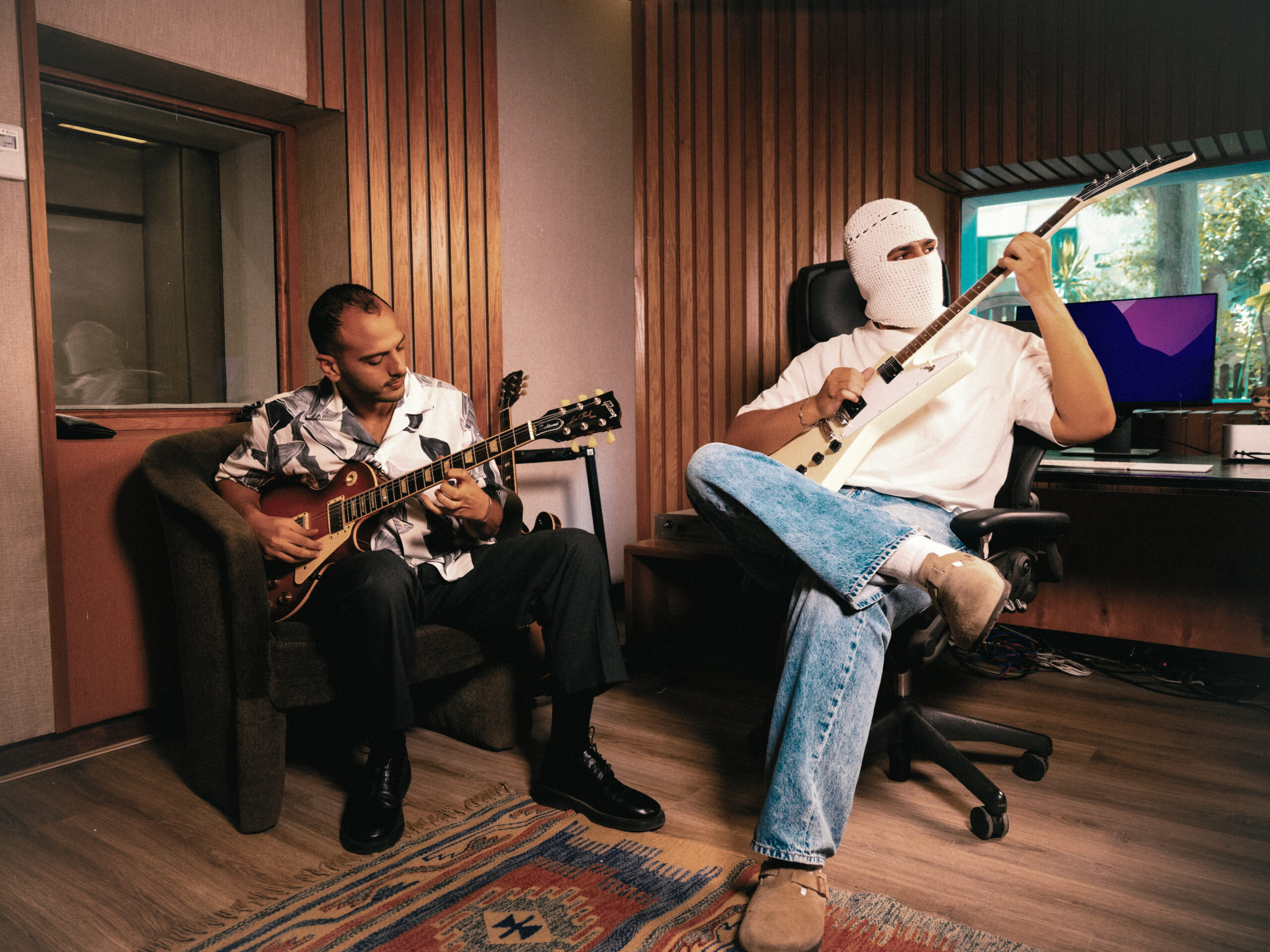
You could describe him as a hidden architect of sorts. “I don’t do music to be famous. I do it because I love it. I don’t know how to talk about what I did,” he admits. However, the work itself is quite expansive. He does not supply pre-built instrumentals; rather, he operates within a co-creative framework. The tracks develop in real time with the artists, being moulded and reshaped continuously and fluidly as the vocals begin to emerge.
We can look back at his early formation to trace the origins of this approach. He was originally enrolled in engineering. He then moved toward music through both formal study, including coursework at the University of Berkeley, and also practical experience with a band he co-founded with some friends called Antique. “I wasn’t just writing my guitar parts, I was hearing the full picture,” he recalls. “I wanted to control the entire vision.” In that sense, you could say production was a structural necessity. It was the only position from which he could control the totality of the sound.
That architecture extends all the way down to the tiniest of details. “I obsess over how things sound on a frequency level. The tone of a guitar, the warmth of a pad, the weight of a kick. Nobody points to it, but it changes everything.” He remembers returning to “Narein” after it had already been mastered. He decided to replace the kick entirely after hearing how it translated in his car speaker. The decision was not a corrective one, but one based on perception, recognising how the low-end weight of the track shifted the production’s emotional balance when played in a physical listening space.
“Be3teeny Leeh” also followed a similar logic. Instead of reproducing a traditional malfouf rhythm directly, he reinterpreted it through modern drum programming, playing with the contours of its sonic texture. The goal was not to replicate it but to translate it, to extract the identity of the rhythm from the original instrumentation and reposition it emotionally within a contemporary mix.
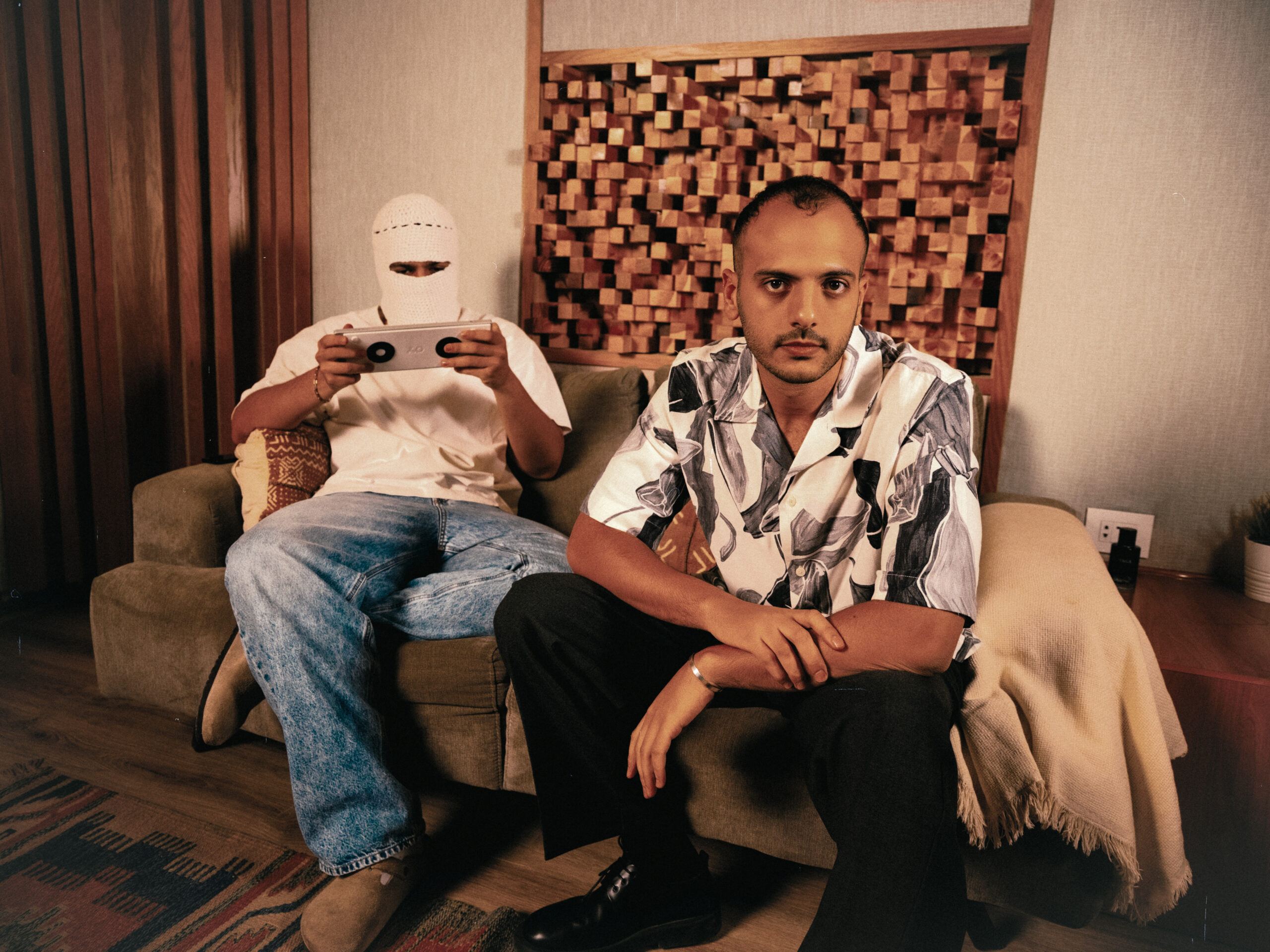
Nowhere is his process more visible than in his collaboration with Tul8te. Across Narein, the two do not operate as just producer and artist. They found themselves in the studio as parallel contributors to a shared sound. “I didn’t want to change his vocal identity or my music identity… we influenced each other and that’s what made it work,” Mady explains. Their connection was immediate. “He had a very unique musical direction. What impressed me most was how fast he could compose to any musical idea. At the core, we had the same taste.”
From there, the work unfolded through a mutual exchange, built on trust and respect. “It’s not about shaping; it’s collaborative. On ‘El Hob Gany,’ I started the beat. When he started singing, I adapted the music to his melody. That’s what took us somewhere unique.” The active interaction is what shaped the structure.
A similar process defines “Heseeny.” Mady had composed a guitar line independently, with no intention of turning it into a song. It ended up becoming the inspiration and spark for Tul8te’s vocals. “When I played it to him, it sparked his vocal line,” he says. “It always comes down to trust.”
That trust is what allowed for a more fluid relationship between the elements. In “El Hob Gany,” the core idea rested on a mix of tension and contradiction. “The sound is nostalgic, very 90s, but I fused funk into it to make it modern. The lyrics are sad, but the beat makes you dance.” And the reference point, Amr Diab’s “Ya Layaly El Omr,” was actually structural, not aesthetic, as some people might think. “They keep looping the chorus. We wanted that feeling. Like the song doesn’t end.”
Underlying this is the instrument that started it all. “The guitarist wants to play more… The producer knows when to pull back,” he says. That tension remains active in his work. The guitar is rarely foregrounded. Instead, it operates within the texture. It carries the melody and harmony, briefly surfacing before receding. “If you strip the vocal and the track still makes you feel something… then my job is done.”
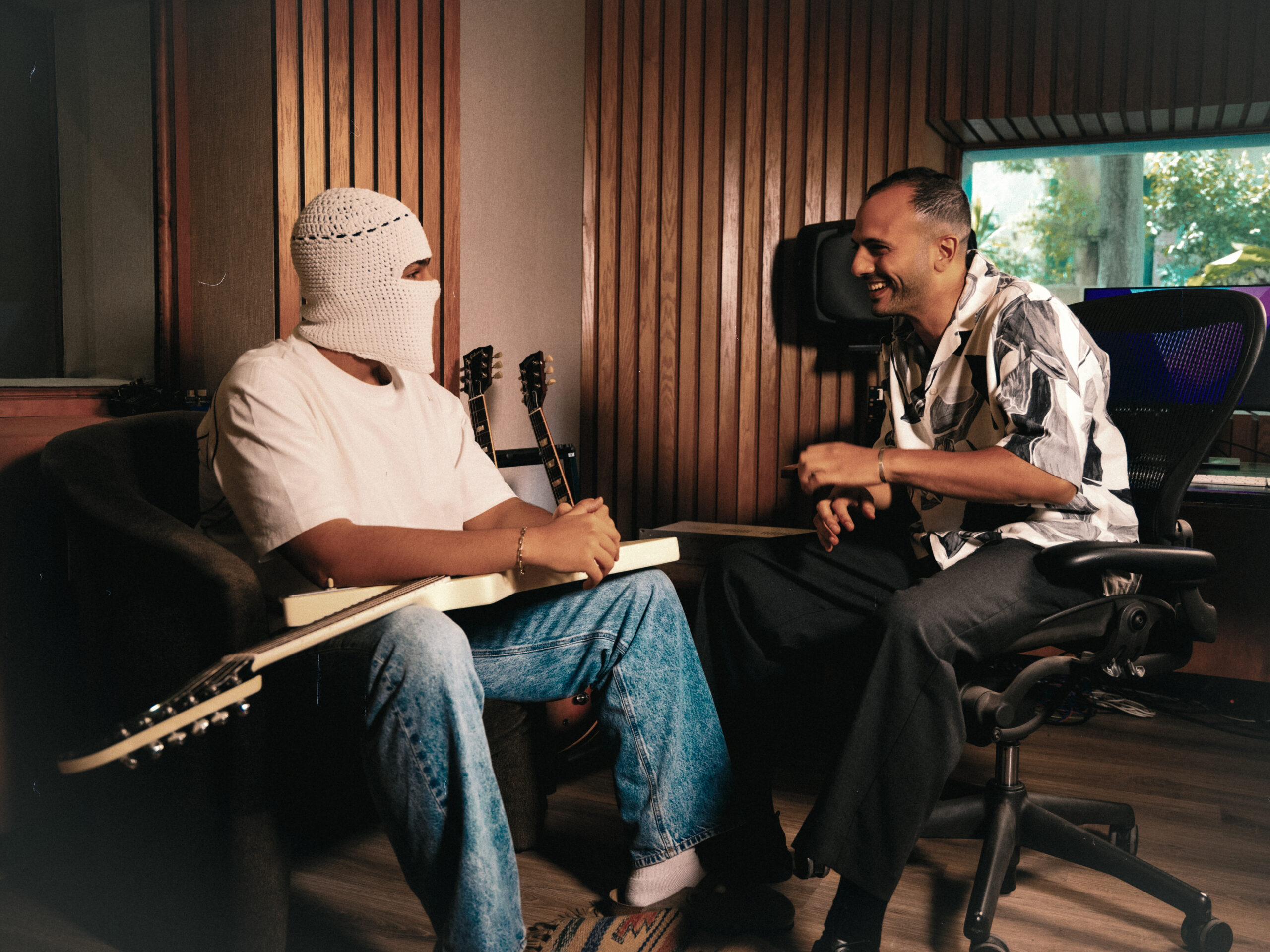
His ability to adapt and tune in extends across the wide range of artists he has worked with over the years. “Nancy’s music needs elegance. Everything must be polished,” he says. “With Bahaa Sultan, there’s a rawness. An energy that needs to breathe,” he’s aware that each artist requires a unique and intuitively understood balance of control and openness. The same applies across generations. “With someone like Cheb Khaled, you respect the legacy. You don’t try to reinvent him,” he says. “With Saint Levant, we’re building something new. You create a third thing that didn’t exist before.”
Parallel to his artistic work is a substantial body of commercial production, particularly during Ramadan. “We all remember that one ad from when we were kids,” he says. “When my work goes live during Ramadan, I think about it becoming someone’s nostalgia.” Success here seems to be measured by memory, by the ability of a piece of music to persist beyond its initial intention and reappear years or maybe even decades later in a pang of nostalgia that suddenly finds you.
Mady resists the idea that success is something that can be systematised. When asked what most producers misunderstand about making a hit, he responded, “that you can engineer one. You can’t.”
For more interviews like this one with Moataz Mady, follow us on Instagram and check out our dedicated music archives here.