At the 2026 Venice Biennale, Bvlgari arrives with a proposition about what luxury patronage can mean today. The Roman Maison becomes Exclusive Partner of the International Art Exhibition for the next three editions, beginning a partnership that will run through 2030. For its first chapter, Bvlgari presents a project by Lotus L. Kang in the Giardini, while Fondazione Bvlgari stages its first official collateral event at the Biblioteca Nazionale Marciana with Lara Favaretto and Monia Ben Hamouda.
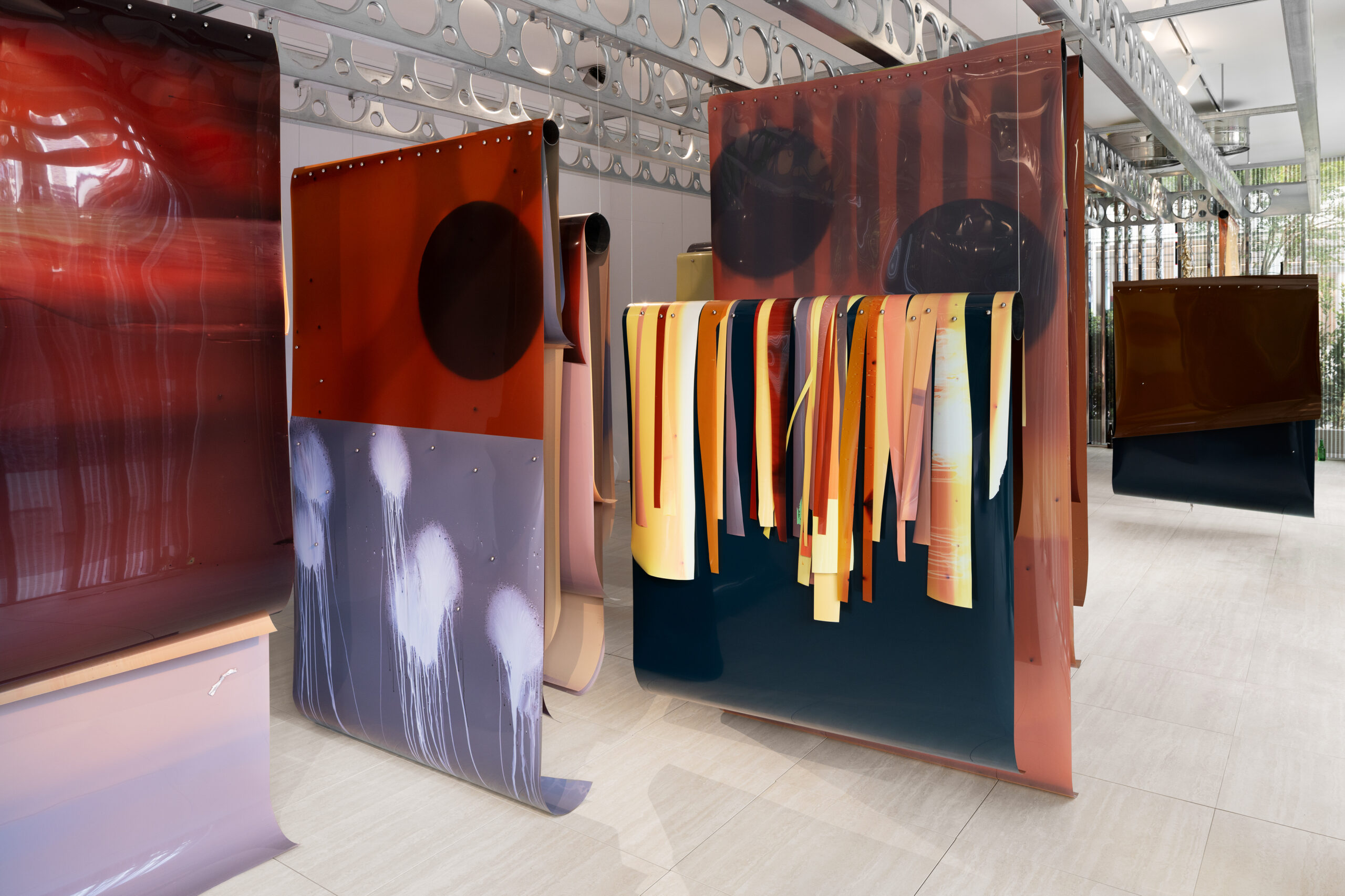
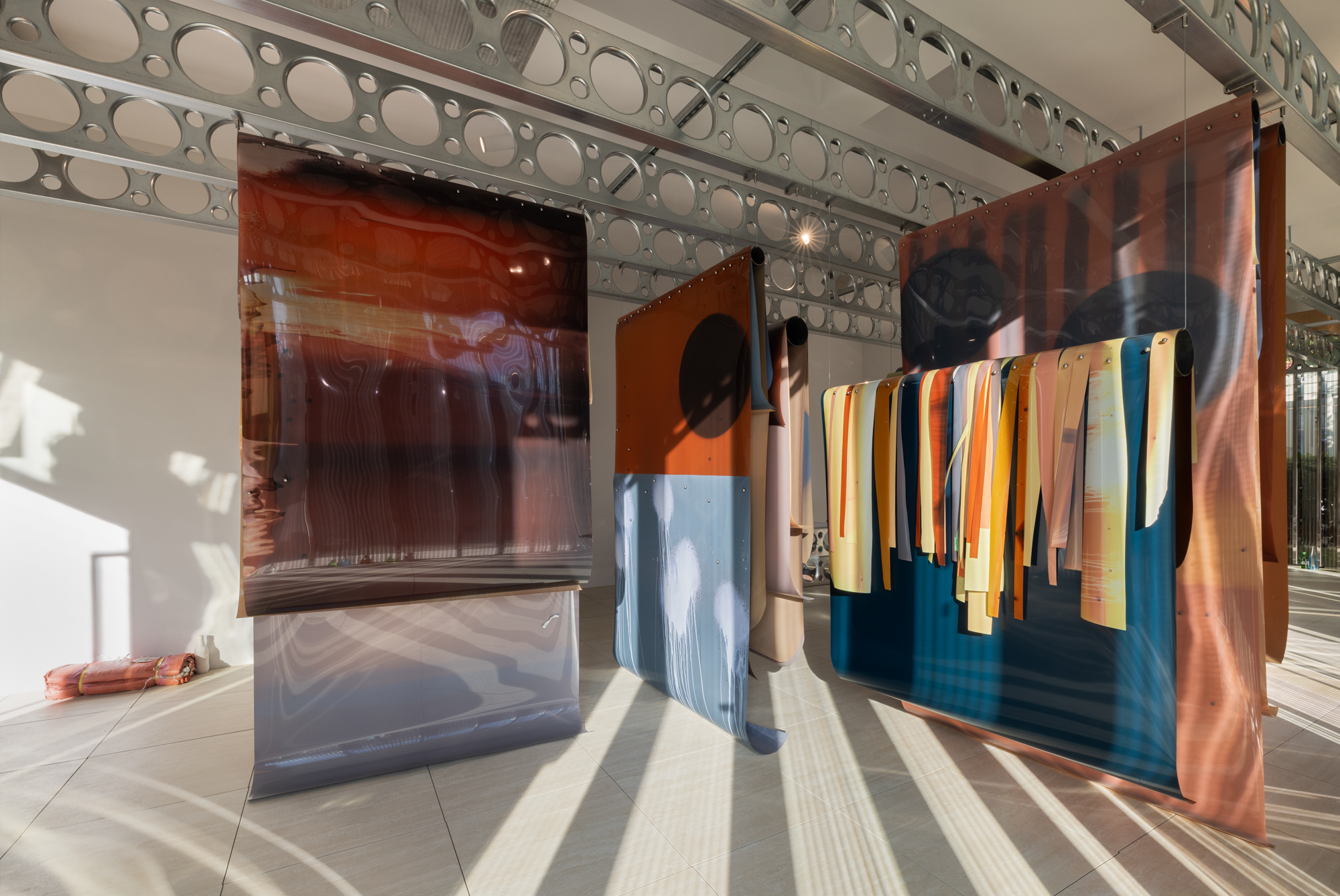
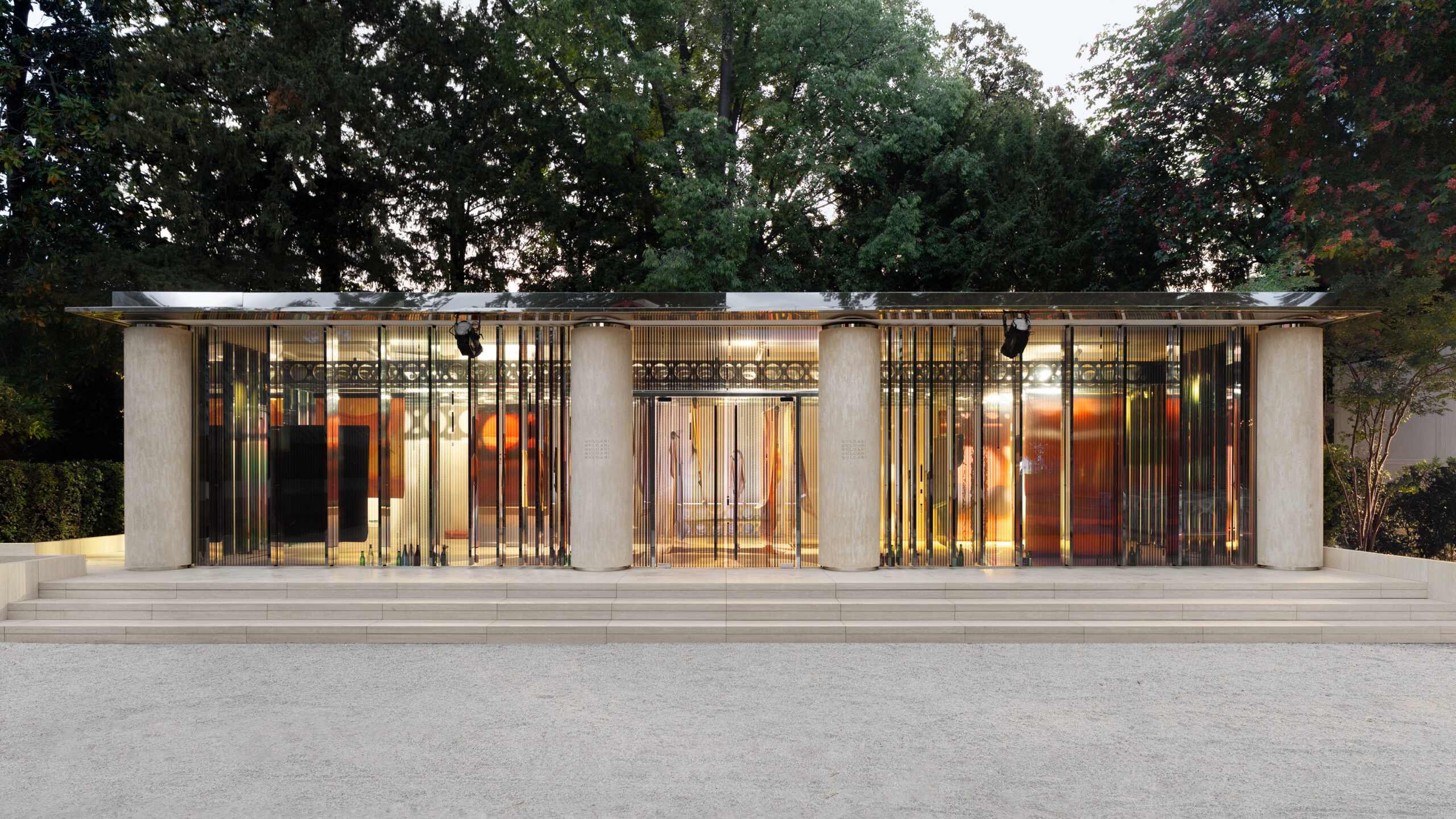
At the Giardini, Bvlgari’s presence takes shape through Lotus L. Kang, the Toronto-born artist whose practice moves between photography, sculpture, biology, and time. Kang is known for working with materials that change: unfixed photographic film, light-sensitive surfaces, organic matter, and forms that respond to their environment. Her work sits naturally within a Biennale concerned with altered states of attention and meaning. In Venice, her project brings Bvlgari’s language of materiality into contact with an artist for whom transformation is the work itself.
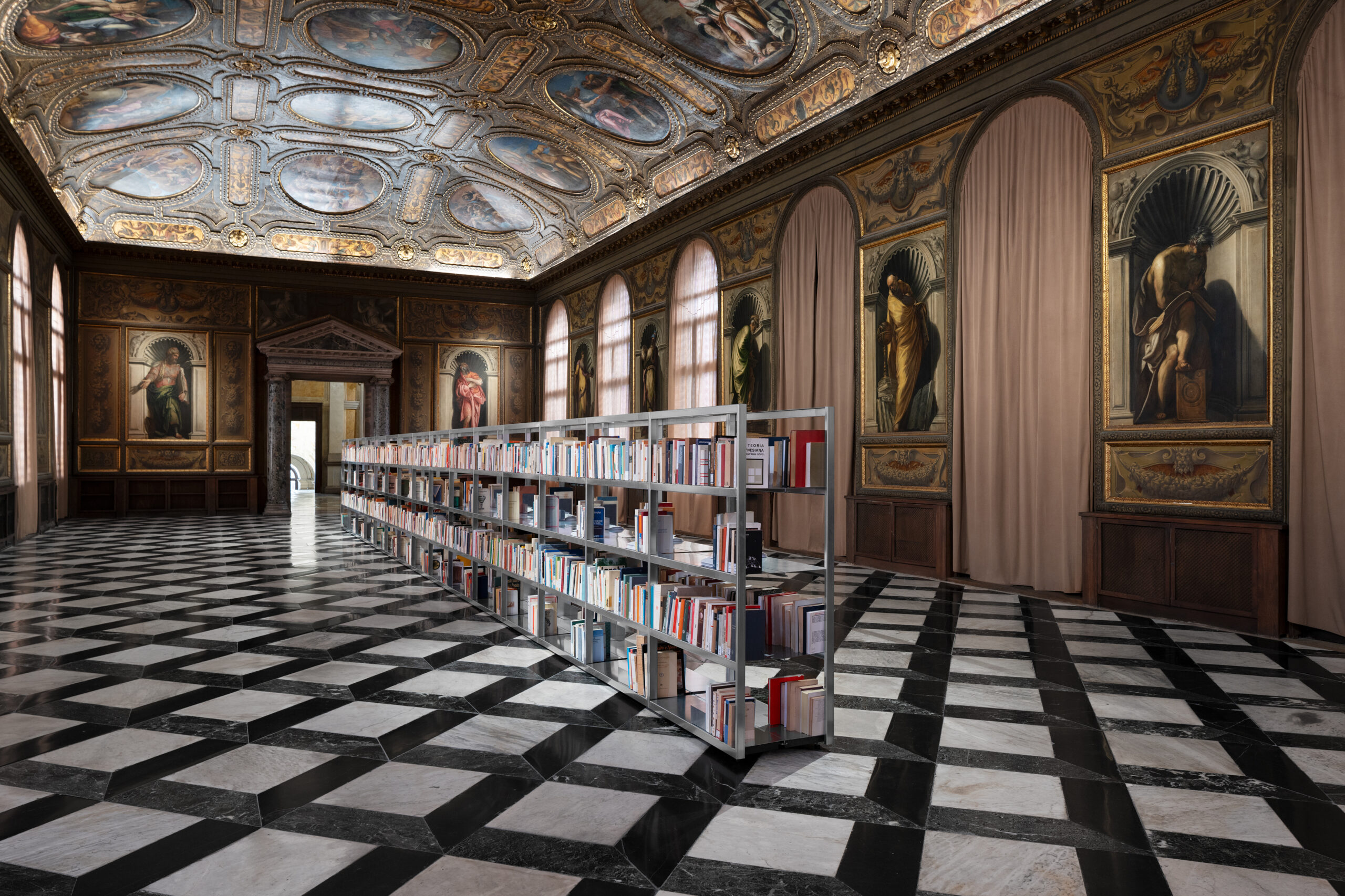
The decision to stage Fondazione Bvlgari’s first exhibition at the Biblioteca Nazionale Marciana began before the Maison’s partnership with the Biennale had been formalised. Bvlgari already knew it wanted to be present in Venice. “The Venice Biennale is the most important Biennale for art, and also for architecture, in the world,” says Fondazione Bvlgari’s Managing Director Matteo Morbidi. The Marciana was the first place they visited. The search stopped there.
“When you enter that space, you cannot think of something else,” Morbidi says. On the same day, he met Stefano Trovato, director of the Biblioteca Nazionale Marciana, a historian whose support became central to the project. Their conversation revealed a shared belief in the place of contemporary art within a historic institution. Trovato, he says, became “the fan number one of this project.”
Founded on Cardinal Bessarione’s donation in 1469 and designed by Jacopo Sansovino, the Marciana is one of Venice’s great monuments to memory, preservation, and the transmission of knowledge. Inside its Sale Monumentali, Fondazione Bvlgari brings together two artists whose practices engage with language, archives, material traces, and the physical life of knowledge.
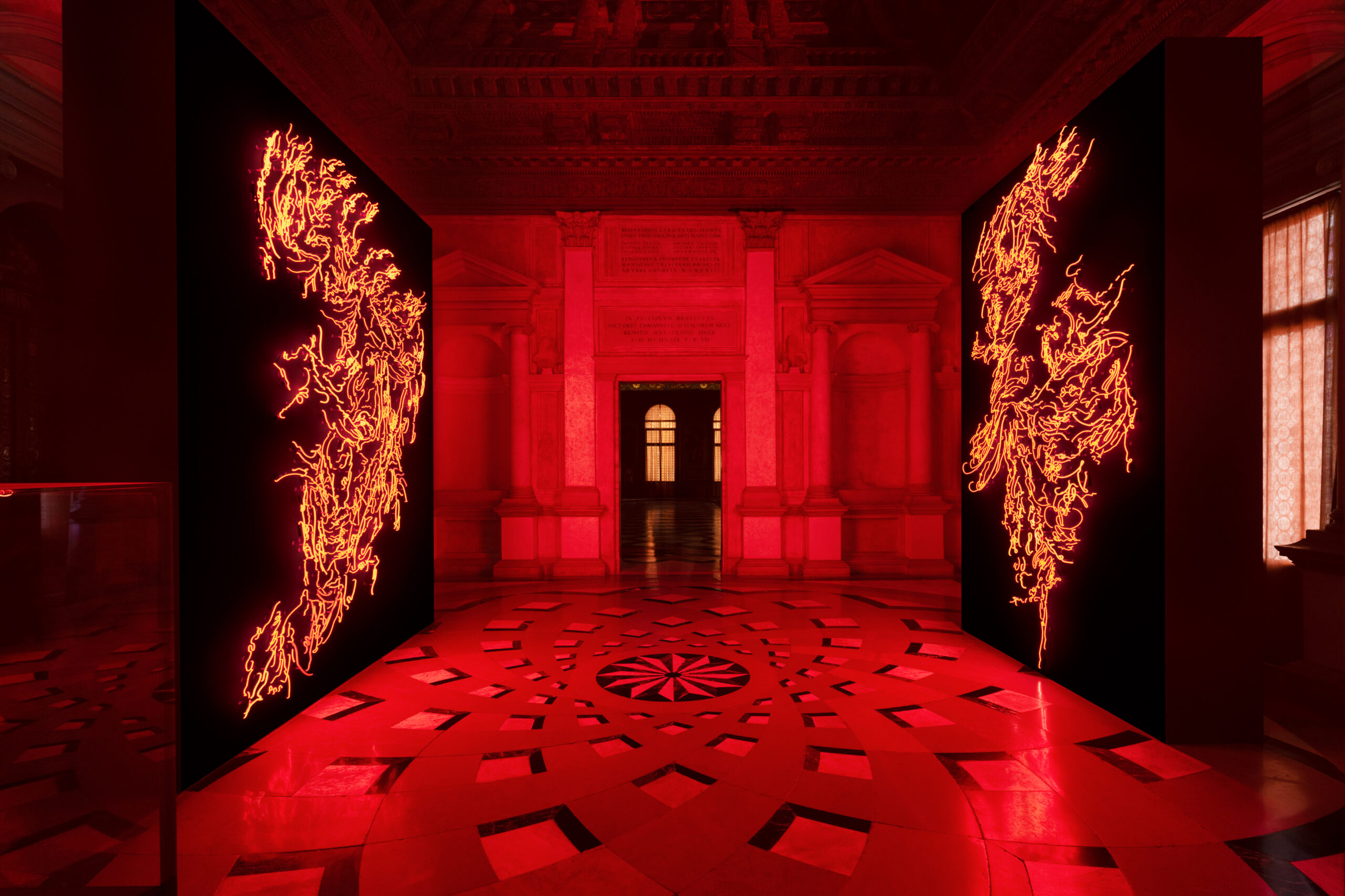
Monia Ben Hamouda opens the exhibition with Fragments of Fire Worship, an installation of two neon sculptures placed in the Vestibolo. Drawing from the artist’s relationship to calligraphy, shaped by her background as the daughter of an Islamic calligrapher, the work turns writing into fragmented, luminous, difficult-to-read signs.
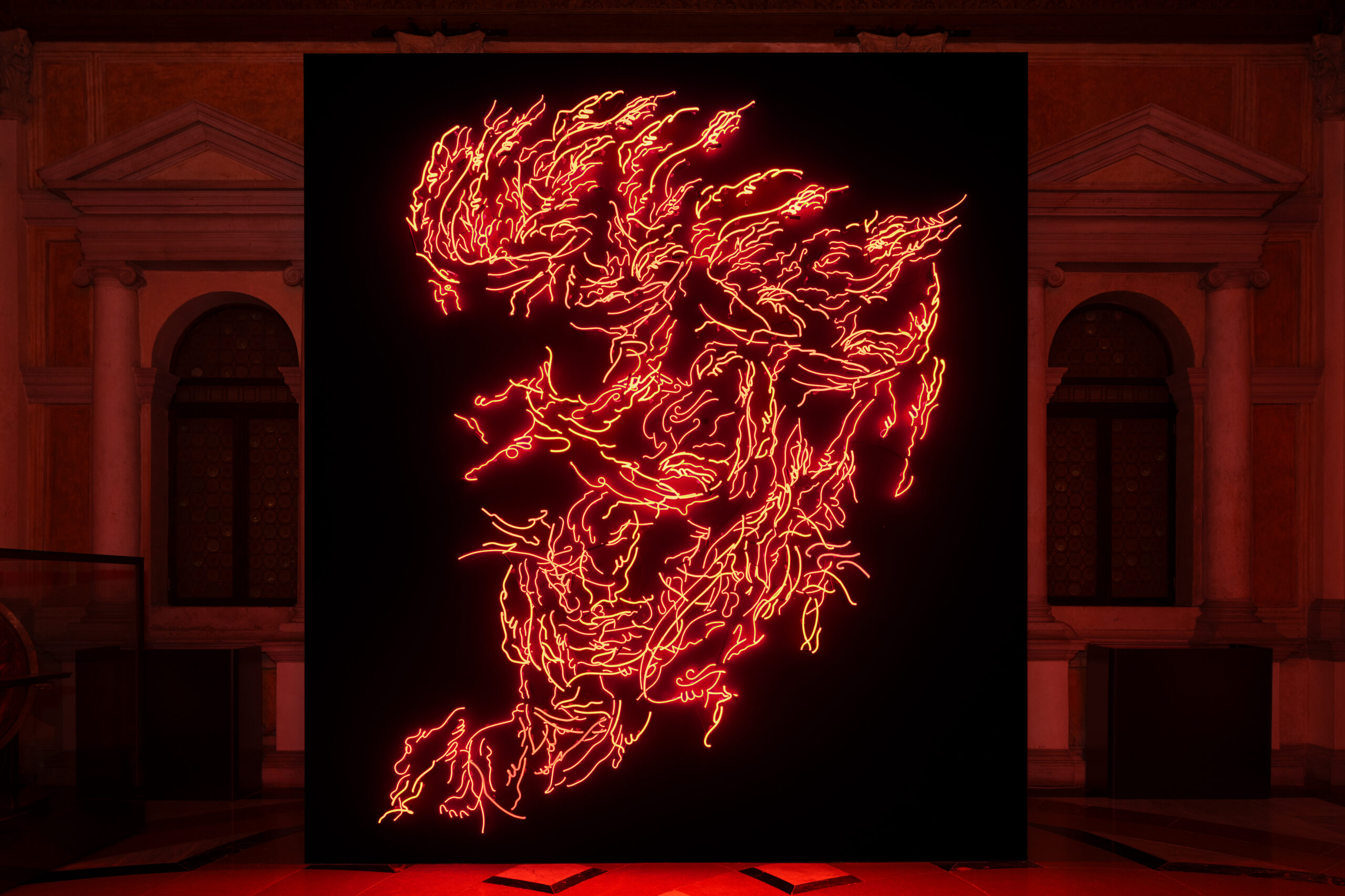
Ben Hamouda’s presence grows out of an existing relationship with Bvlgari. She won the most recent edition of the MAXXI Bvlgari Prize and has since become, in the words of the foundation’s Managing Director, “sort of part of the Bvlgari family.” The collaboration also extends to Milan, where her sculpture Ya’aburnee (Untranslated Fragment I) will be installed in the garden of the Bvlgari Hotel Milano from 27 April, remaining on view for the duration of the Biennale Arte 2026.
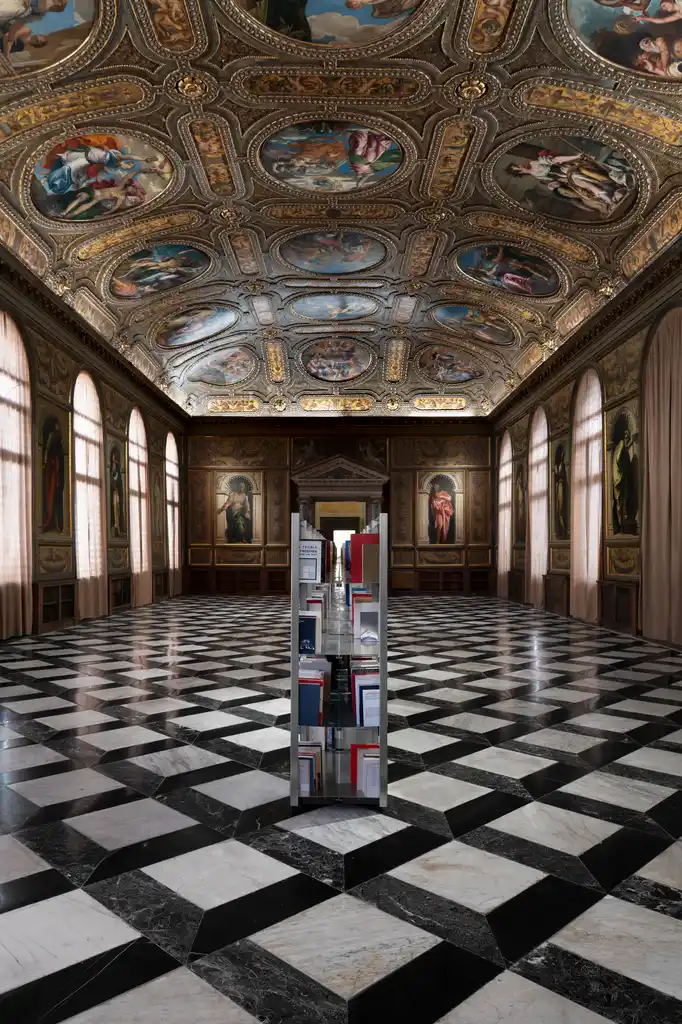
In the Salone Sansovino, Lara Favaretto presents the seventh and final chapter of Momentary Monument – The Library. The scale of the project is immense. According to Morbidi, Favaretto began by building an initial body of around 12,000 books. “She started her selection of books calling all the universities, all the libraries in Italy,” he says. “She did an incredible job for seven, eight months.”
From that mass of material, Favaretto selected 2,700 volumes. “She examined each book,” he continues. “She selected each book one by one.” Every book’s position was decided by the artist. Inside each volume, Favaretto has placed an image from her personal archive, which she has been building since 1995. “In each book, there is an image,” the director says. Displayed on a monolithic shelving structure, the work becomes an archive, a reading room, and an artwork shaped through months of handling, looking, and choice.
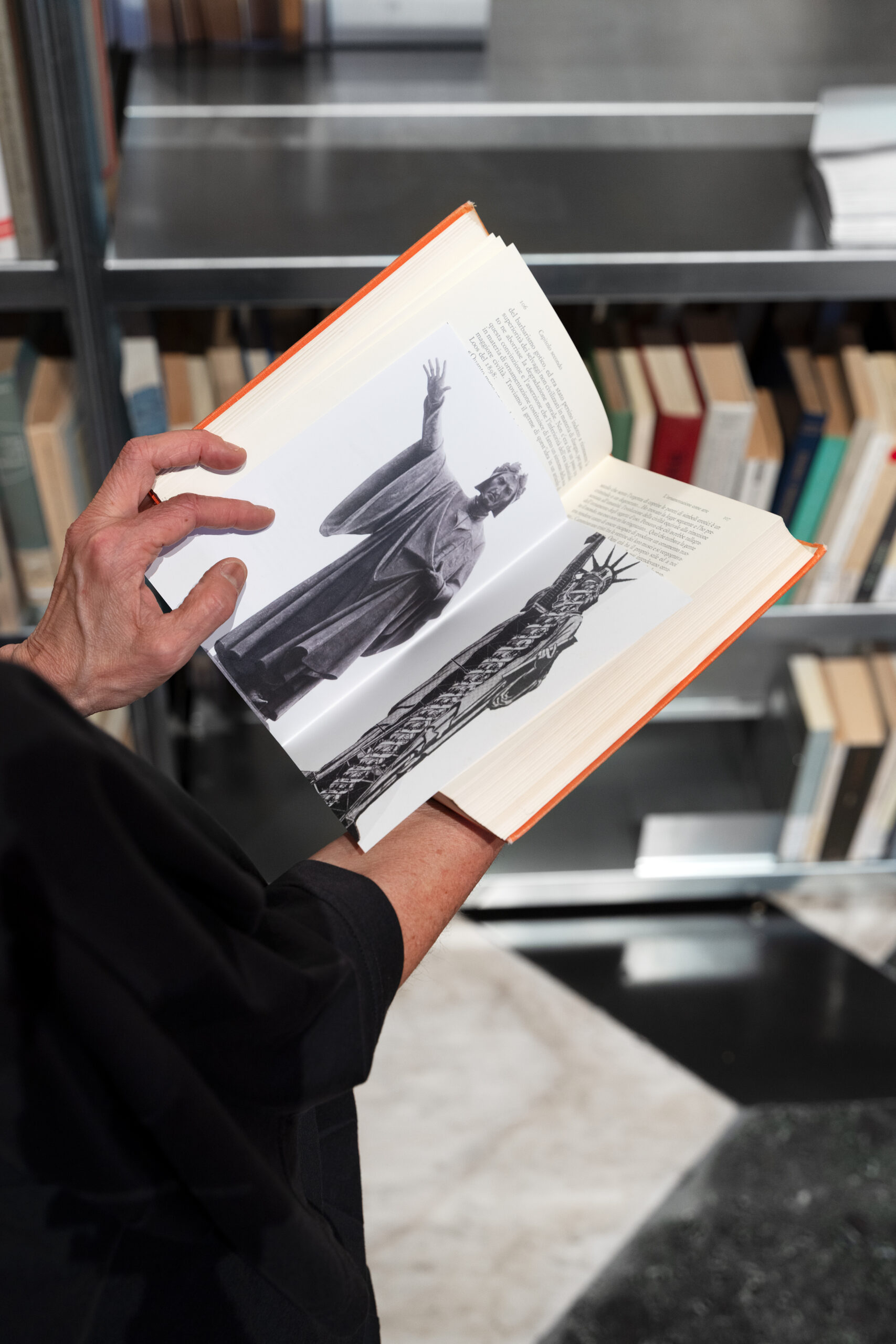
The pairing of Favaretto and Ben Hamouda came after the location had been chosen. “First of all, we selected the place,” says the Managing Director. “Then we started to think about which kind of artists we could bring to this special place.” In the Marciana, their works activate the library’s central questions: what survives, what is lost, what can be read again, and what happens when memory enters the present.
For the foundation’s Managing Director, the library’s role feels especially urgent now. “The library is really a place of memory, a place of culture, a place of history,” he says. Favaretto’s use of real books became essential to the project for that reason. “It is so important, especially in this specific time, to rediscover the library as guardian of the memory and of the past and of the culture.”
The broader context is Fondazione Bvlgari’s growing cultural role. Established in 2024, the foundation expands the Maison’s work across contemporary art, historical restoration, education, philanthropy, and the transmission of savoir-faire. “It’s not an art foundation, it’s a philanthropic foundation,” says its Managing Director. “Of course, we feel more responsibility. This is also the reason why we decided to establish the foundation.”
For Fondazione Bvlgari, the Biennale partnership is part of a larger commitment to long-term cultural projects. “We want not to have a spot sponsorship of a small project, but really invest in long-term projects,” he says. That same logic applies to the MAXXI Bvlgari Prize in Rome, the Maison’s support of the Whitney Biennial in New York, and the restoration of the Torlonia Collection, one of Rome’s most important private collections of ancient marble sculpture. Bvlgari has so far supported the restoration of 150 sculptures from a collection of more than 600 works.
“What I would like to achieve is to concentrate on long-term projects with the goal to make things accessible and visible for future generations,” the Managing Director says. “It is the same value if you do a restoration project, if you restore the collection, if you support young artists, if you invest in the education of young children. It is really investing in the future and future generations, and making things visible and accessible to everybody. This is the mission of the foundation.”
That idea also shapes his view of the role luxury brands should play today. “It is a responsibility for the luxury brand of today to support the cities where they are born, support the monuments, support the talents, the young talents,” he says. “They have to support these kinds of cultural projects.”
For Bvlgari, that responsibility is tied to Rome, heritage, restoration, craftsmanship, and contemporary art. “I think only the brands that sell not only products, but values, history, heritage, craftsmanship, only the brands that give values to the customer, can be the player of the future,” he says.
Asked who defines culture today – institutions, audiences, or artists – the Managing Director resists a single answer. “I think all of them,” he says. “It’s a mix, and the Biennale is a great example. The dialogue that the Biennale is able to create between the institution and the artists really makes culture today.”
In Venice, that dialogue becomes visible. In the Marciana, books are handled, selected, placed, opened. Language is fractured into light. Archives are made public again. Materials change over time. Across these projects, Bvlgari frames patronage as cultural continuity: a way of preserving, supporting, and making visible the ideas and objects that shape what comes next.
For more stories of art and culture, visit our dedicated archives and follow us on Instagram.