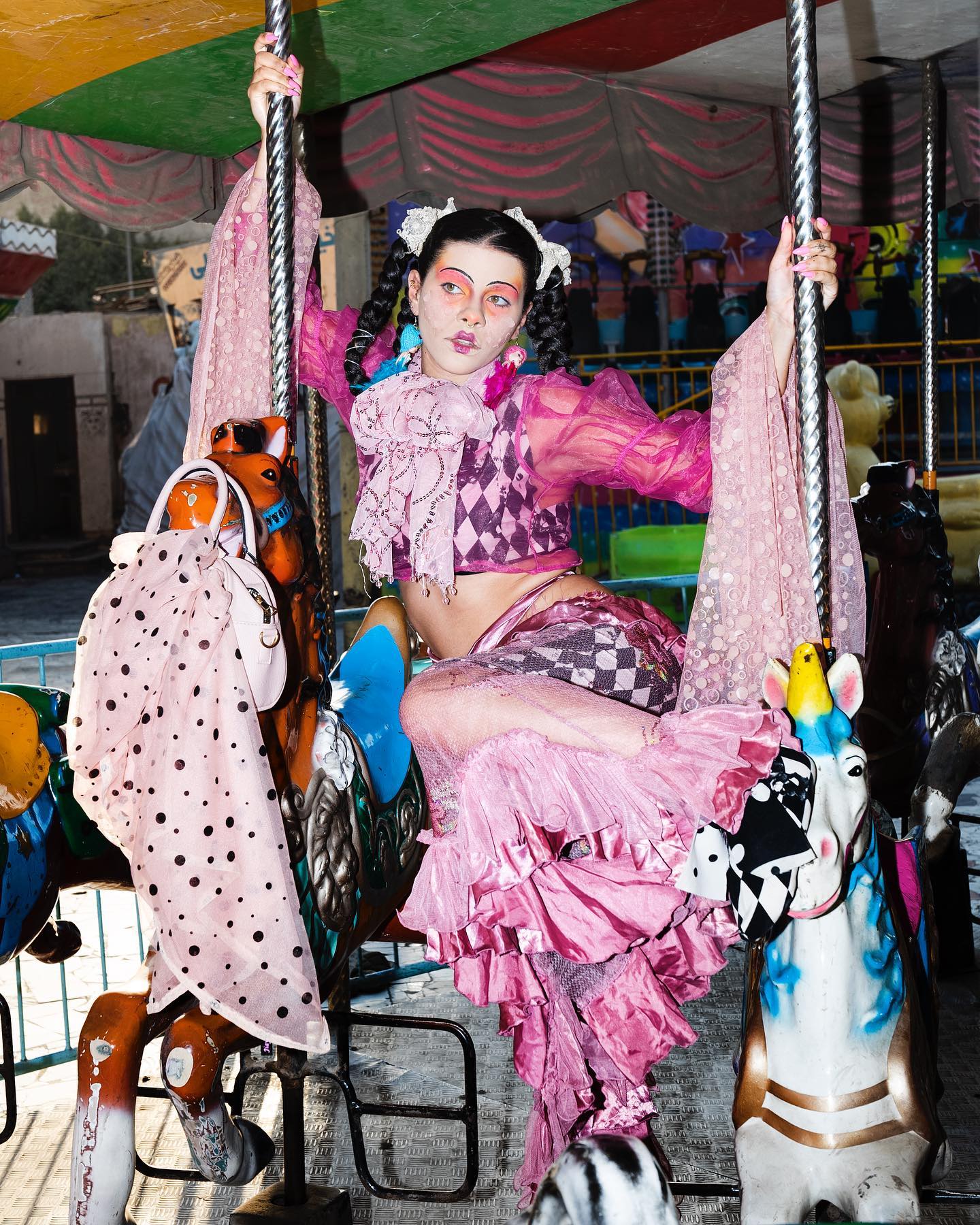
We are living in an era of terrifyingly immaculate execution. Within seconds, an algorithm can spit out a hyper-rendered, vector-perfect image, a sterile corporate logo, or a prose composition sanded down to every smooth, frictionless edge. Online, everything is getting cleaner, slicker, and infinitely more optimized. However, look closer at your feeds.
Spliced between this so-called perfection, something wonderfully unruly is staging a takeover. We are seeing more and more uneven handwriting scrawled across digital graphics, naive illustrations that look like they were drawn with a blunt crayon, wildly clashing bright colours, and clothing accessorized with playful keychains and storybook motifs.
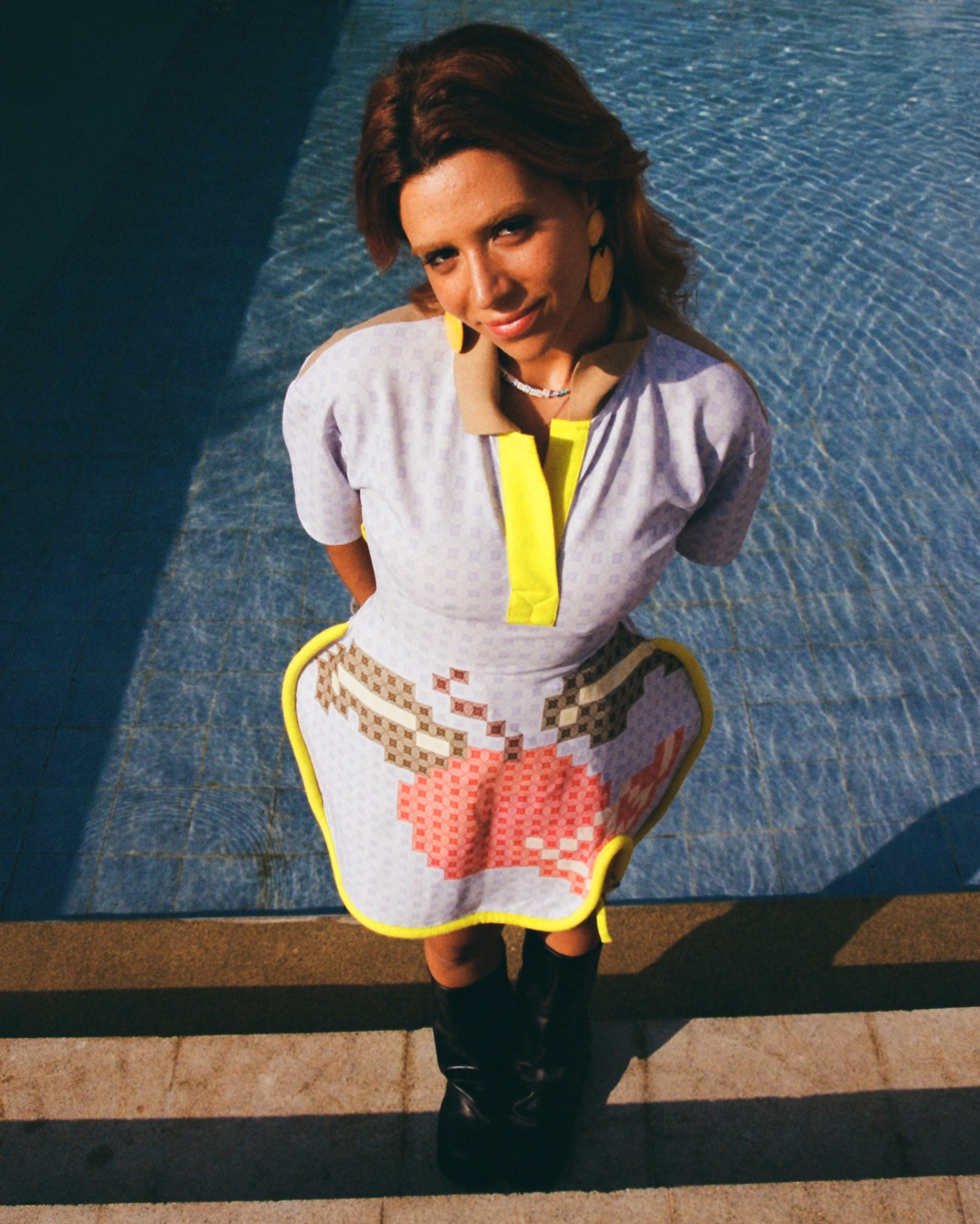
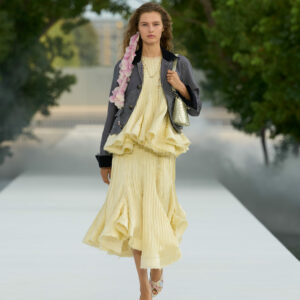
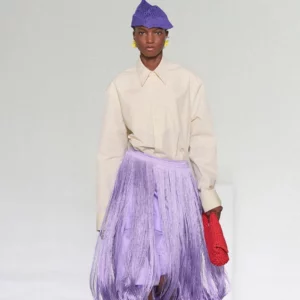
Oversized silhouettes, teddy bears, heart-shaped motifs, bows, stickers and schoolgirl accessories have all made their way into luxury fashion brands like Coach, Louis Vuitton, and Simone Rocha, collapsing the old idea that dressing like an adult has to mean dressing seriously. Ruffles, tulle, frills, bejewelled hair clips, bag charms; the irony is almost perfect: we spent childhood dressing up as adults, only to reach adulthood and spend adult money on the things we were expected to outgrow.
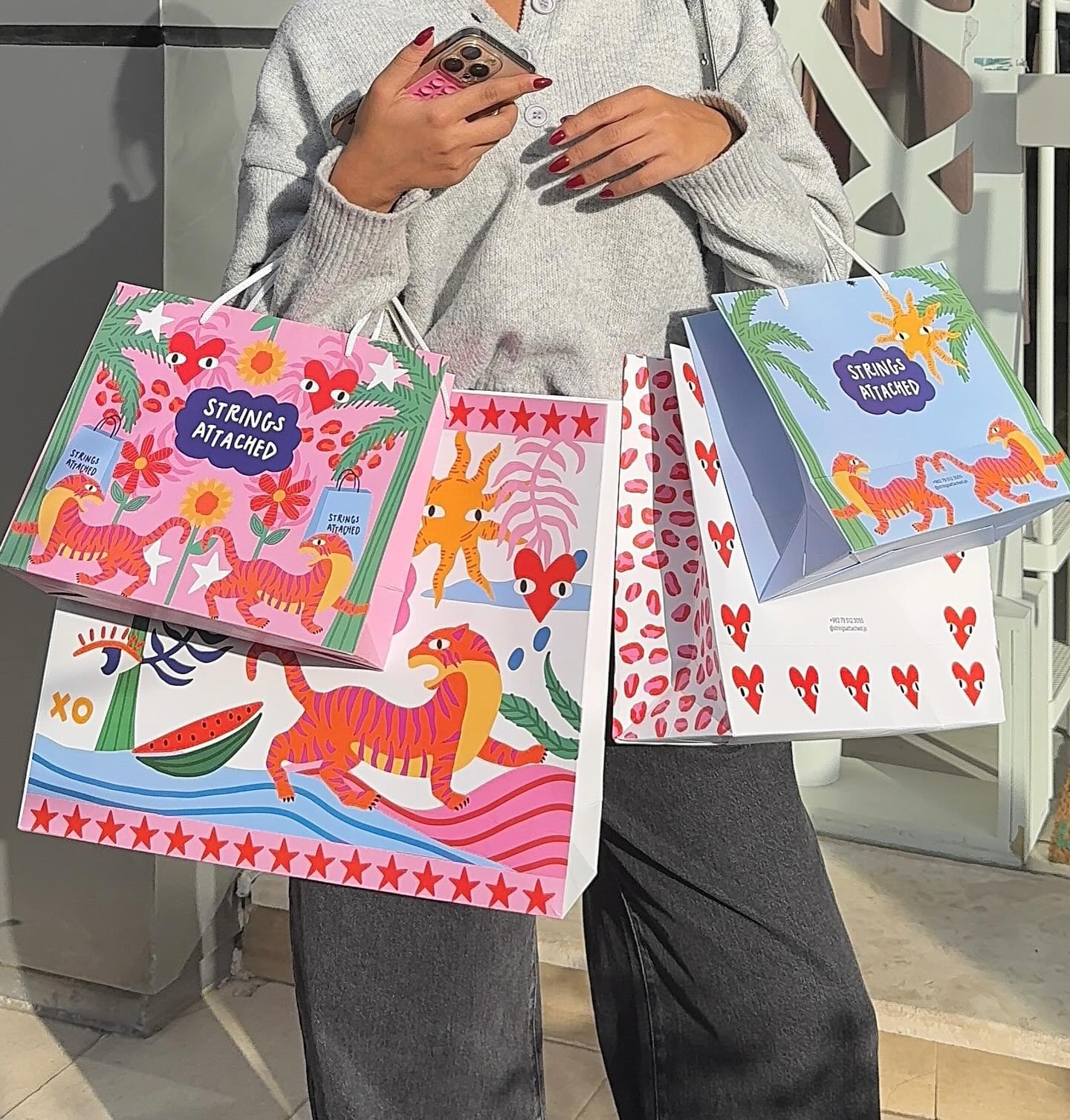
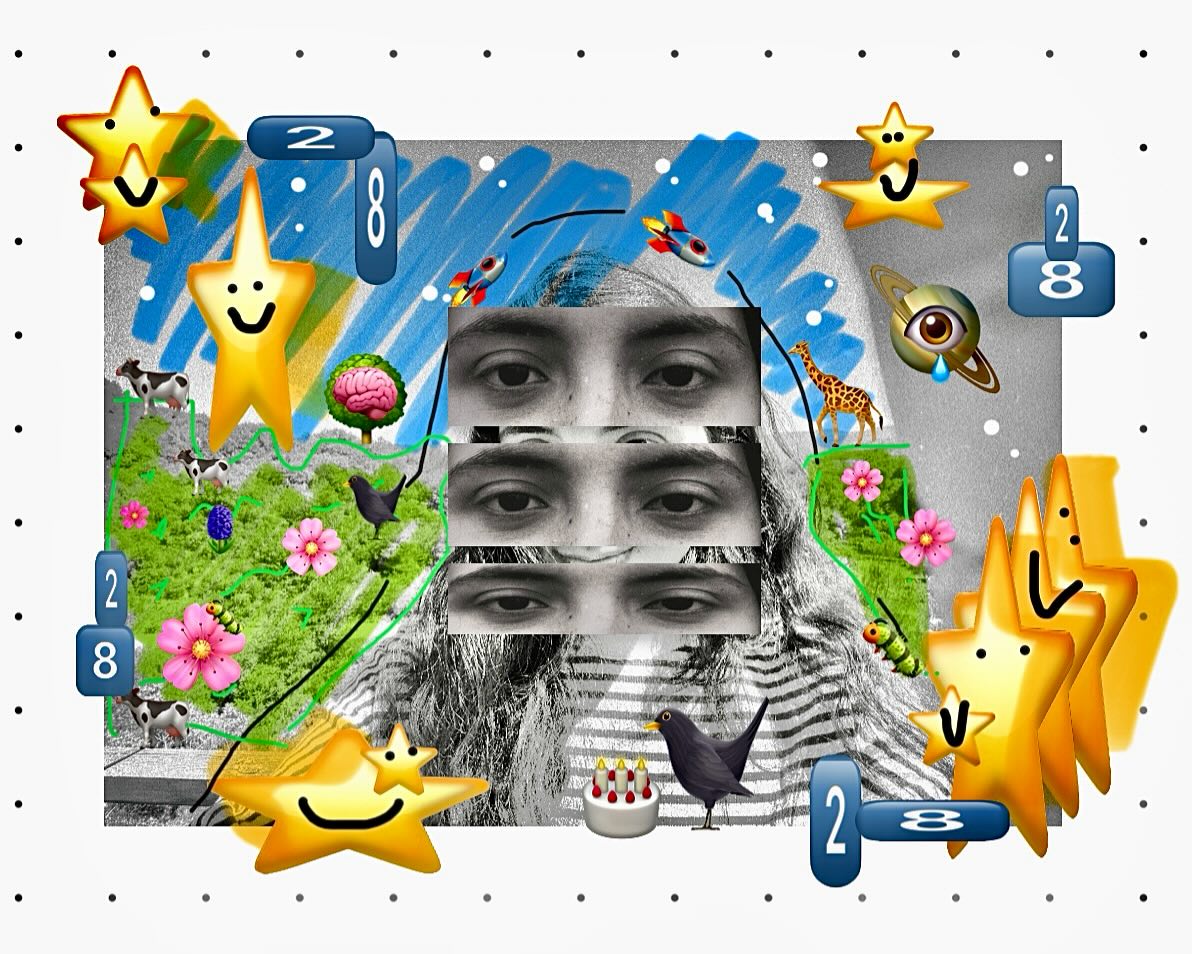
Graphic design has been moving in the same direction, like the work of Jordanian designer Abeer Anabtawi, and Egyptian designers like Nabeela Roshdy and Naira Shalaby. After years of perfect grids, pale palettes and squeaky-clean branding, kid core and adjacent styles like type collage are bringing back the language of childhood: sticker sheets, crayon drawings, toy packaging, bubble lettering, cartoon graphics and intentionally uneven shapes. The point isn’t to make design look childish so much as to recover the spontaneity that digital design had ironed out.
There’s more going on here than just nostalgic throwback or a bout of arrested development. The surge toward childlike aesthetics—spanning fashion, graphic design, and digital media—is a cultural defence mechanism. It is a refuge against burnout, and most importantly, it is the ultimate rebellion against artificial intelligence. Even pop music is leaning into the same visual cues. Zara Larsson’s Midnight Sun era, for example, trades slick pop-star perfection for something more whimsical and fantastical, with playful styling and imagery that feels closer to a childhood daydream (with the dolphins).
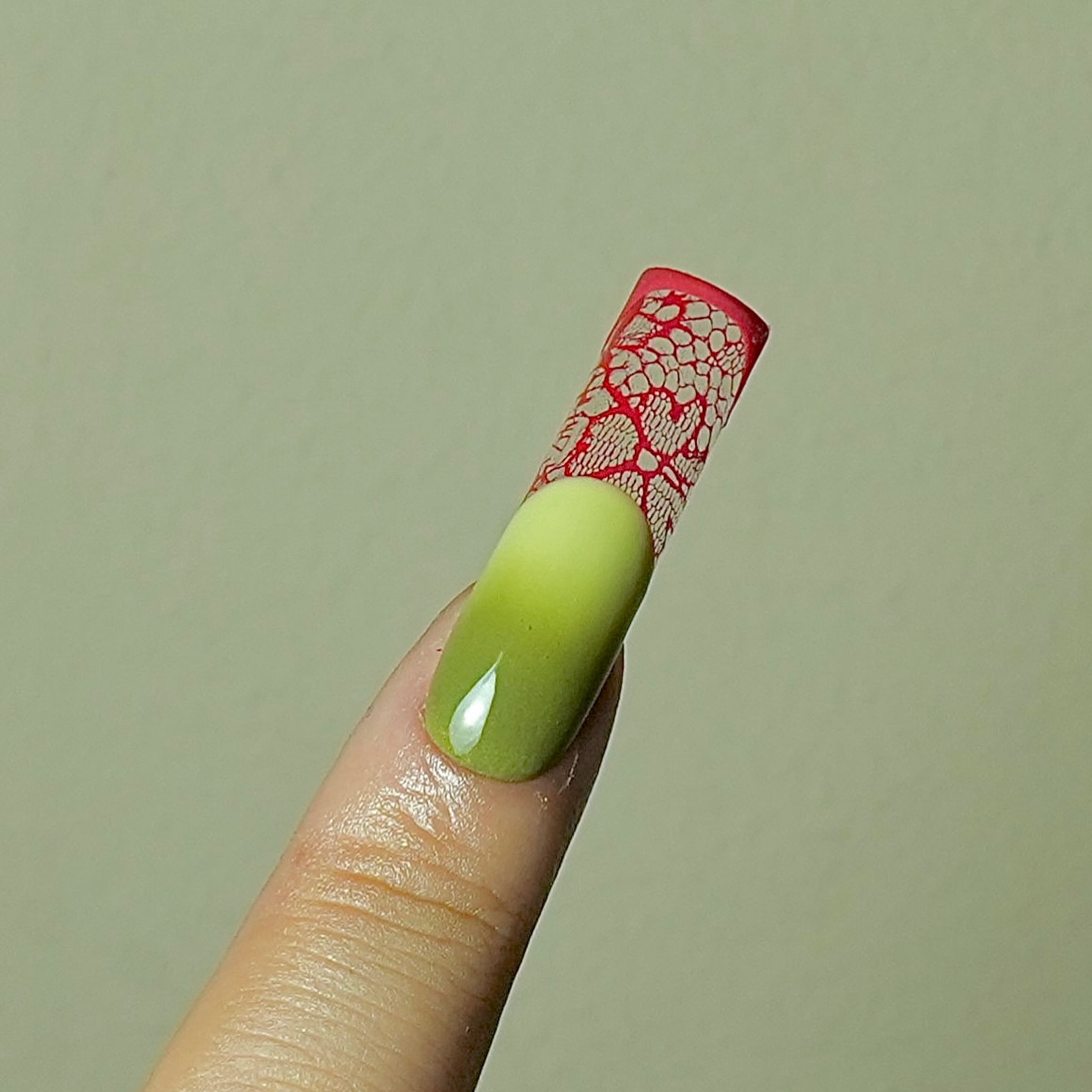
While closer to home, that whimsy has made its way down to our fingertips. Egyptian nail artist Claws by Faye regularly works with flowers, Hello Kitty, lace-tipped press-ons, charms and other wonderfully unserious motifs, turning nails into tiny collages of childhood references. Across mediums, the instinct is remarkably similar: taking something that might once have been dismissed as childish, tacky or unserious and treating it as worthy of adult creativity.
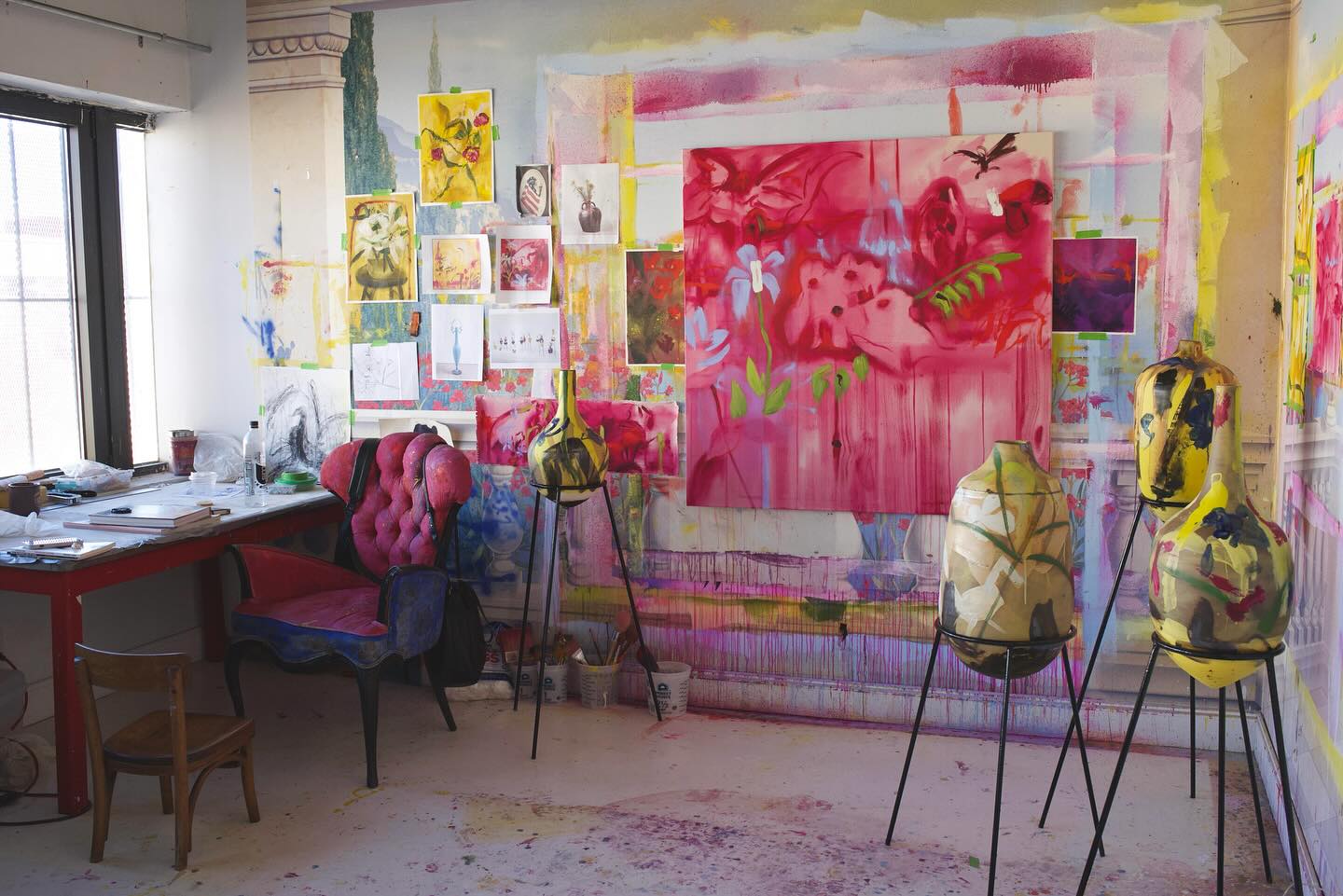
The appetite for playfulness stretches well into art as well. Palestinian-American artist Saj Issa works across painting, ceramics and sculpture, carrying vivid colour studies and gestural brushstrokes from paper onto pots, vessels and sculptural forms. Her work can be exuberant in colour and form, even as it deals with much heavier ideas around landscape, memory and Palestinian identity. UAE-based fashion house Reemami taps into a similarly illustrative sensibility. Their clothes have featured hearts and hand-drawn imagery, including Palestinian references rendered almost like sketches across knitwear, evidence that serious cultural storytelling doesn’t necessarily have to arrive dressed in seriousness
Psychologically, the gravitation toward childhood elements makes intuitive sense. When the adult world feels saturated by economic instability, political friction, and an unrelenting news cycle, the brain looks for safe harbours. Childlike aesthetics act as an emotional safety blanket. In lifestyle spaces, trends like “healing my inner child” and “girlhood” offer a way to reclaim the pleasures and freedoms of childhood on adult terms. They offer a space where adults—particularly women, whose aesthetic choices have historically been policed by rigid ideas of professionalism—can reclaim playfulness and become carefree.
It is also a form of self-regulation. When life feels entirely out of your control, choosing to wear a bright, primary-coloured accessory or surrounding yourself with playful motifs is a micro-act of autonomy. It is a way of saying: I refuse to let the world make me entirely severe.
Aside from the psychological comfort, there is an obvious pushback against technology happening here. Lately, the internet has started to look completely flattened by AI-generated gloss. Software doesn’t slip up on its own; it churns out symmetry, flawless gradients, algorithmic alignment, and clean vector lines without breaking a sweat.

Naive design does the opposite. It celebrates the tremor of a human hand, quirky proportions, spontaneous scribbles, and layouts that look delightfully unbalanced. In an AI-infused 2026, clumsiness has become a luxury. A messy, handwritten title on a digital flyer or a slightly off-kilter illustration is a proof-of-life badge. It whispers to the viewer: A human made this. We were here, we were tired, we were feeling something, and our hands shook while we did it. Against the cold output of a server farm, a clumsy crayon stroke is an act of fierce preservation.
The real pull here is that it pushes back against the binary that growing up requires abandoning wonder. For too long, adulthood was sold to us as a gradual process of bleaching the colour out of our lives in exchange for seriousness and corporate-led lives.
The return of the childlike aesthetic suggests we are finally calling that bluff. We are realizing that trading our imagination for sterile maturity was never an upgrade.
For more stories of fashion, art and culture from around the region, visit our dedicated archives and follow us on Instagram.