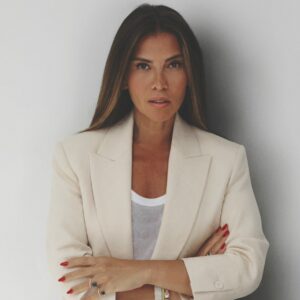
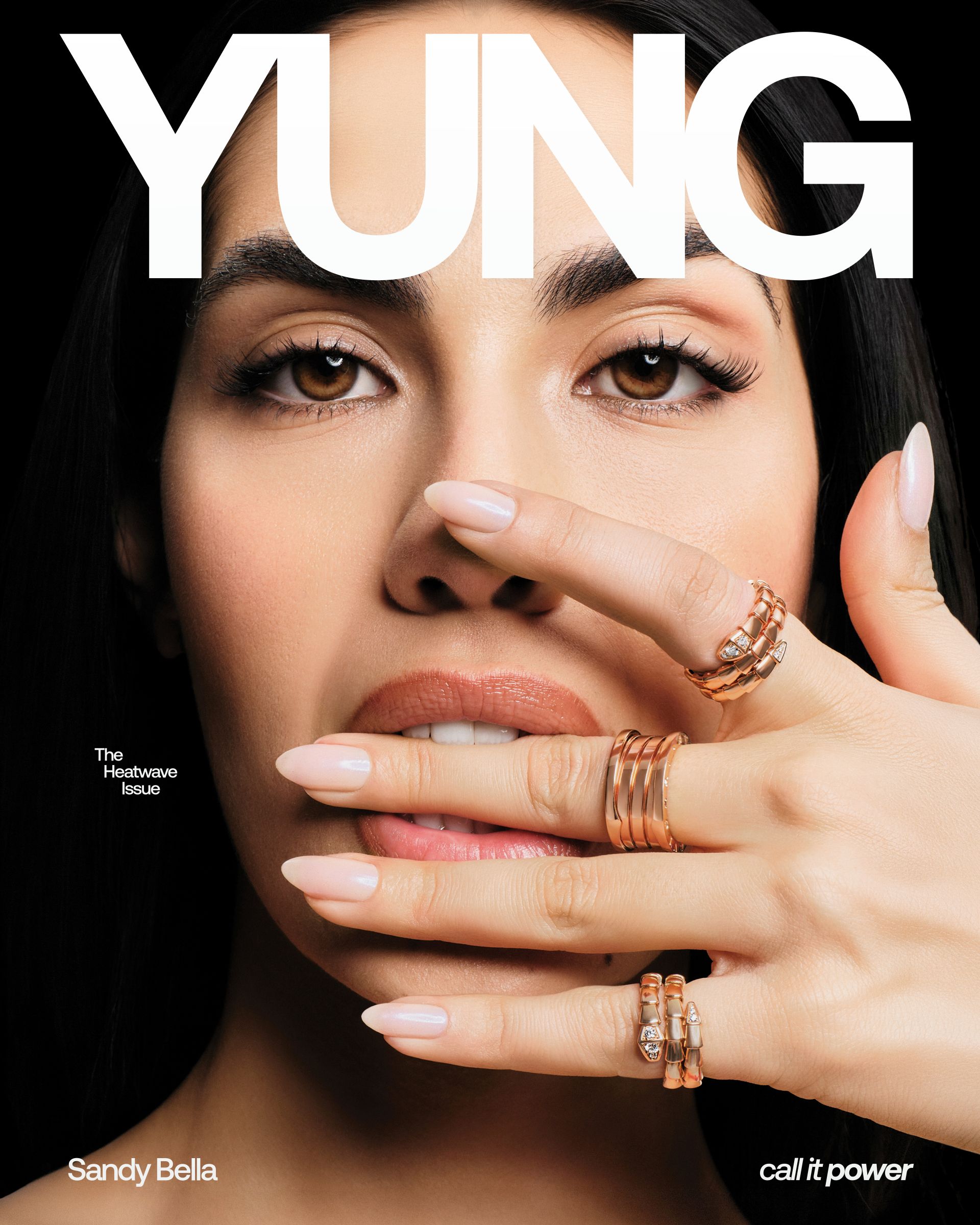
Known for her role in Franklin, and the recently launched 7 Dogs, there is a version of Sandy Bella that people think they understand. It lives on the surface, in images, in quick impressions, in the quiet assumptions made before she has even spoken. But that version, the Lebanese actress makes clear, is incomplete. What exists behind the surface is something far more deliberate, built over time through dedication, repetition, and a refusal to be reduced to a single frame. “I’m someone very disciplined and focused,” she says. “People see the surface, but behind it there’s a lot of work, consistency and intention in everything I do.”
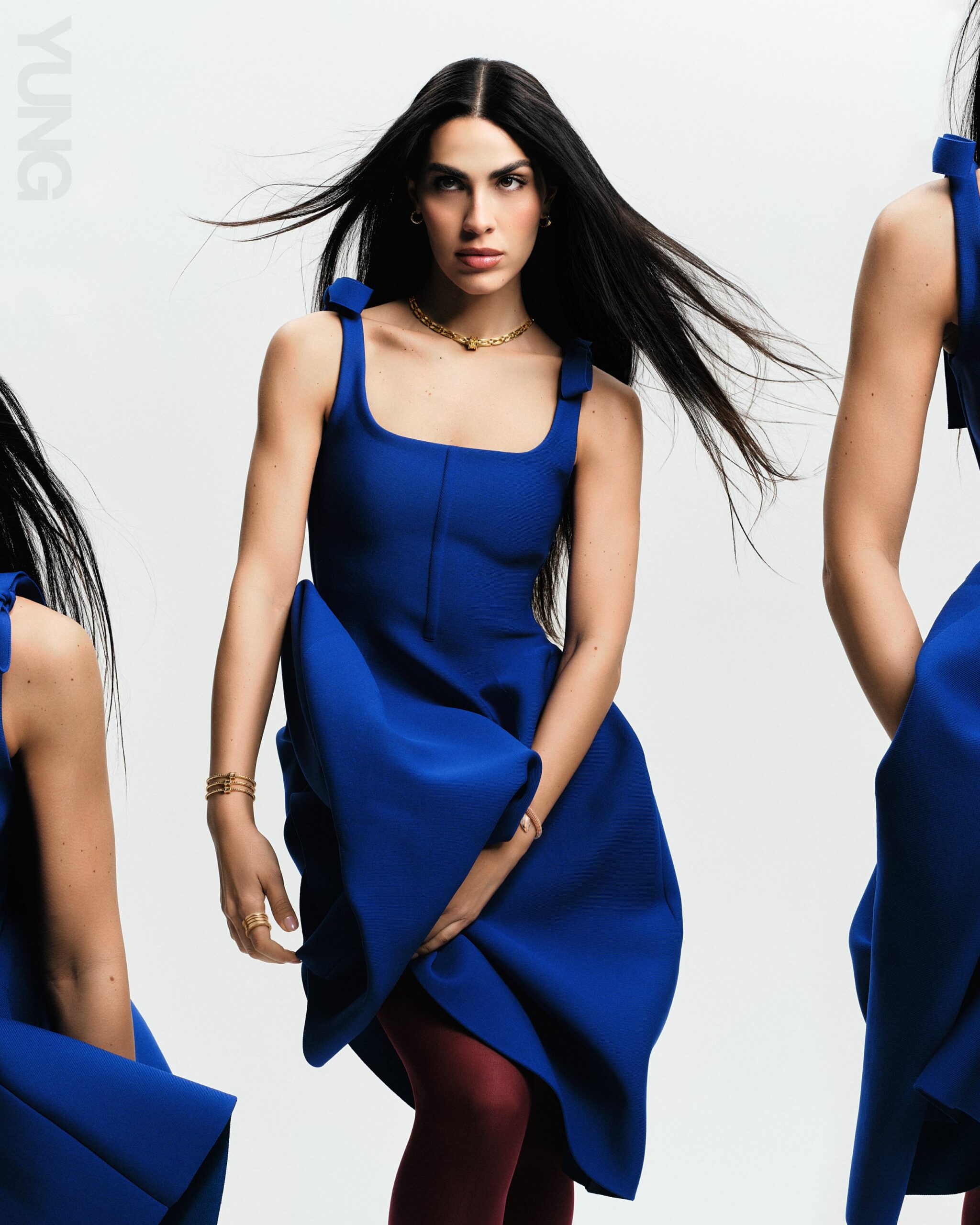
It is this insistence on depth, on process over perception, that defines where she stands today. She’s no longer reacting to an industry, she’s slowly shaping her place within it.
Sandy Bella moves between modelling and acting, but the distinction between the two is becoming clearer. Modelling introduced her to visibility, to presence, to the language of the image. Acting, however, is where she feels something shift internally, where expression moves beyond aesthetics and into something more layered. “Modelling is part of me, it’s how I got here,” she explains, “but right now acting feels more real and allows me to express myself more.”
When she speaks of acting being “more real”, it is not about abandoning one world for another. It is about evolution. Modelling remains part of her identity, but acting offers a different kind of honesty, one that requires her to confront herself, to understand emotion, to hold space for complexity. It is not about being seen, but about being understood.
And understanding, for Sandy Bella, is tied to intention. There is a clarity in the way she approaches her career now, one that resists urgency in favour of direction. She is not chasing visibility for its own sake. She is building something, piece by piece. “I’m focusing on building my career step by step,” she says. “I also never stop working on myself, I want to be good at everything.”
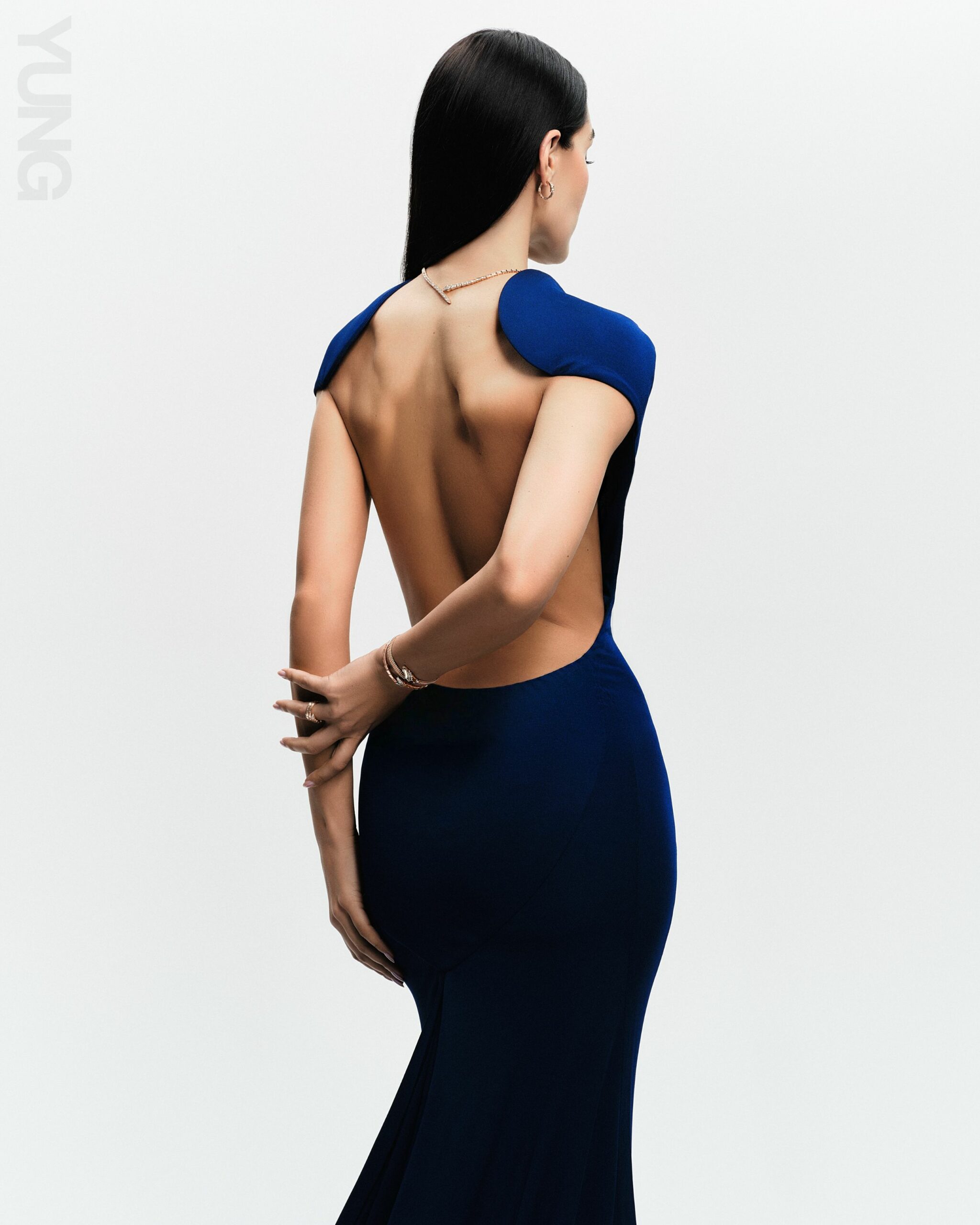
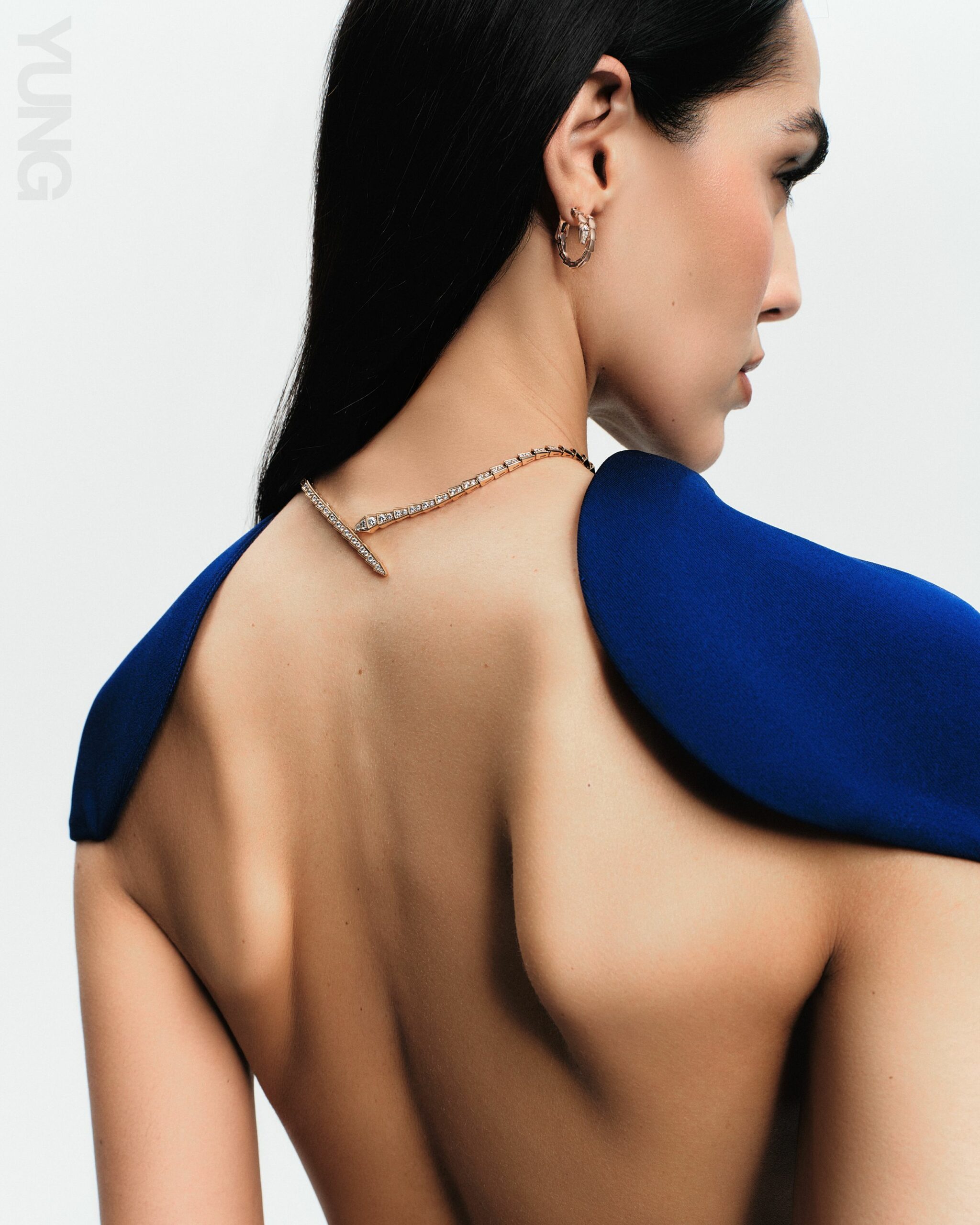
It is a statement that could sound simple, but it speaks to a deeper philosophy. Growth, for her, is not passive. It is active, continuous, and often unseen. It happens in the quiet moments, in preparation, in the decisions that never make it to the final image or the final scene. “I’m thinking long term, not just quick moments,” she continues. “I don’t want to be seen just for the sake of being seen.”
That resistance to immediacy, to the fast pace of visibility that defines much of the industry, is what sets her apart. She is not interested in fleeting recognition. She is interested in permanence, in building a body of work that reflects who she is becoming, not just who she appears to be.
Her role in Franklin marked an important point in that journey. Not because of what audiences saw, but because of what it demanded from her behind the scenes. “Honestly, it’s the work behind it,” she says when reflecting on the experience. “It made me respect the process even more and understand how much work goes into every scene.”
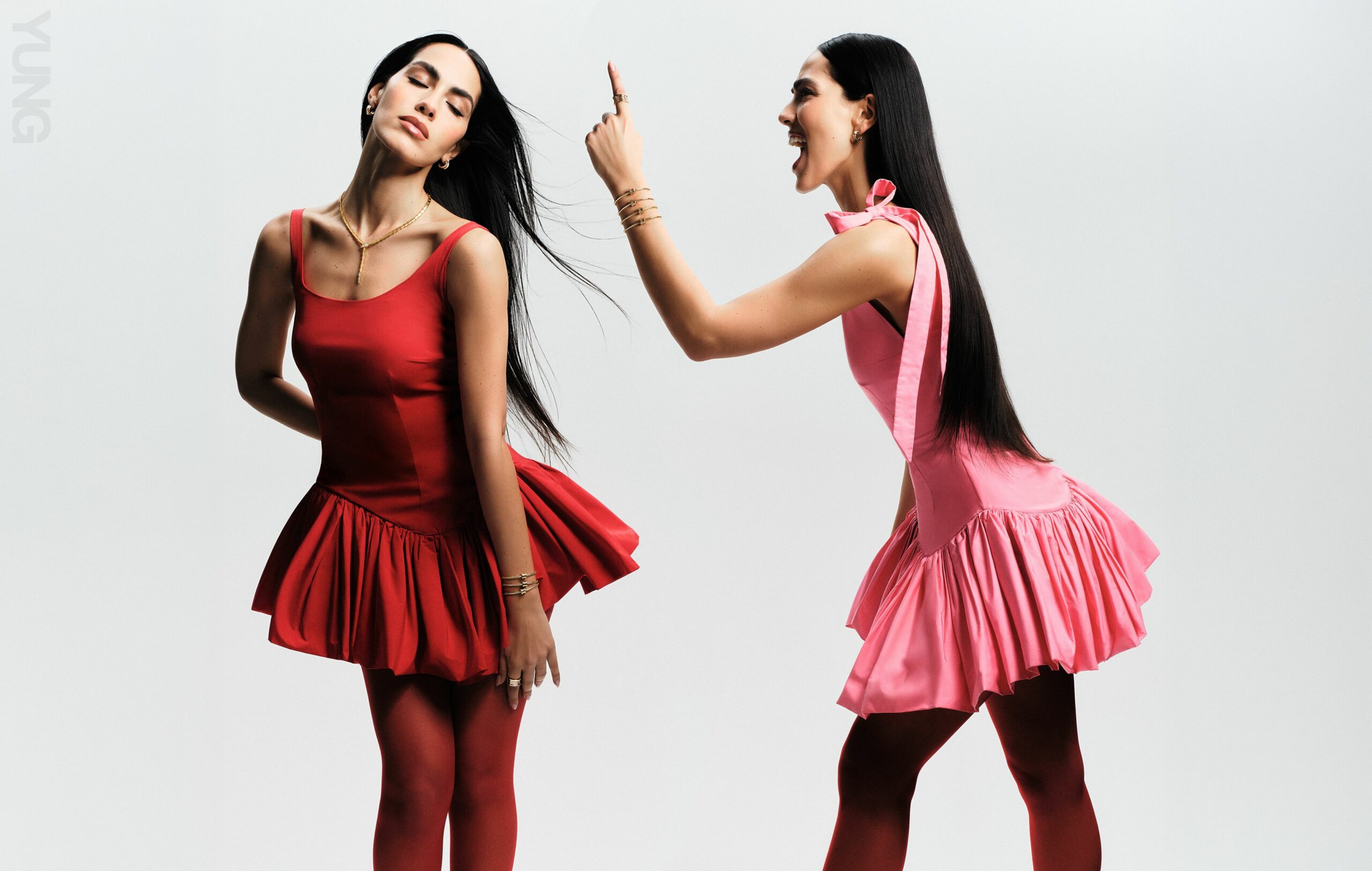
It is a shift that many actors describe, but for Sandy Bella, it became a kind of foundation. A realization that performance is only a fraction of the story. That what shapes a role happens long before the camera starts rolling.
That awareness has changed the way she sees herself on screen. Not just in terms of confidence alone, but also in terms of the possibilities. “Yes, it made me more aware of my potential and also more critical, in a good way,” she explains. “I see where I can push more now.”
There is something important in that phrasing, “critical, in a good way.” It speaks to a kind of self-awareness that does not paralyze, but propels. A willingness to question, to refine, to demand more from herself without losing sight of what she has already achieved.
If Franklin was about understanding the process, 7 Dogs was about testing her limits. From the moment she encountered the project, there was an instinctive pull. Not toward comfort, but toward challenge. “The energy of the project,” she says when asked what drew her in. “It felt bigger, more intense, with real responsibility, and aligned with the kind of roles I want.”
That sense of scale, of weight, is something she actively seeks. Not because it is easy, but because it forces growth. And growth, for Bella, seems to come most clearly when she is pushed beyond what feels familiar. “Proving myself on this project was no joke,” she adds.
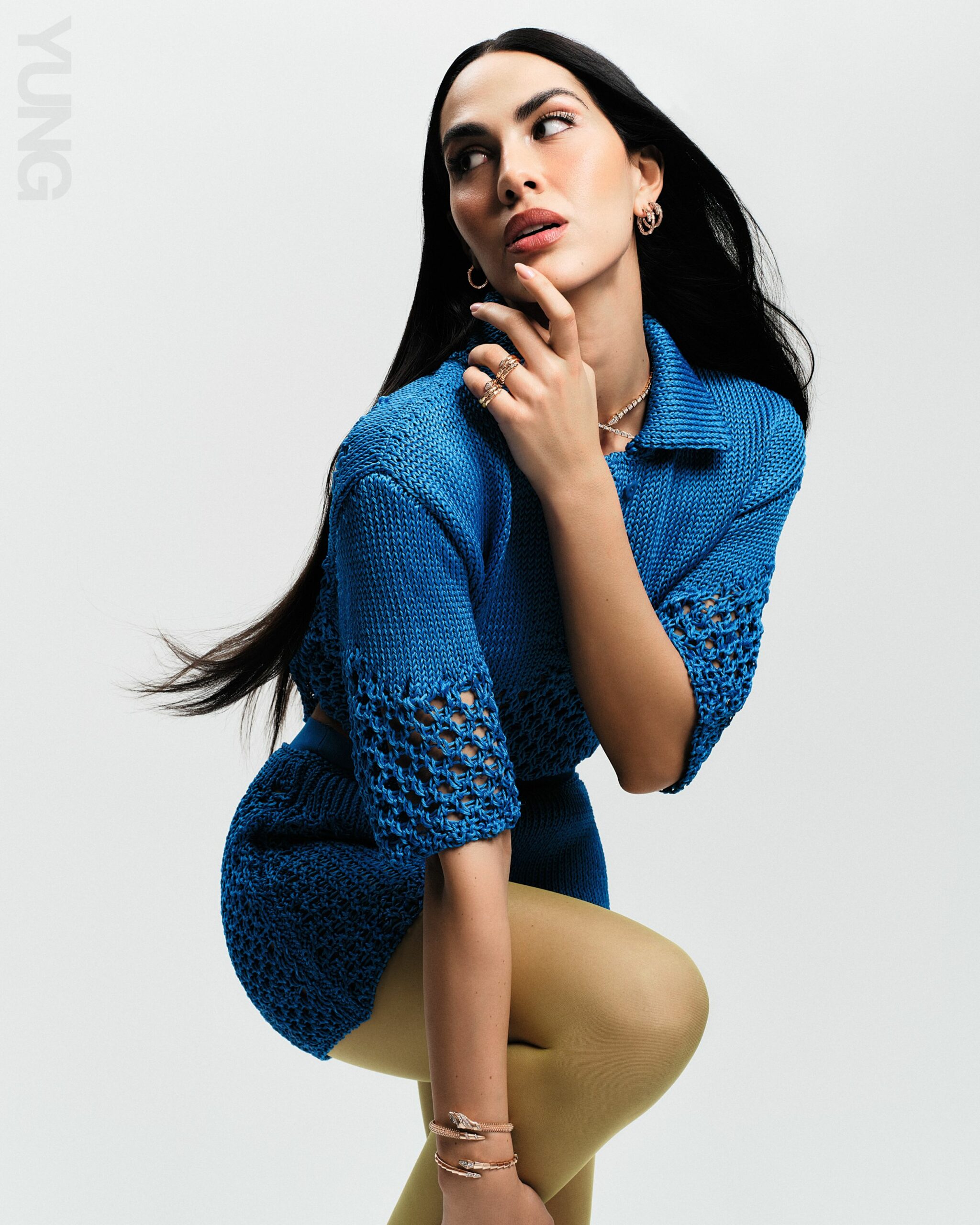
There is no attempt to soften the experience. 7 Dogs demanded more from her, not just as an actress, but as a person navigating an environment where expectations were high and the margin for hesitation was small. “Being the only ‘new girl’ alongside such big names felt like a challenge in itself,” she says of starring alongside the likes of Karim Abdel Aziz, Ahmed Ezz and Monica Bellucci. “Like people were counting on me, and I had to rise to it.”
That pressure, rather than intimidating her, became a catalyst. A moment where discipline met opportunity, where preparation had to translate into presence. It is in these spaces, where comfort disappears, that her approach reveals itself most clearly. She does not retreat. She adapts. And in adapting, she redefines what she is capable of. “I’ve always seen myself as disciplined and hard-working, but this project pushed me to unlock a whole new level.”
That “new level” is not something she treats as a destination. It is part of an ongoing process, one that continues to evolve as she becomes more selective about the roles she chooses. “I’m going after strong, impactful roles,” she says. “I’m not interested in anything that feels superficial or doesn’t add value to my growth.”
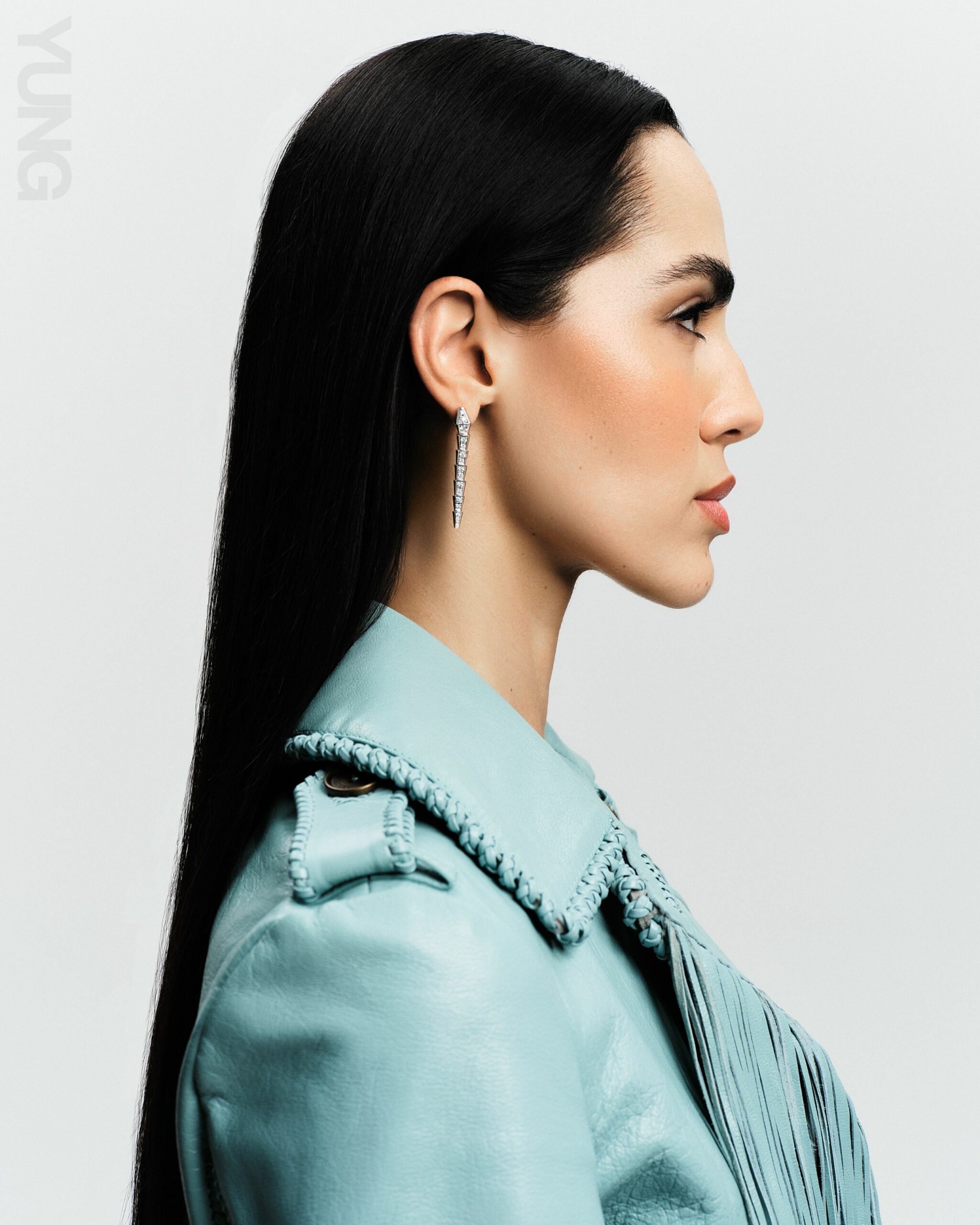
It is a clear line, one that defines both what she wants and what she refuses. In an industry that often rewards visibility over substance, saying no becomes a form of control, a way of protecting the direction she has set for herself. “I’ve been working day and night to become the woman I am today, and I’m still pushing myself to grow,” she continues. “So I’m very clear on what I want.”
Clarity, in this sense, is not rigid. It is responsive, shaped by experience, by instinct, by the quiet decisions that accumulate over time. And some of those decisions are not always visible to others. “Choosing to be more selective,” she says when asked how her outlook is evolving. “Saying no to opportunities my instincts told me to turn down because something better suited me was coming, and it did.”
There is a kind of faith embedded in her approach. Not passive optimism, but an active trust in her own judgment, a belief that opportunities are not singular, that being available and positive are key. “I’ve never believed that opportunities come once in a lifetime,” Sandy Bella explains. “What’s meant for you will find its way back in different forms,” she says.
It is a perspective that allows her to move without fear of missing out, to make decisions based on alignment rather than urgency. And in doing so, she creates space for something more intentional to emerge.
But while her internal world is grounded in clarity, the external perception of her remains something she continues to navigate. “People often assume I’m mean or unapproachable because of my fierce look,” she says.
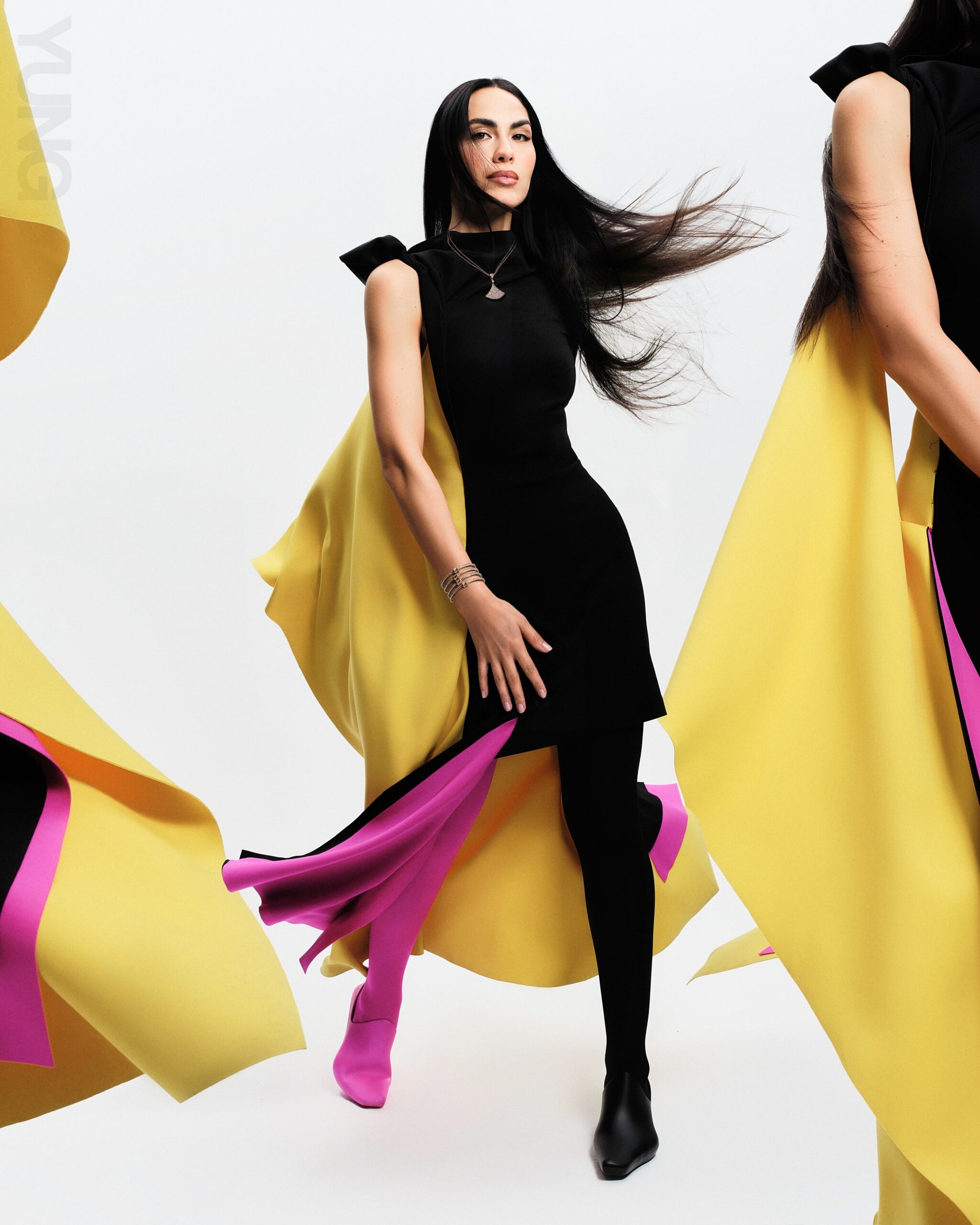
It is a familiar narrative, one that many women in the public eye encounter. The reduction of presence into personality, of expression into assumption. “I might come across as intimidating at first,” she adds, “but once you get to know me, you’ll realize I’m actually one of the kindest people you can meet and work with.”
There is a lightness in the way she says it, but also a quiet acknowledgment of the gap between perception and reality. It is a gap she does not seem intent on correcting aggressively. Instead, she focuses on what she can control.
Her work. Her choices. Her direction.
“I feel most in control of my narrative when I’m focused, grounded, and in line with my goals,” she says.
Control, for Sandy Bella, is not about managing every external opinion. It is about alignment. About staying connected to what she is building, even when things do not move as quickly as she would like. “It feels like it’s slipping when things don’t move as fast as I want them to,” she admits. “It overwhelms me.”
That honesty, that willingness to acknowledge the tension between patience and ambition, adds another layer to her story. She is not detached from the pressures of the industry. She feels them. She responds to them. But she does not allow them to dictate her direction.
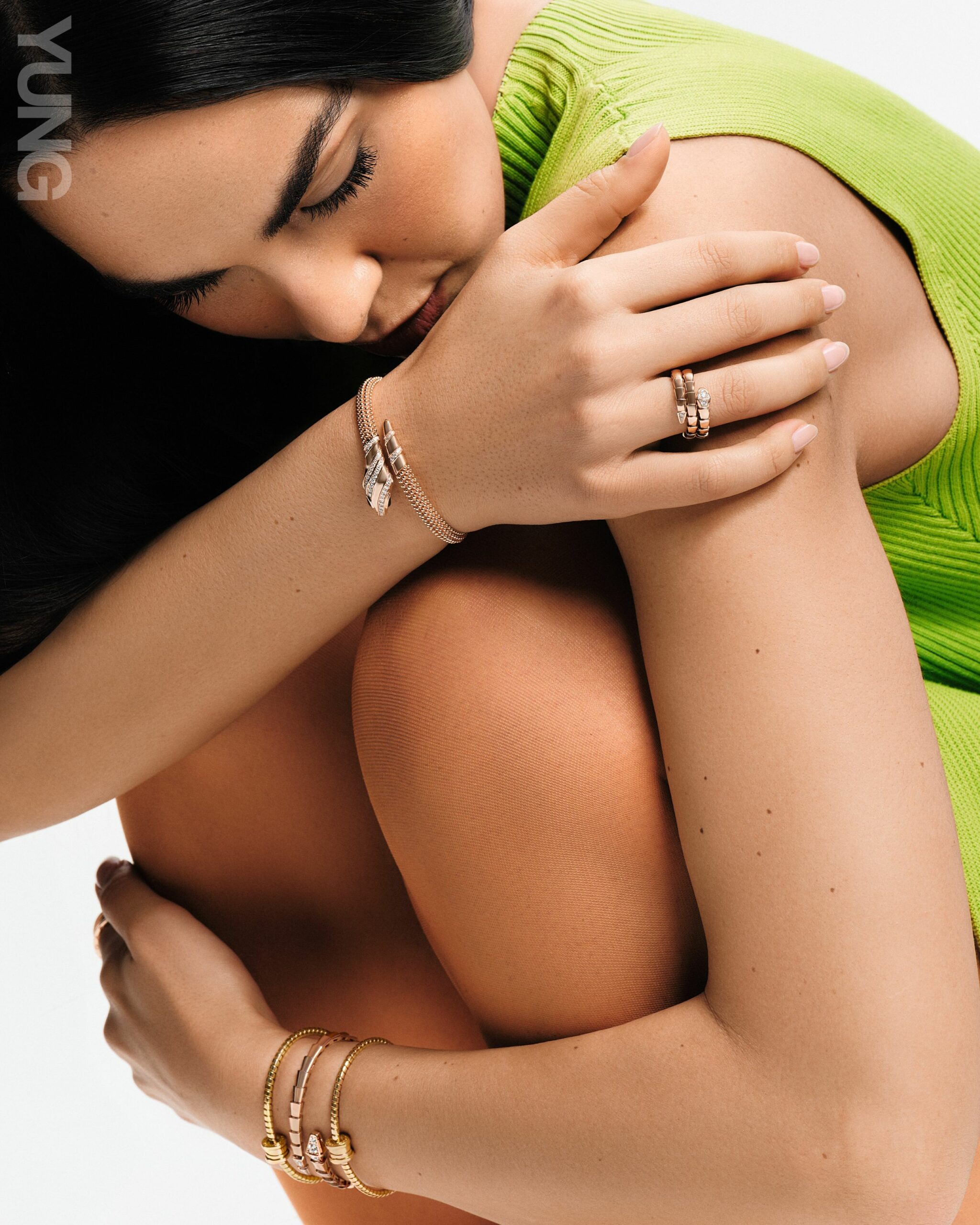
Instead, she returns to process. To discipline. To the quiet work that continues regardless of pace.
And right now, that work is focused on two things at once: “Building and evolving at the same time,” she says.
It is a simple statement, but it captures the essence of where she stands. Not at a fixed point, but in motion. Not defined by what she has done, but by what she is actively becoming. Sandy Bella is not trying to fit into an existing narrative. She is constructing her own, one decision at a time. One role at a time. One step further away from perception and closer to intention.
What people see is a work in progress. Beneath it, something entirely precise and driven is taking shape.
For more stories of art and culture, visit our dedicated archives and follow us on Instagram.